Germany and Austria are no longer only home to large OEMs testing next‑gen EVs — a fast‑growing cluster of startups is quietly plugging gaps in batteries, charging software and second‑life recycling that major suppliers and grids have struggled to close. That matters to drivers, fleets and dealers because it shortens time to usable capacity, lowers installation costs and broadens aftermarket options across both countries.
Money and awards are following product steps
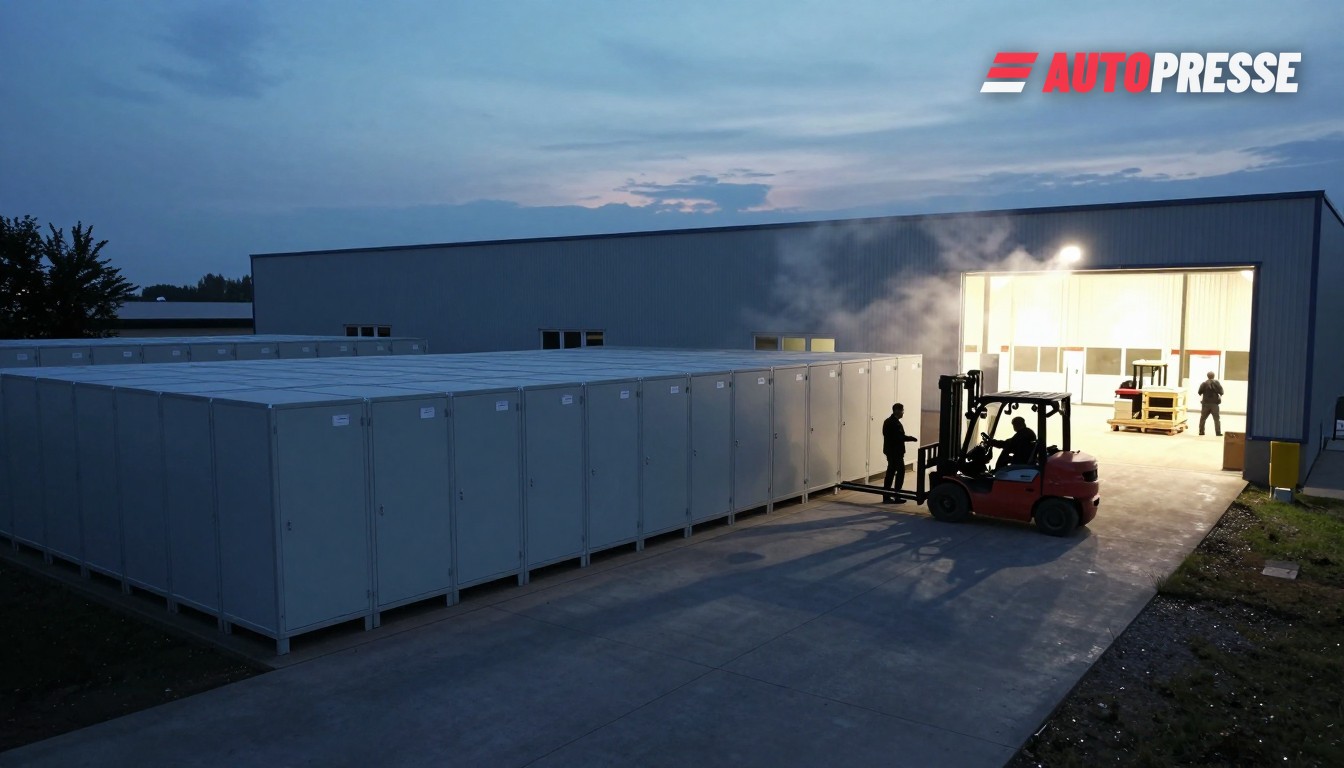
Small teams have translated lab ideas into paying customers and industrial plants. Aachen‑based Voltfang says it opened what it called Europe’s largest second‑life battery factory and closed a Series B worth roughly $17m (reported as €15m) in June 2025 to scale production of commercial storage units built from used EV modules. These systems now underpin more than 300 installations the company reports.
On the software side, Helsinki’s eMabler raised €5.5m in a Series A announced 16 June 2026 and explicitly named Germany as its first central‑European expansion target; the platform embeds charging into parking and retailer apps and plans “grid‑aware” features to optimise charging against day‑ahead prices. That push makes it easier for German and Austrian property owners and parking operators to offer smart charging without heavy integration projects.
Closer to the battery cell, young German firms are gaining state and EU recognition. Pulsetrain (formerly Bavertis) was selected by the European Innovation Council in November 2026 for blended EIC Accelerator support; the company has described a software‑defined pack topology that partners such as Yazaki demonstrated in a January 2026 proof‑of‑concept and which Pulsetrain says could let used vehicle packs become stationary storage. The EIC pick signals EU interest in industrialising novel pack electronics.
At the seed level, Hamburg’s Anori Tech — a software‑defined battery‑management start‑up — recorded a seed round and small public support through IFB InnovationStarter’s InnoRampUp in 2026 as it commercialises AI‑driven BMS tools for rapid configuration across chemistries and pack sizes. That kind of software can shave weeks or months from BMS integration for niche vehicle makers and remanufacturers.
What this means for the market
First, OEMs and Tier‑1s gain buying options: second‑life integrators and modular BMS suppliers reduce dependence on a handful of large suppliers and help keep costs down for local installers and fleets. Second, grid‑aware charging software and energy‑management layers let operators convert fleets and parking into flexible demand that eases peak stress on German and Austrian networks — a commercial route to the same grid benefits regulators want from V2G without immediate hardware rollouts. Third, EU grants and early‑stage venture flows show public money is steering deep‑tech startups toward industrial scale rather than pure research; that increases the chance of local jobs in assembly, testing and system integration.
Yet the landscape remains mixed. Scale requires long delivery contracts with utilities or fleets; independent firms must prove lifetime and safety claims before they replace incumbent systems in cars or grid assets. Venture reports show Europe’s investor interest in climate and automotive tech remains strong but selective — funding is clustering around a few winners.
Electric vehicle listings on WorldTrader24 →
Sources: Seedtable, EV Infrastructure & Energy News, EIC Accelerator report, Dealroom