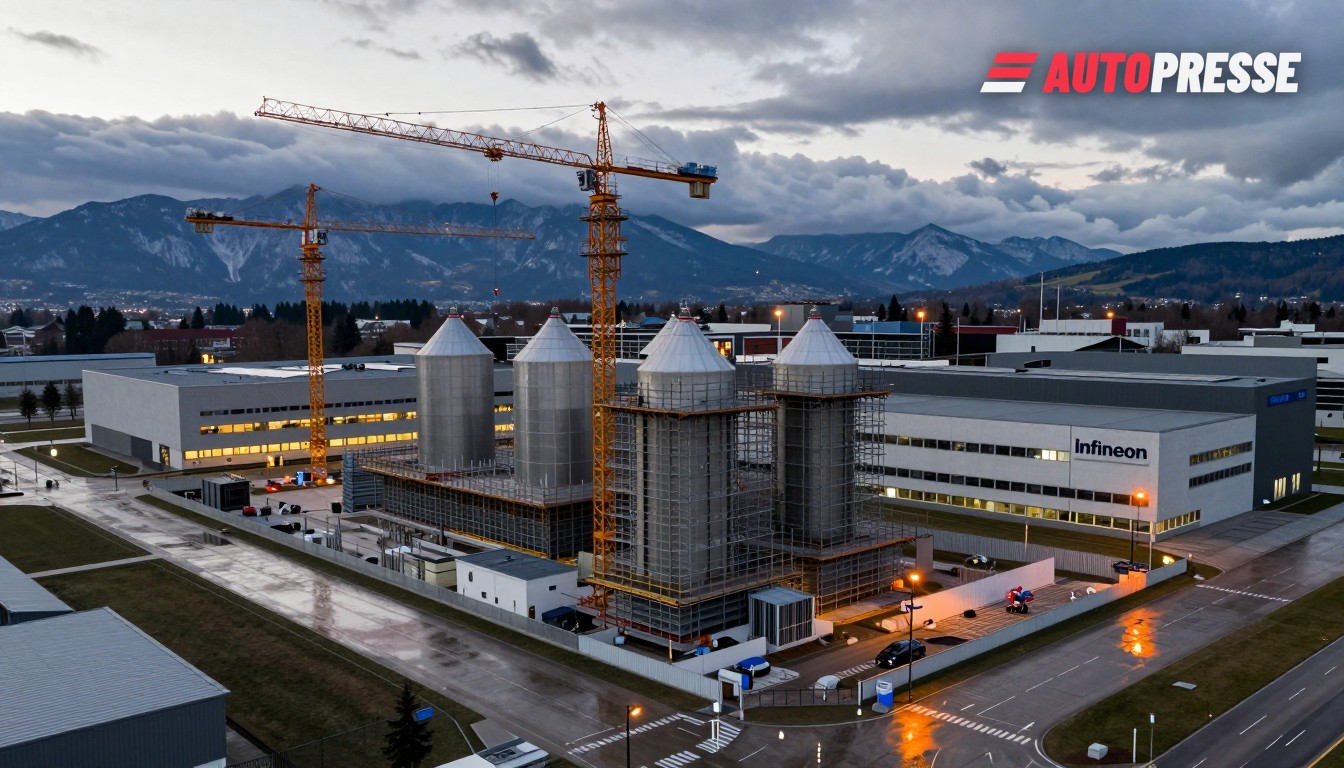
Germany’s car industry is threading two opposing trends: production and exports fell in October while electric‑vehicle demand surged — and Austria is racing ahead on registrations. That split matters for drivers, dealers and plant workers across the two countries: fewer cars rolling off German lines, but stronger local demand and a major chip investment in Austria that will feed next‑generation electric power electronics.
Production down, EV share up
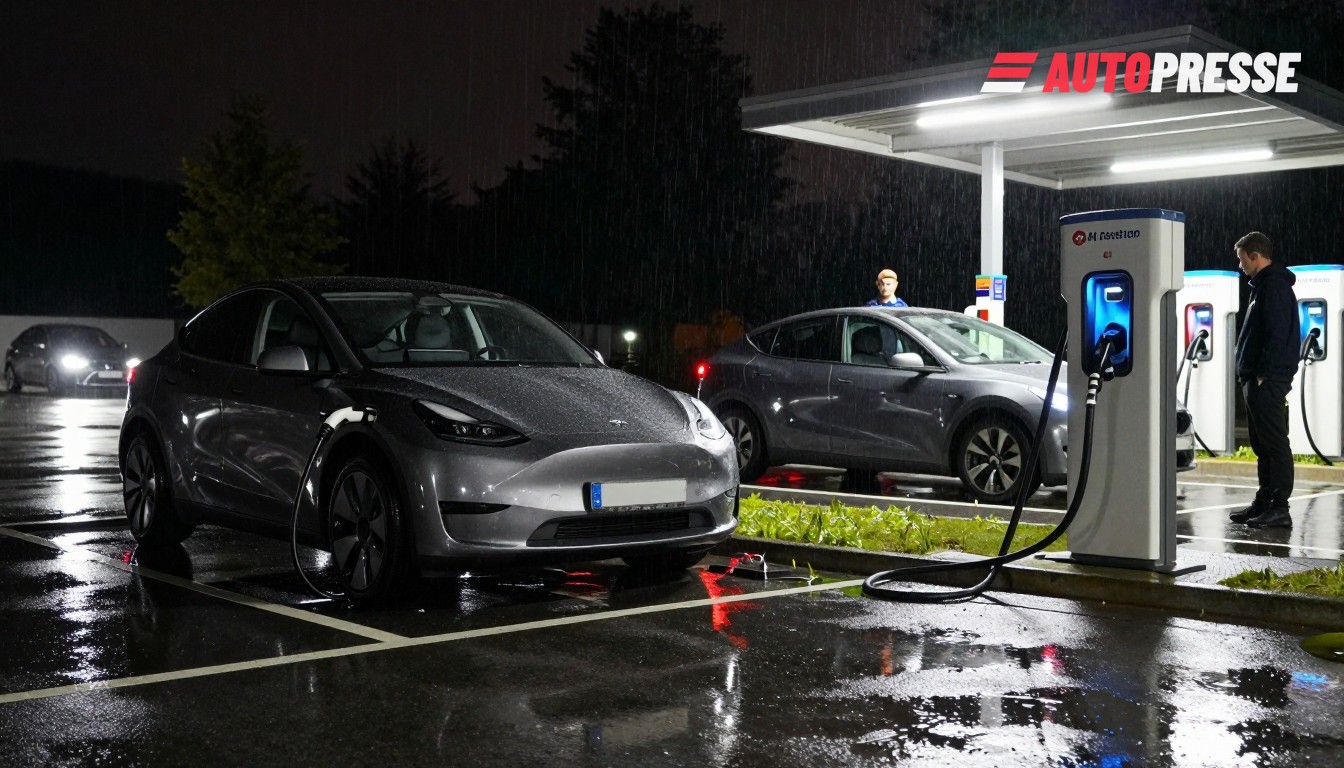
Germany produced 326,300 passenger cars in October 2026, a 7% fall versus October 2025; year‑to‑date production after ten months stood at 3.37 million units, 4% lower than a year earlier and still about 15% below 2019 levels, the VDA reported on 3 November 2026. At the same time the electric‑vehicle share of new registrations jumped: 48.2% of October registrations were electrified cars, with pure BEVs at 94,086 units for the month.
That combination — weaker factory output and a stronger retail tilt toward BEVs — is visible across supplier orders and export flows, and shows up in official macro commentary: the Deutsche Bundesbank notes the automotive sector’s orders fell for a second consecutive quarter and that low water levels on inland waterways have worsened input deliveries and transport costs.
Austria: registrations and chip investment
By contrast Austria’s market is growing: Statistics Austria reported a 10.7% rise in new passenger‑car registrations from January–October 2026 (265,282 units), with cars with alternative drives making up 67.6% of new registrations in that period and battery‑electric cars up 39.5% year‑on‑year. The shift shows dealers and fleets in Austria are accelerating toward electrification.
Supply‑side investment in Austria is now catching up. On 27 October 2026 Infineon announced it will invest around €1.1 billion at its Villach site to build Europe’s first high‑volume 300‑mm gallium‑nitride (GaN) power‑chip facility, with production scheduled to start by end‑2027 and up to €319m of support agreed under the European Chips Act. The plant is explicitly pitched at automotive power electronics and e‑mobility as well as data centre and energy uses.
What this means for the market
The near‑term picture is mixed. German OEMs and suppliers face a production squeeze and higher logistics costs even as domestic buyer preference swings decisively to BEVs; that raises pressure on margins and on factory utilisation. Austria’s rising registrations and Infineon’s Villach expansion mean the region will gain more local semiconductor content for inverters, on‑board chargers and fast‑charging infrastructure — a structural advantage for Austrian supply‑chain nodes and for German OEMs that source chips locally.
Labour talk is now a live risk for output. IG Metall escalated action in mid‑November, calling full‑day strikes at hundreds of plants on 19 November 2026 as part of a pay round that seeks a 5% rise and stronger site protections; employers have warned extended walkouts would worsen an already weak order backdrop. Those stoppages add immediate disruption to production schedules and supplier deliveries.
For dealers and aftermarket businesses the consequence is twofold: stronger EV demand in both countries should boost services and charging‑related sales, but intermittent factory and parts shortages — and transport bottlenecks tied to low Rhine water levels — mean used‑car supply, refurbishment and parts availability will remain volatile into 2027.
Electric vehicle offers on WorldTrader24 →
Sources: Infineon Technologies, VDA, Statistics Austria, Reuters, Deutsche Bundesbank