Germany and Austria are racing to electrify public fleets — but a concrete Austrian result is already forcing a rethink across the border. In Salzburg a 13‑month research pilot called OptiChargE proved that software, data and depot planning can turn an expensive grid problem into operational savings for transport operators and suppliers.
Austria’s OptiChargE: numbers and lessons
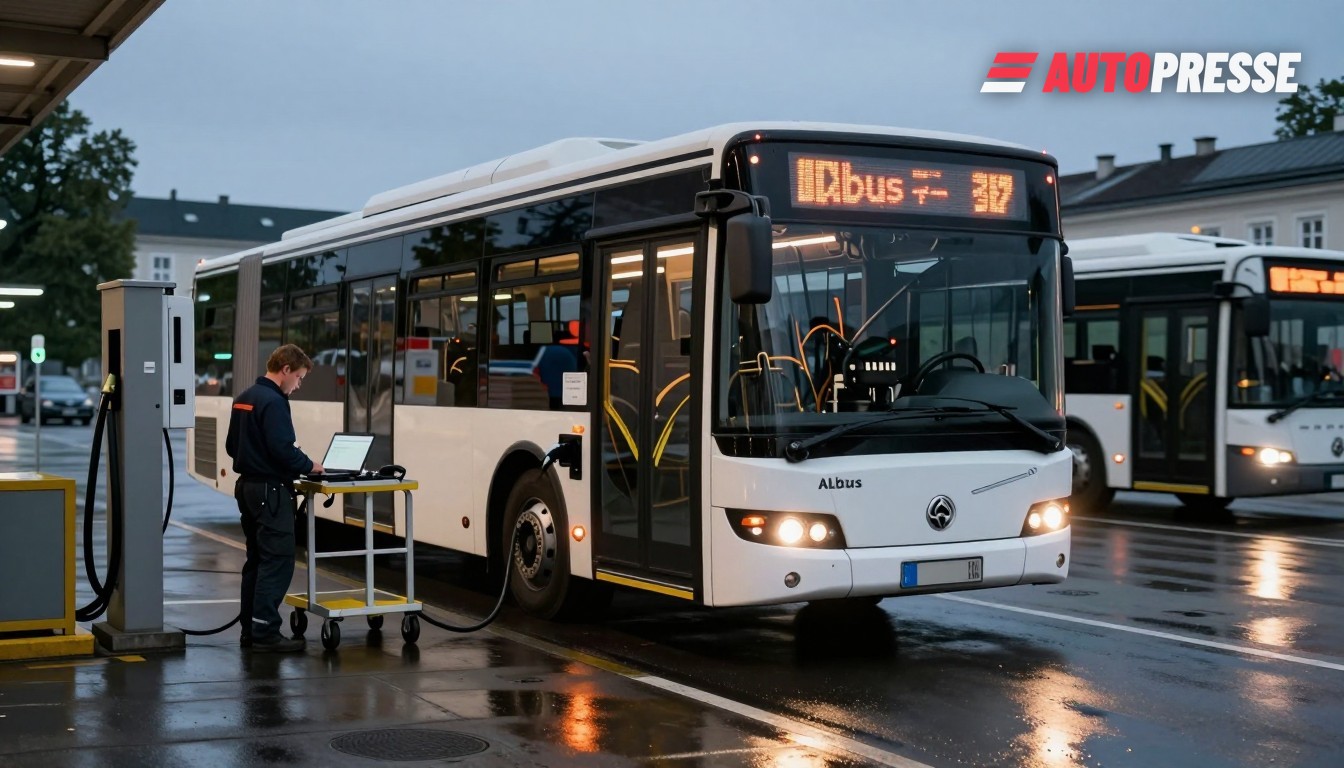
Salzburg Research published final results on 9 October 2026 for the OptiChargE project (run February 2024–September 2026). The trial accompanied Albus Salzburg’s transition from seven to 58 electric buses and an increase in charging points from 20 to 56. Using an integrated charging‑management system the pilot reduced monthly depot peak loads by 55–75% compared with uncontrolled charging and calculated about €80,000 in avoided grid charges over the pilot period. “The research findings show that the electrification of bus fleets involves far more than simply replacing the powertrain,” project lead Cornelia Zankl told researchers in the project report. (Salzburg Research, 9 Oct 2026).
Germany: research, pilots and a hard regulatory deadline
Germany hosts multiple R&D pilots and living labs that reach similar conclusions: charging strategy and depot scheduling determine total cost of ownership for battery buses and heavy fleets. A comprehensive review in Transport Research Part D (November 2026) underlines that optimized charging strategies, integrated planning and coordination with the distribution grid are central to making battery buses economically viable.
On the regulatory side the EU’s Alternative Fuels Infrastructure Regulation (AFIR) and its implementing rules mean a practical deadline for interoperable, smart charging: EN ISO 15118‑20 becomes obligatory for newly installed or renovated public and many private charging points from 1 January 2027. Industry and test‑lab sessions at Renewable Energy Grid Integration Week 2026 flagged implementation risks and the need for staged conformance testing, while projects such as “PowerUp” aim to combine megawatt charging hardware with local storage and intelligent energy management to protect the grid in real operation (conference abstracts, 2026).
What this means for the market
Three clear market consequences flow from the Austrian pilot and the German research landscape. First, depot electrification is now a systems procurement problem: operators will pay for software, telematics and energy‑management integration as much as for chargers and buses. Second, suppliers that bundle charging hardware with energy‑management, local storage and ISO‑15118‑ready backends will win tenders — the OptiChargE savings example turns a technical feature into a procurement argument. Third, distribution‑grid constraints and the AFIR/ISO deadlines (1 Jan 2027) create an urgent retrofit market for charging stations and test services; operators who delay face higher peak‑capacity charges and potential regulatory retrofit costs.
For Germany and Austria the lesson is pragmatic: electrifying fleets without integrated charging management shifts costs to utilities and taxpayers. The Salzburg pilot shows the alternative — a measurable, replicable route to fewer grid peaks, lower operating costs and faster scale‑up of electric public transport.
Electric vehicle listings on WorldTrader24 →
Sources: Salzburg Research (OptiChargE, 9 Oct 2026); Renewable Energy Grid Integration Week 2026 abstracts; Transport Research Part D, November 2026.