When people in Germany and Austria type "ev charger payment" into Google they want one clear thing: how do I actually pay at a public charger? The short answer in late 2026 is threefold — contactless bank card (or chip reader) for ad‑hoc charging, in‑car subscription access such as MB.CHARGE, or network apps and cards like Wien Energie’s and Verbund’s V‑Go — with large fast‑charger operators already rolling these options out across both countries.
What recent news tells drivers
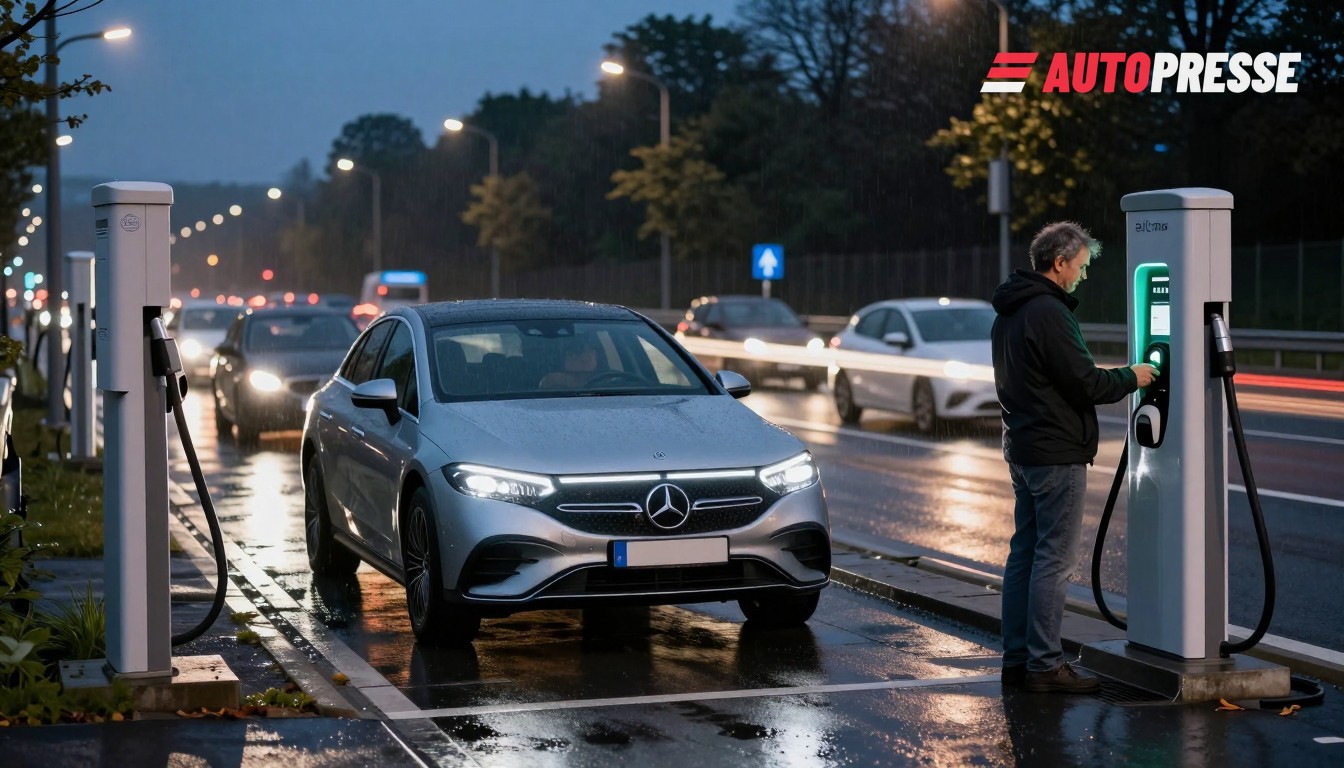
Automotive and charging operators have been active this week. Electra announced on 3 November 2026 that it has linked with Mercedes‑Benz’s MB.CHARGE Public to give Mercedes customers in‑car access, reservation and preferential rates across Electra’s network — more than 800 stations and 5,000 charge points — including 31 Mercedes‑branded hubs in Germany and six in Austria. That means MB.CHARGE subscribers can start and pay for charging directly through the vehicle ecosystem at many locations.
In Austria, Wien Energie said on 9 November 2026 it has expanded and integrated roughly 500 acquired points into its wider network as it scales toward about 3,000 publicly accessible charging points — reinforcing the continued role of operator apps and charging cards for payment and access. Meanwhile Verbund’s V‑Go promotion (6 November 2026) underlines that app‑based payment and account charging remain central to how many Austrian drivers will pay.
Regulation: why contactless card matters now
Crucially for drivers, the EU’s Alternative Fuels Infrastructure Regulation (AFIR) requires that publicly accessible charging points with 50 kW or more along the TEN‑T road network (and in certain secure parking areas) must accept electronic payments via a payment card terminal or a device with contactless card reading capability — a retrofit deadline set for 1 January 2027. Germany has already transposed similar minimum payment requirements into national practice via its charging‑point rules, so ad‑hoc contactless payment is becoming the baseline expectation on major routes.
What this means for the market
For drivers: pack a contactless card or a phone wallet, and link a payment method to your OEM charging account or to network apps if you want reservation, lower tariff tiers or loyalty pricing. For dealers and fleet managers: in‑car billing (Plug & Charge / MB.CHARGE) and app integrations are a new sales and service differentiator; customers will expect seamless invoicing and roaming across networks. For operators and CPOs: the AFIR retrofit deadline focuses spending and technical effort — card readers, secure POS integrations and clearer ad‑hoc pricing are now operational priorities.
EV vehicles available now on WorldTrader24 →
Sources: Electra, EUR‑Lex, Bundesnetzagentur, Wien Energie, Verbund