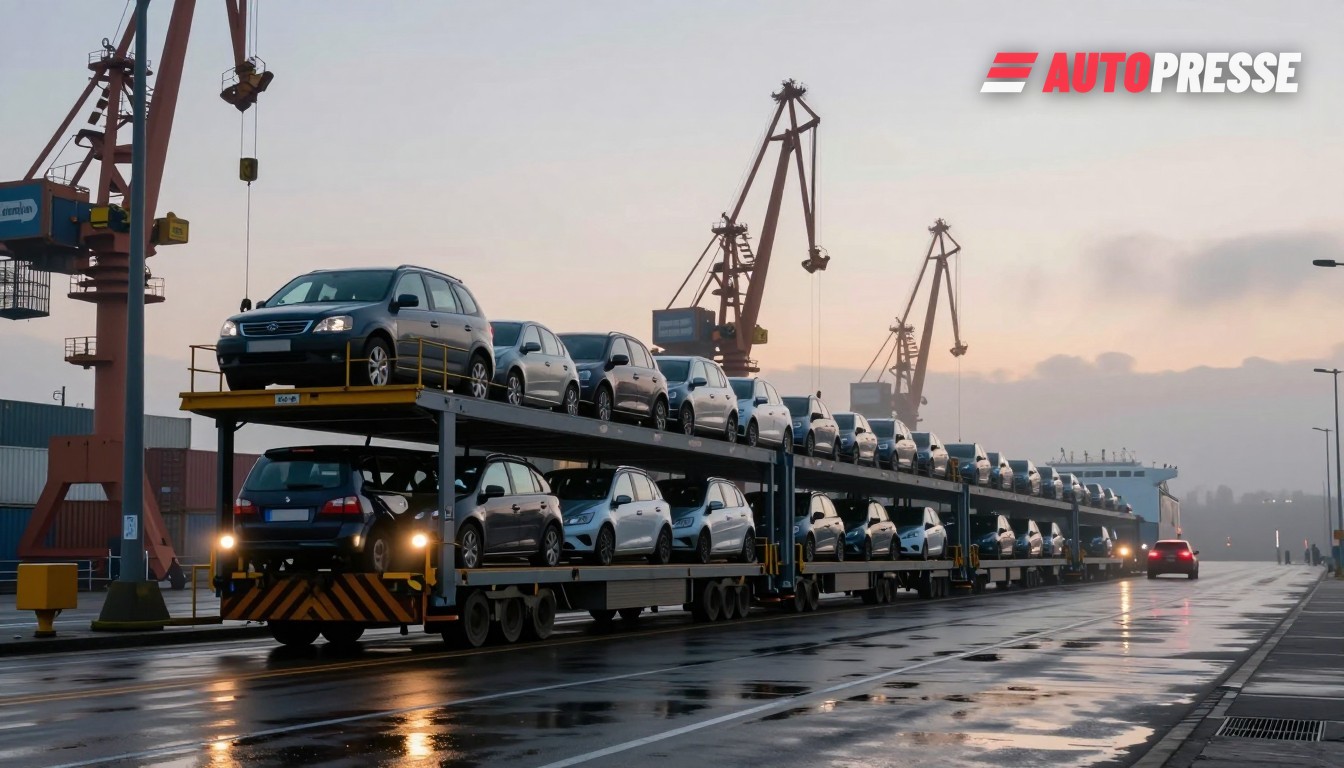
October’s car statistics show a market in motion: German factories and exports lost ground while buyers — both private and corporate — pushed registrations higher through the first ten months of 2026. At the same time Austria posted a surprisingly strong year‑to‑date rise, changing dealer order books and supplier timetables on both sides of the border.
Numbers and rhythm: production down, registrations up
German production fell sharply in October: factories turned out 326,300 passenger cars, 7% fewer than a year earlier, and output across January–October 2026 totaled 3.37 million units, 4% below the same period in 2025. Exports weakened as well — October shipments were about 246,500 units, roughly 10% below last year’s level. At the same time the pace of new registrations in Germany remained healthy: after ten months the market had recorded 2.48 million new passenger car registrations, an increase versus the prior year. (VDA, 3–4 Nov 2026).
Austria’s market followed a different track. Statistik Austria reports that from January to October 2026 Austria registered 265,282 new passenger cars — a 10.7% increase on the same period in 2025 — though the month of October itself saw a small dip compared with October 2025 with 24,174 new cars. Statistik Austria also notes that the growth in Austria is concentrated in alternative‑powertrain vehicles and hybrids, which together make up the bulk of the year‑to‑date increase, and the statistical office’s general‑director highlighted the shift in market mix on 10 November 2026.
Who sold what: brands and market structure
Brand rankings underline continuity at the top and dynamism among importers. For January–October 2026 the KBA FZ10 tables (compiled in monthly reporting) place Volkswagen at the head of the German market, followed by Mercedes and BMW with Škoda and Audi close behind — a top five that matches the year‑to‑date leaderboards seen in the October data set. Import brands, including several Chinese marques, show fast growth in monthly comparisons and are reshaping model‑level listings in several segments.
Fleet and rental registrations continue to matter: data providers note rental and car‑hire returns supplied roughly one in ten of October’s new registrations, a structural feature that ties dealer stocking and remarketing plans to seasonal cycles. The VDA analysis also points out that private registrations recovered faster than commercial ones in October 2026, a factor that helped dealers refill retail pipelines.
What this means for the market
For dealers: the mixed signals create short windows of opportunity. Rising retail demand allows showrooms to move stock, but weaker factory output and strained export schedules mean lead times remain uneven; dealers should tighten forecasts and prioritise return on front‑lot inventory.
For suppliers and plants: the production decline highlights pressure on capacity utilisation. Margins will be squeezed where lower volumes meet continued investment in electrification and software — suppliers with flexible production or quick conversion capacity will pick up business as OEMs reallocate runs. The VDA figures (Nov 3–4, 2026) underline the immediate need to match upstream output plans to a market that is regaining retail demand but not yet its pre‑crisis production levels.
For fleet managers and buyers: Austria’s 10.7% YTD growth and the shifting brand mix mean buying conditions vary widely by country and segment. Fleet contracts and residual‑value assumptions must be revisited in light of the stronger year‑to‑date registrations in Austria and the fast moves of some import brands. Statistik Austria’s 10 November 2026 bulletin is the clearest, recent formal signal of that change.
Policymakers and infrastructure planners should note the divergence: Germany’s weaker production and exports demand industrial policy focus on competitiveness and logistics, while Austria’s brisk registration growth requires continued investment in charging and service capacity to avoid local bottlenecks; Austria’s mobility minister framed the trend as part of a strategic shift in a ministry statement on 10 November 2026.
VW electric offers on WorldTrader24 →
Sources: Verband der Automobilindustrie (VDA), Statistik Austria, KBA FZ10 compilations, Europe‑Mobile, ChinaCarGuide