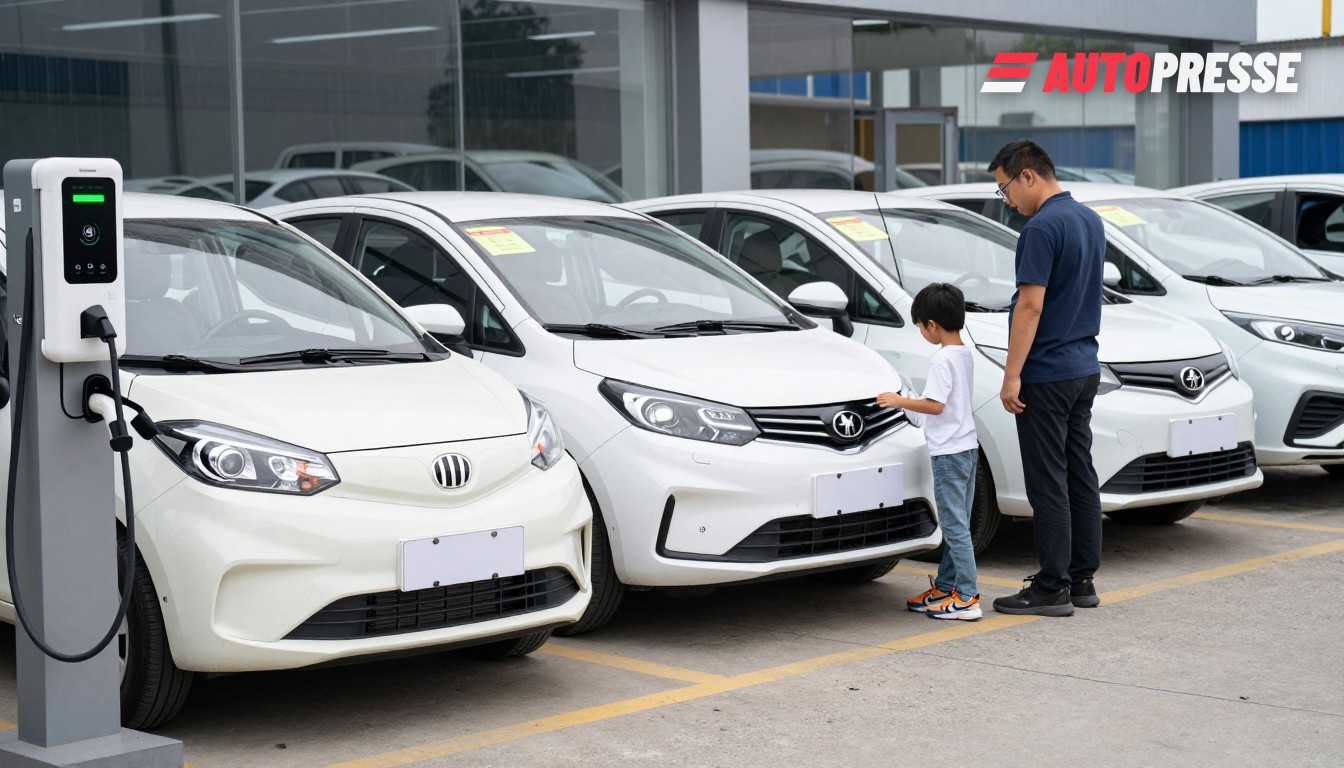
Germany and Austria are no longer a single market when it comes to electric cars. Recent state‑level registration data reveal stark regional contrasts: some German Länder now register well over 40% battery‑electric cars, while others remain below 20%. At the same time Austria reports pockets of very high EV penetration — and a noticeably denser public charging network than Germany. These splits matter for dealers, charging operators, grid planners and buyers deciding where to charge or which models to stock.
A map of extremes
The Kraftfahrt‑Bundesamt’s state breakdown (reported in the KBA monthly data) shows a wide spread in the share of battery‑electric cars among new registrations: Rheinland‑Pfalz and Schleswig‑Holstein are at the top end (around 41.8% and 41.6% respectively for the period reported), while Hamburg is at the bottom with roughly 18.3%. The KBA dataset used for October/September comparisons makes clear these are localisation effects in registrations, not necessarily production or ownership changes.
Across the border, Statistik Austria’s regional tables and recent analyses point to even sharper local peaks: Oberösterreich reached an extraordinary monthly share (September 2026) of about 42.2% battery‑electric new cars, and several Länder — Burgenland and Salzburg among them — also posted monthly EV shares above 30%. That rapid regional growth in Austria is visible in the Statistik Austria data aggregated for January–September 2026 and in regional breakdowns reported by local outlets.
Infrastructure: quantity versus location
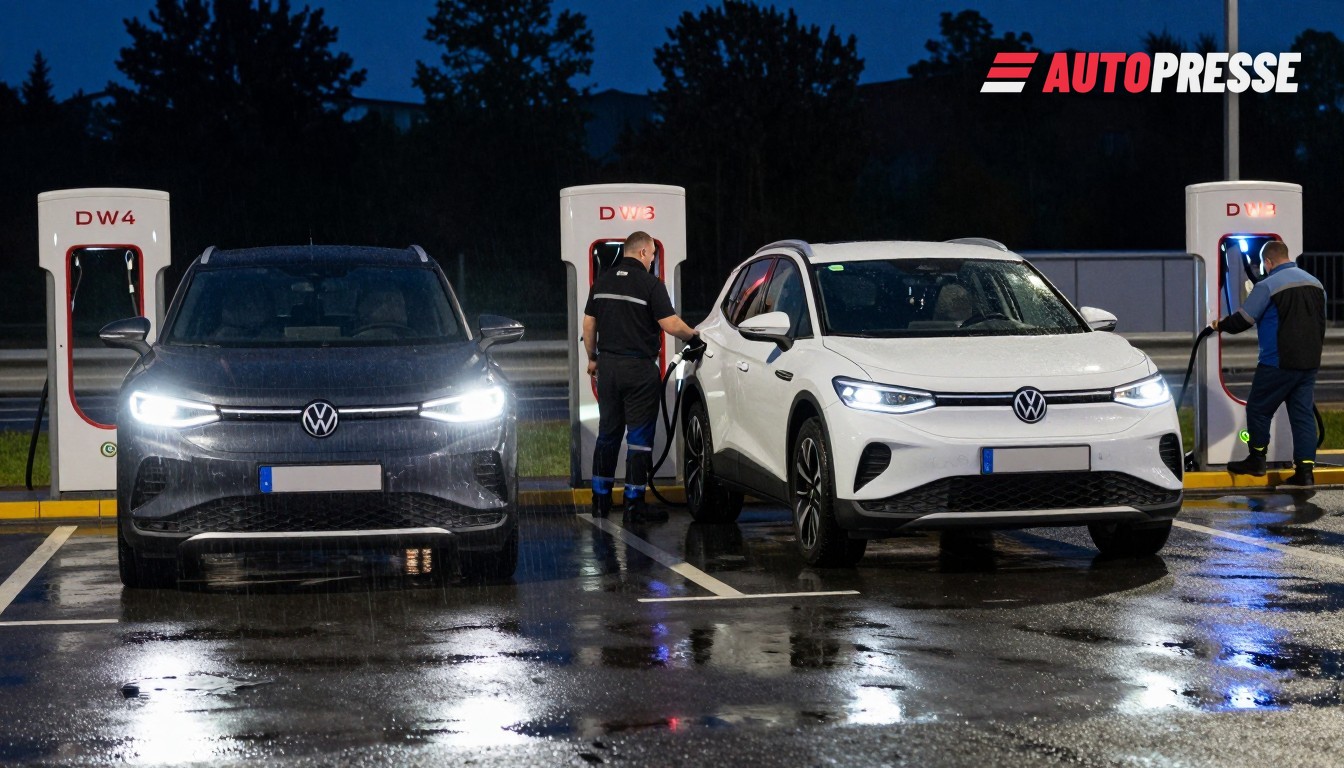
Public charging supply shifts the picture. The VDA’s loading‑index reported via i‑Magazin finds that, on a headline basis, Germany has roughly 17 electric cars per public charging point (VDA method, 1 July 2026), while Austria’s comparable ratio is about 7.9 BEV per public point (AustriaTech / E‑Control / ladestellen.at‑based counts). That does not mean Austria has everywhere perfect coverage: the Austrian figures use a different cut (pure BEV only, different cut‑off dates) and charging performance and geographic distribution vary strongly. Still, the arithmetic favours Austria on public‑point density and especially on the ratio of BEV to fast chargers (HPC).
The same VDA analysis highlights a key German problem: many municipalities still lack any public charger. The VDA counts that roughly 30% of German municipalities above 500 inhabitants had no publicly accessible charging point and 61% had no rapid charger at the referenced cut‑off — a distribution problem that coincides with the Bundesländer registration gaps.
What this means for the market
For dealers and importers: stocking and marketing must be local. A model that sells out in Rheinland‑Pfalz or Upper Austria may sit for weeks in a Hamburg showroom where public‑charging patterns and buyer preferences still favour different drivetrains. For charging operators and utilities: headline counts of sockets are not enough — location, power class and visibility (supermarket, motorway, urban kerb) determine usefulness and utilisation. For policymakers: national incentives and targets now meet a patchwork of regional realities; planning and funding must be targeted, not one‑size‑fits‑all.
Finally, for buyers and fleet managers the message is practical: check local charging density and fast‑charge availability before committing to an EV, and expect sharply different resale and usage patterns across Germany’s Länder and Austria’s provinces as adoption continues to diverge.
Electric vehicle listings on WorldTrader24 →
Sources: Kraftfahrt‑Bundesamt (KBA), Statistik Austria, VDA / i‑Magazin, MotorNews, VCÖ