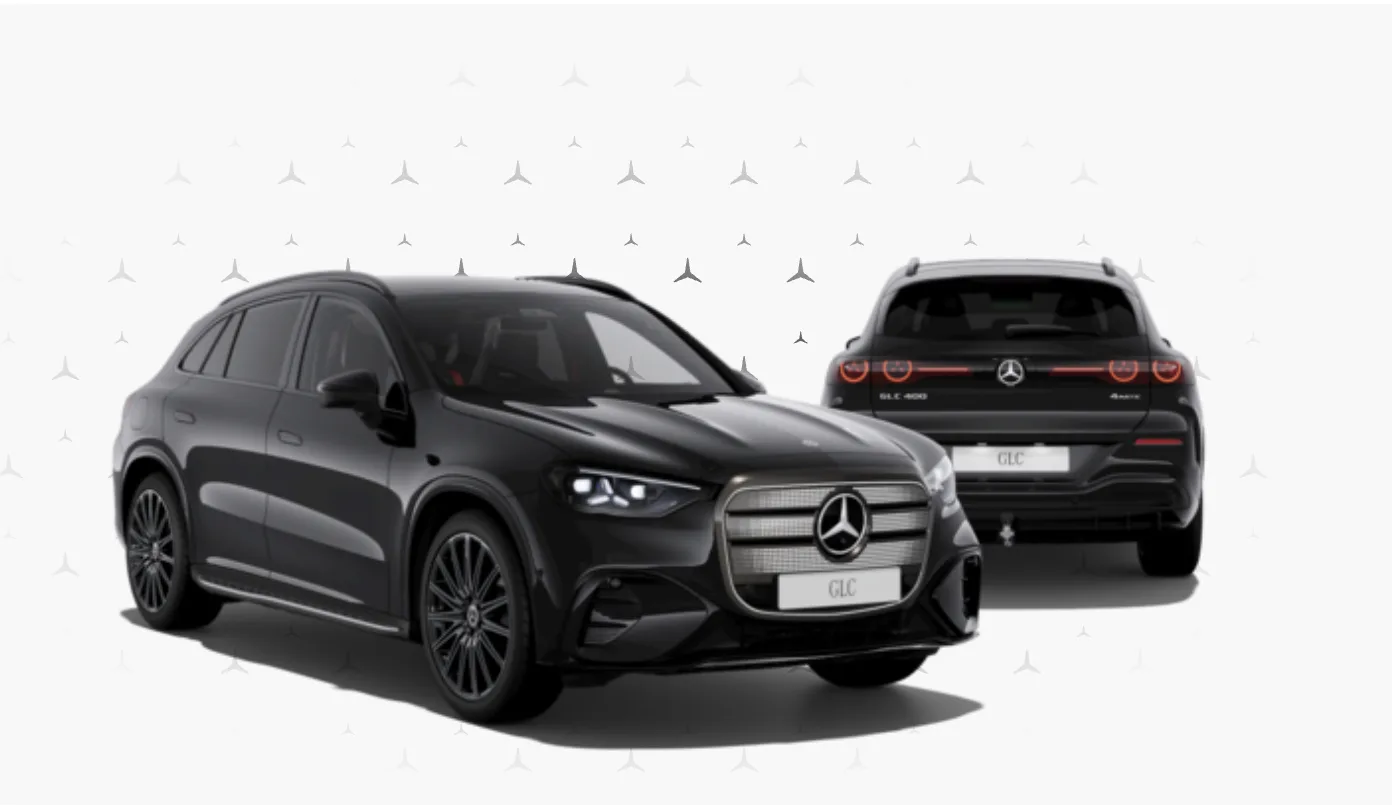
The all‑new Mercedes‑Benz GLC has moved from show floor to trade stock: Mercedes launched expanded electric versions — notably the GLC 300 4MATIC Electric and the flagship GLC 400 4MATIC with EQ Technology — and EU B2B marketplace Worldtrader24 is listing GLC units for verified dealers with "available now" status and net partner prices. For German and Austrian dealers, importers and fleet buyers this combination short‑circuits allocation wait times and opens immediate resale or demo opportunities.
Launch and supply: dates, prices, production
Mercedes staged the world premiere of the all‑new GLC with EQ Technology at IAA Mobility 2025 and opened orders in key European markets from late October 2025. The manufacturer confirms the market launch with list prices and configurator access in Germany: the GLC 300 4MATIC electric is published from €57,400 (excl. VAT) / €68,306 (incl. VAT) and the launch‑market GLC 400 4MATIC electric carries a manufacturer price shown at €71,281 (incl. VAT) for one of the initial trim levels. Production has been ramped up at Mercedes‑Benz’s Bremen plant, where the GLC is built alongside combustion and hybrid variants to keep throughput flexible.
Technical highlights and positioning
The new GLC family is positioned as a midsize premium SUV line that emphasises long range and fast charging as key customer benefits. The GLC 400 uses a larger usable battery (about 94 kWh) and a two‑motor 4MATIC layout rated at roughly 360 kW peak, while the GLC 300 carries an 85 kWh usable pack in a 4MATIC configuration. WLTP ranges are published up to roughly 715 km for the top model and up to 616 km for the GLC 300, with Mercedes citing an 800‑volt electrical architecture and recharging performance that can add more than 250 km of range in around ten minutes under ideal conditions. North American technical references give fast‑charging capability up to around 330 kW and EPA‑estimated ranges (for the GLC 400) near 350 miles — details that underline Mercedes’ intention to compete on long‑distance usability, not only urban efficiency.
Dealer access via Worldtrader24
Worldtrader24, the EU B2B vehicle marketplace, aggregates factory stock, short‑term registrations and dealer inventory and makes those cars available to verified trade partners at net partner prices (VAT and destination taxes shown separately). The platform already lists hundreds of Mercedes‑Benz GLC entries and shows specific GLC 300 and GLC 400 electric‑badged vehicles marked as immediately available ("sofort verfügbar"). According to Worldtrader24’s public pages, partner net prices become visible after free registration and trade verification, and each vehicle listing carries delivery time, registration status and equipment detail that matter for cross‑border trade. That means dealers with approved accounts can see a binding net price and request or reserve units without waiting for a local allocation from their OEM network.
Two practical consequences follow for trade buyers. First, stock vehicles on Worldtrader24 may originate as EU factory‑built units, short‑term registrations or demonstrators, so the price gap to local RRP can be material and margins can be generated on resale, wholesale or demo conversions. Second, full transparency on delivery and paperwork (COC, invoice, VAT/NoVA statements, transport options) is available per listing which reduces the uncertainty many dealers face when sourcing across EU borders — but it requires rigorous checks on warranty start, equipment spec and homologation for destination markets. Worldtrader24 explicitly flags VAT and destination‑specific taxes and provides guidance on cross‑border import steps for dealers.
What this means for the market
For dealers and importers in Germany and Austria the immediate availability of all‑new GLC electric units on a B2B marketplace alters short‑term strategy: allocation pressure from OEM order banks can be bypassed for certain inventory needs (used for demos, short‑term rental or retail resale), while access to net partner pricing makes margin calculations transparent before purchase. Fleet and corporate buyers who need EVs quickly — for contract fulfilment or to meet electrification targets — can source EU‑spec GLCs now rather than waiting months for factory allocation.
Operationally, buyers must manage two key risks: paperwork and timing. EU cross‑border purchases still require correct VAT treatment and, for Austria, calculation of NoVA and local registration taxes; these figures change the landed cost materially and must be modelled before any commitment. Transport and COC handling add days to delivery, and dealers should verify manufacturer warranty start dates on short‑term registered vehicles. Worldtrader24 shows these items on every listing, but the onus remains on the purchaser to validate.
Strategically, Mercedes’ emphasis on a long‑range GLC signals continued focus on European midsize premium EV buyers who demand a close parity of capability with ICE counterparts. For suppliers and service partners, the GLC’s mix of a shared production line in Bremen, an 800‑volt battery architecture supplied via ACCUMOTIVE and fast‑charging capability implies demand for specific parts, high‑voltage service training and fast‑charging infrastructure in the dealer workshop network. In short: the product will create immediate aftersales and logistics workstreams as units enter the trade channel in volume.
Dealers evaluating purchases on marketplaces such as Worldtrader24 should run two simple checks before confirming: total landed cost (net price + VAT/NoVA + transport + registration) and the warranty/registration start date on short‑term registered units. Where margins permit, taking a limited number of immediate‑availability cars can be a rapid route to EV stock, useful for demonstrations and short‑term fleet fulfilment — but it must be part of a controlled, modelled commercial plan.
GLC models available now on WorldTrader24 →
Sources: Mercedes‑Benz Media, Mercedes‑Benz USA, Worldtrader24