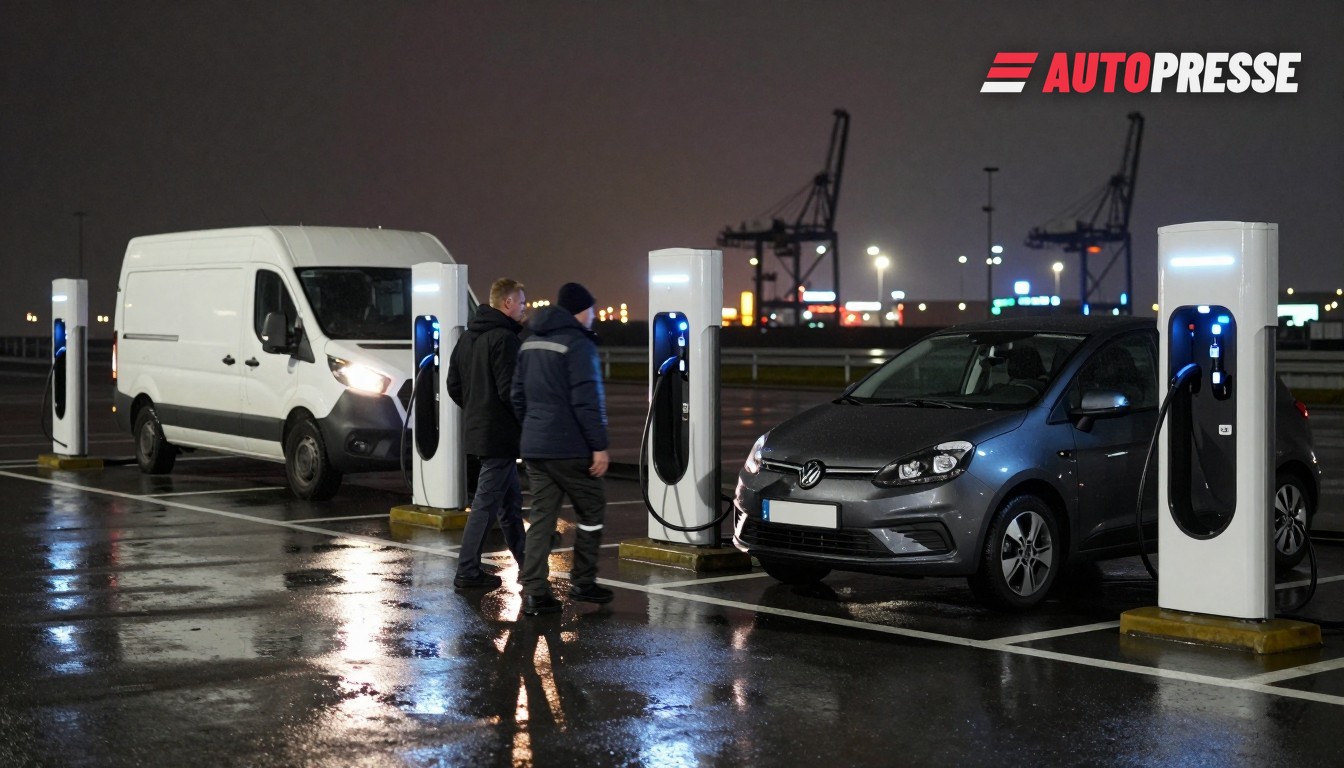
A near‑term EU compliance deadline is forcing an abrupt shift in how Germany and Austria operate their charging networks — and who pays to upgrade them. The Alternative Fuels Infrastructure Regulation (AFIR) and its delegated acts make support for the ISO 15118 family of communication standards mandatory for newly installed or renovated public chargers from 8 January 2026 and extend the requirement to private Mode‑3 points with the tougher ISO 15118‑20 features from 1 January 2027.
What the rules demand
AFIR requires new and renovated public charging points to implement ISO 15118‑2 from 8 January 2026 and — crucially for bidirectional services, Plug&Charge and smart charging orchestration — ISO 15118‑20 from 1 January 2027. Member states must also report on infrastructure deployment and the Commission will review AFIR by December 2026, with heavy‑duty (truck) charging needs a particular focus.
That technical clock exposes two practical problems for Germany and Austria. Germany hosts one of Europe’s largest public networks by absolute numbers but much of it must be retrofitted for ISO 15118 and secure PKI/Plug&Charge back‑ends. ChargeInsighs’ AFIR tracker counts roughly 209,000 public charging points in Germany (with national registries showing rapid additions through 2026), while Austria’s network is smaller in absolute terms but dense relative to EVs — giving Austria relatively high coverage per vehicle but also revealing gaps on TEN‑T corridors and in heavy‑duty pools.
What this means for the market
First, hardware and software spend will move front and centre: operators, CPOs and site owners must budget for PLC‑capable controllers, certificate management and ISO 15118‑20 firmware or replacement of legacy units. Firms that sell retrofits and backend PKI services are positioned to capture follow‑on revenues. ICCT and industry monitoring show the average public charger power rating has risen fast (to about 51 kW by mid‑2026), but many AC wallboxes still lack the digital stack AFIR requires; upgrading is not just a patch but an integration project.
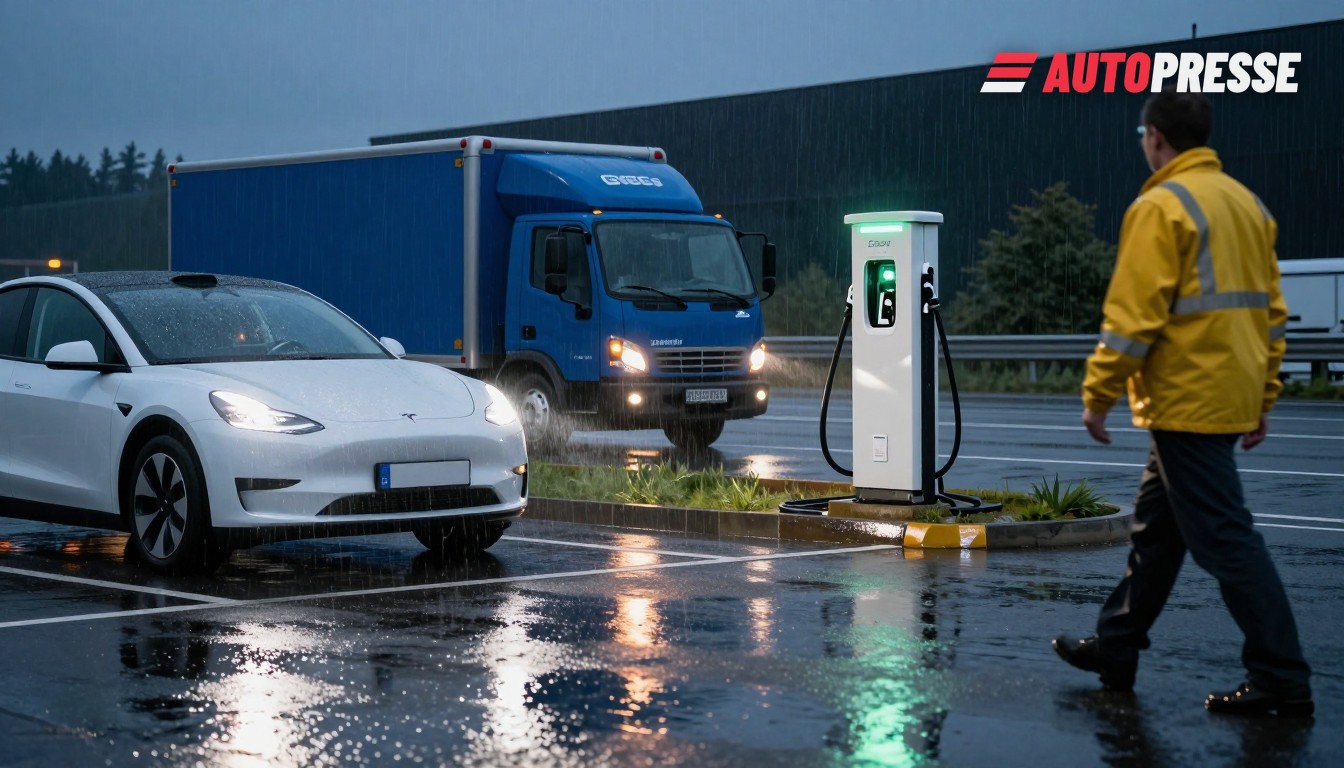
Second, fleet and depot charging for trucks and buses is now a visible bottleneck. The AFIR review in late 2026 will examine heavy‑duty pools and TEN‑T corridor coverage; planners in Austria and Germany must accelerate depot permitting, grid connection offers and pooled financing if electric long‑haul traction is to scale on schedule. Transport‑sector analyses warn that distance‑based AFIR targets leave substantial additional public and private depot capacity to be built if electrification of HDVs is to meet demand.
Third, compliance deadlines raise customer‑facing issues that affect revenue: stations that fail to offer interoperable Plug&Charge or correct, transparent pricing risk enforcement and reputational damage as users migrate to better‑integrated hubs. Regulators across the EU are already preparing monitoring and data‑disclosure systems; operators who move now can turn compliance into a competitive service advantage.
For Germany and Austria the practical picture is thus mixed: Germany’s scale gives it leverage to absorb upgrade costs through large CPOs and OEM‑backed roll‑outs, while Austria’s comparative density eases urban access but must still close corridor and heavy‑truck gaps quickly. The AFIR review in December 2026 will likely sharpen obligations for depot charging and interoperability — and the next 12 months will decide which operators profit from mandated upgrades and which are left paying retrofit bills.
Electric vehicle listings on WorldTrader24 →
Sources: European Commission (EUR‑Lex), ICCT, ChargeInsights / Ladeindex, Transport & Environment, EAFO