The EU’s Alternative Fuels Infrastructure Regulation (AFIR) is forcing a national split in enforcement that matters to drivers, fleets, charging‑point operators (CPOs) and local authorities across Germany and Austria. The regulation itself has applied since 13 April 2024 and sets common targets and tight data, payment and price‑transparency rules for publicly accessible charging points.
Two enforcement tracks: heavy fines in Germany, reporting and monitoring in Austria
Berlin has closed a gap in national enforcement with a law published in the Bundesgesetzblatt (BGBl. I Nr. 314) that amends the German Price Indication Act to transpose AFIR price‑transparency sanctions into domestic practice. From 1 January 2027 price authorities of the Länder can sanction violations of AFIR price‑disclosure rules with administrative fines of up to €100,000. The text and parliamentary summary spell out new inspection powers, mandatory pre‑charge price displays and a January 1, 2027 entry into force.
Austria takes a different, lighter route. Publicly accessible chargers must be registered in the E‑Control charging‑point register; operators must provide both static and dynamic data to the national access point and keep entries current, and the national rules attach modest administrative fines (generally up to €1,000, rising to €2,000 for repeat offences) for failures to report or to keep data accurate. Austria’s approach stresses monitoring via E‑Control and open data rather than very large single fines.
Technical deadlines and data duties
Two technical deadlines are now critical for CPOs and property owners in both countries. Commission delegated acts require EN ISO 15118‑20 support for newly installed or substantially refurbished public chargers (including many AC installations) from 1 January 2027, and delegated rules set tight freshness requirements for dynamic data: availability and ad‑hoc price updates must be reflected within one minute. Those obligations are implemented through national reporting channels (Germany’s market surveillance and price authorities; Austria’s E‑Control). Non‑compliance therefore risks either heavy fines in Germany or registration penalties and operational blocks in Austria.
What this means for the market
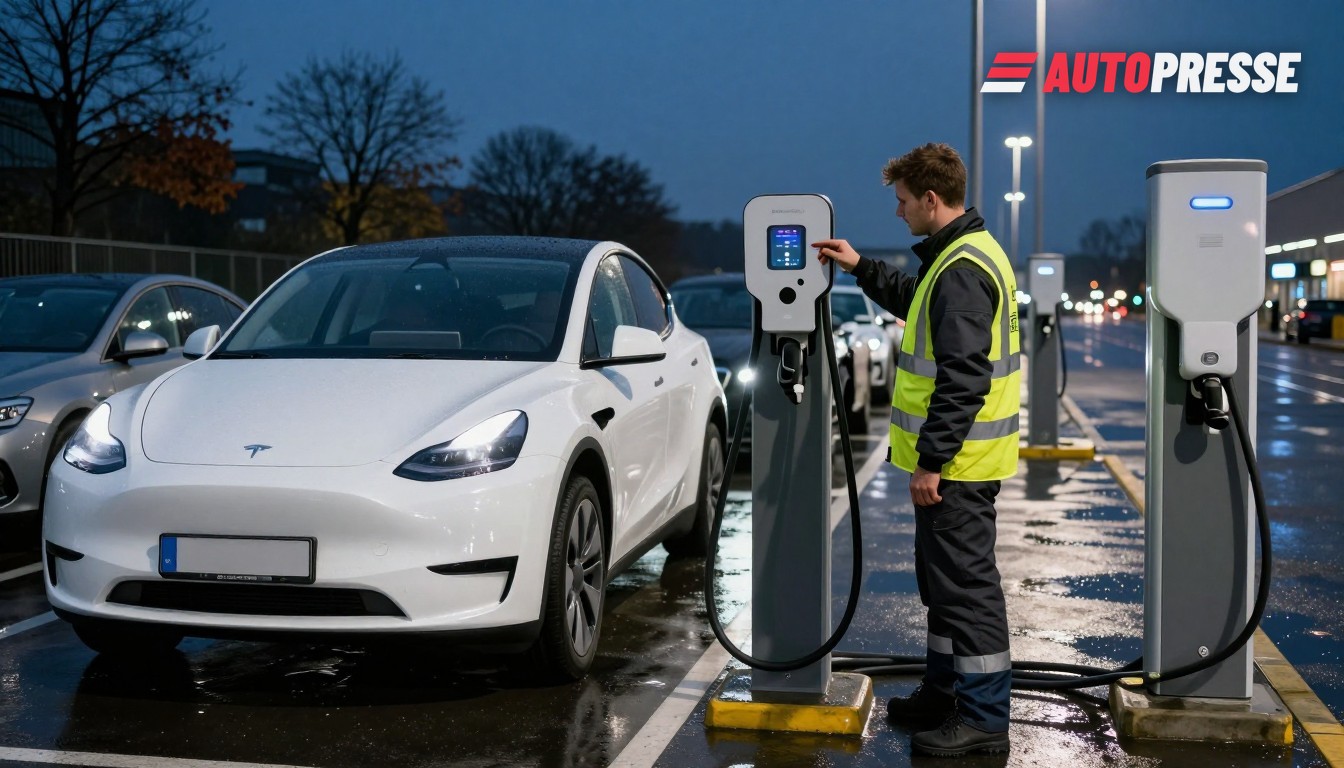
For CPOs and port‑ and depot‑owners this is now a compliance and technology programme, not just a rollout problem. Operators must (1) audit whether each public socket is within AFIR’s definition of “publicly accessible” and therefore in scope; (2) confirm who legally owns and who operates the point (the reporting duty follows that contractual allocation); (3) update station firmware and backend systems so that EN ISO 15118‑20, Plug&Charge and per‑minute/kWh price breakdowns are delivered to the national access points; and (4) adopt monitoring and reconciliation processes that prove dynamic data updates occur within the one‑minute window required by EU delegated rules. Failure in Germany risks six‑figure fines; in Austria it risks registration penalties, operational restrictions and reputational damage.
For fleet managers and drivers the immediate effect is greater price clarity at the socket and in roaming apps — but also a new administrative burden: fleet billing and route planning systems must ingest accurate real‑time price and availability feeds, or they will be operating on wrong assumptions. Municipalities and landlords must also check leases and procurement contracts now, because AFIR shifts many responsibilities through contract wording (who supplies the data, who pays for grid reinforcement, who keeps firmware updated).
Electric vehicle listings on WorldTrader24 →
Sources: European Commission (Mobility & Transport), Ampion GmbH