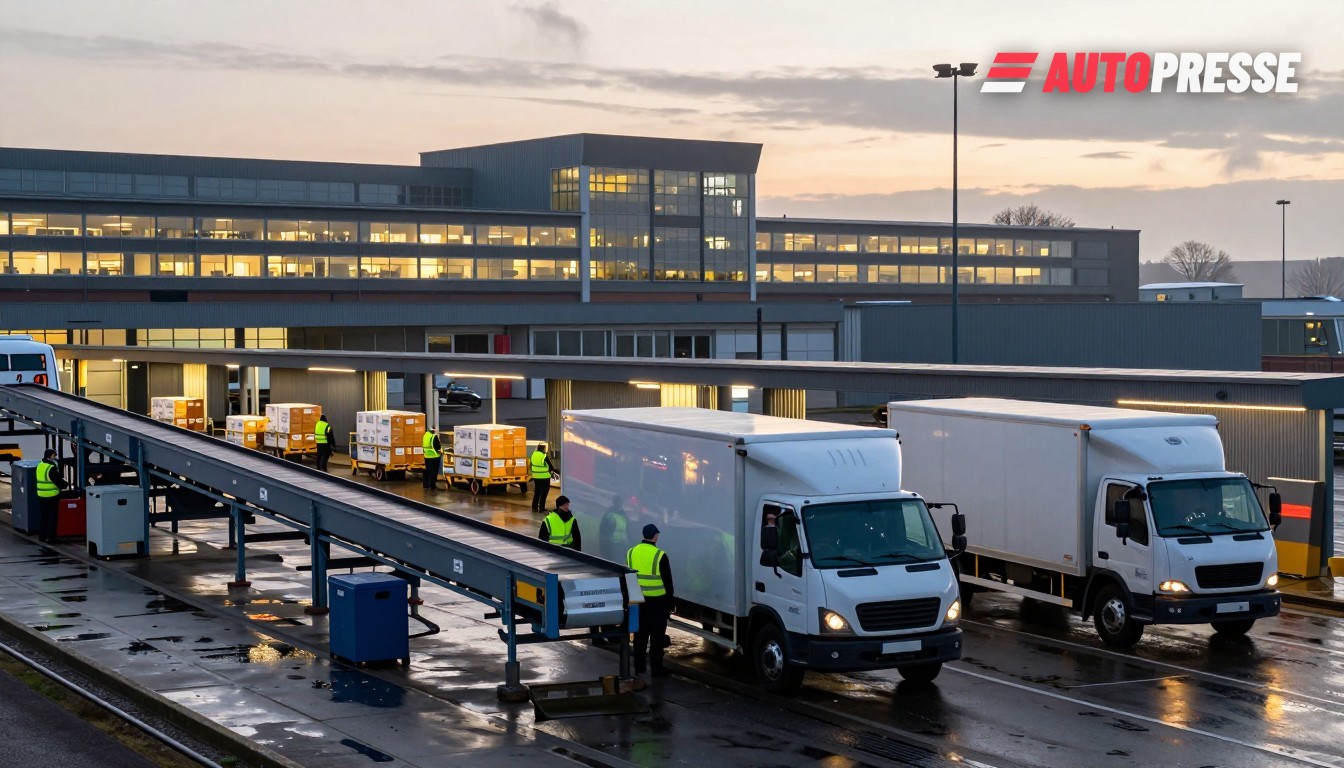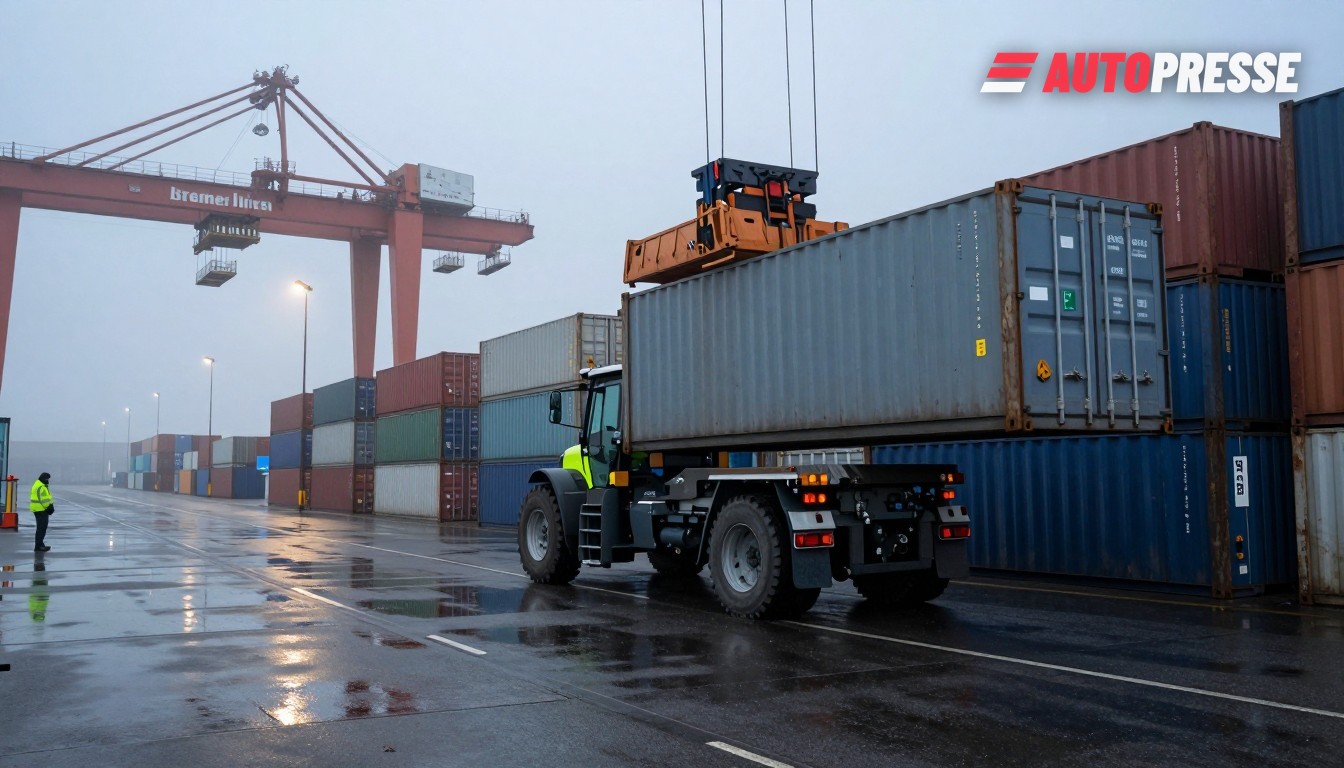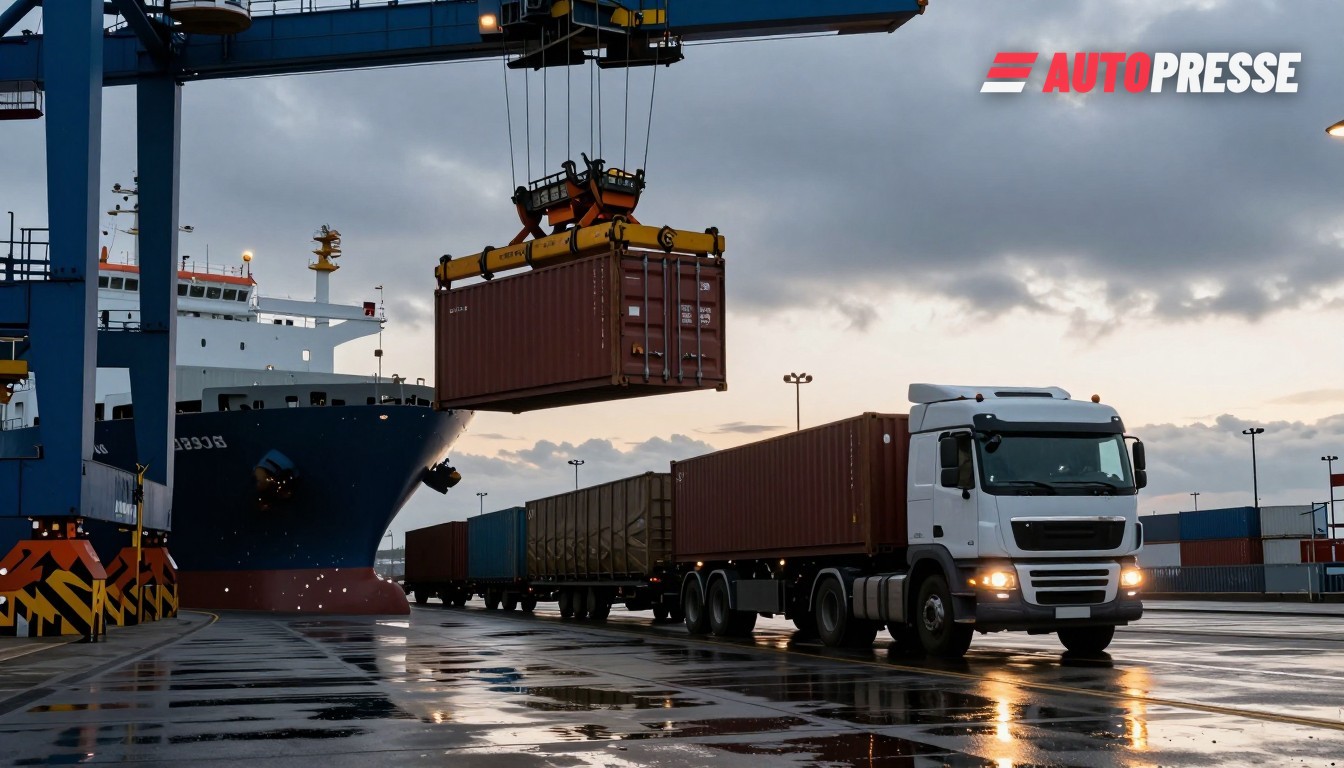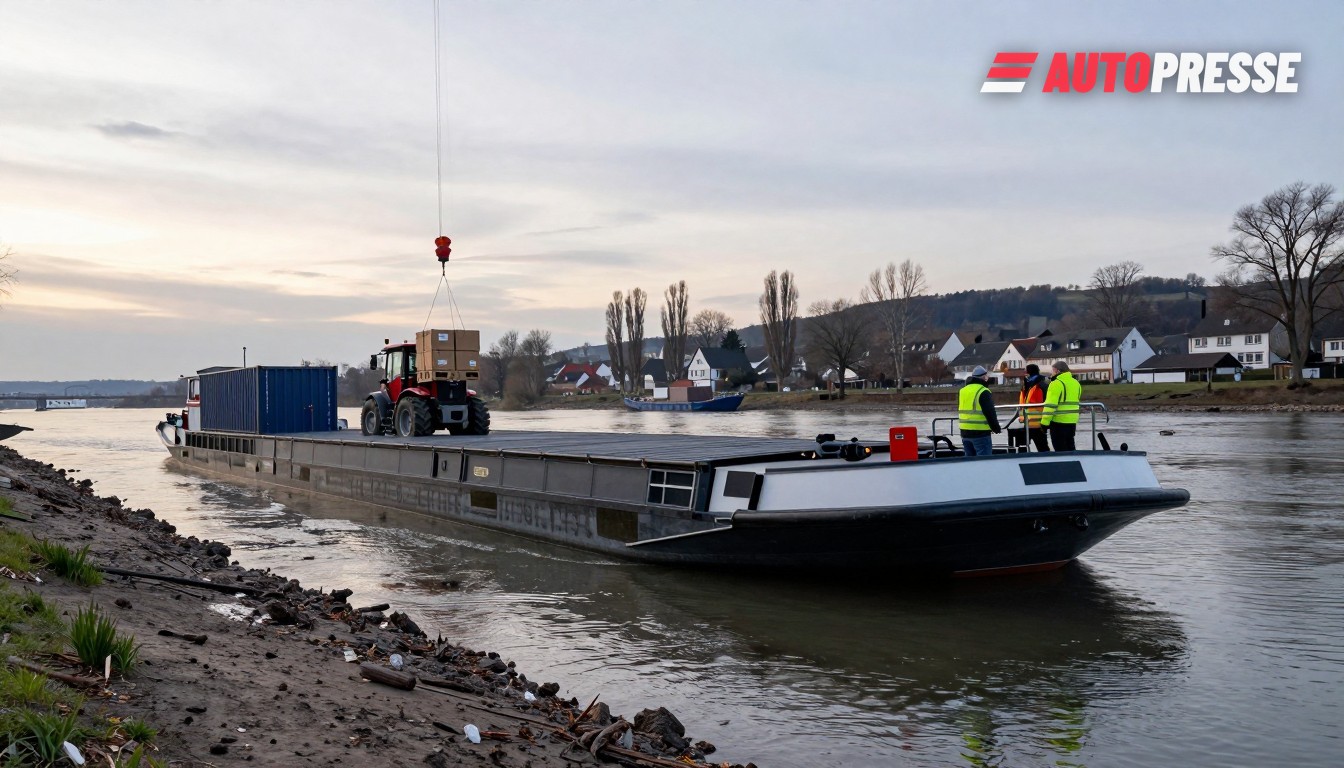
A prolonged low‑water season on the Rhine and Danube is again reshaping freight flows for Germany and Austria, forcing shippers to shift loads from barges to trucks and trains and to pay substantial surcharges. The change matters to OEMs, suppliers, dealers and logistics providers: higher hinterland costs, delayed inbound components and heavier road traffic are already visible on the ground.
What is happening on the rivers
Carriers and inland terminals have published step‑graded low‑water surcharge tables tied to river gauges such as Emmerich, Duisburg‑Ruhrort, Cologne and Kaub; Contargo’s customer notice (dated 16 November 2026) shows Kaub surcharges for 20' containers rising from €300 in the 80–71 cm band to €1,075 from 40 cm downward, and it warns transport cannot be guaranteed once levels hit defined stop thresholds.
Hapag‑Lloyd and other liner operators confirmed revised Rhine low‑water pass‑through surcharges effective from 1 November 2026 and reiterated that if key gauges fall below operational limits (for example: Emmerich ≤30 cm, Duisburg‑Ruhrort ≤180 cm, Cologne ≤105 cm, Kaub ≤80 cm) inland barge transport may not be possible.
The water‑level decline has concrete throughput effects: HHLA reports container throughput for the first nine months of 2026 at 4.446 million TEU — down 7.3% year‑on‑year — and cites operational disruption from upgrades and wider adjustments in goods flows; low‑water disruptions across the Rhine corridor add to that pressure.
Austria’s Danube: tonnages cut and replacement costs
On the Danube, Austrian reporting and industry groups recorded steep summer drops: Statistik Austria data quoted by BauernZeitung show July–August river tonnages fell by roughly 56% year‑on‑year in the summer of 2026, as low water and a local closure halted much transit traffic; as a result shippers re‑routed cargo by rail and road and paid noticeably higher unit costs.
viadonau and federal authorities have responded with targeted measures to secure navigation and to prepare alternative fairways and maintenance work, but operators warn that some adjustments — for instance partial loading of barges and higher charter rates — will persist while river levels remain low.
What this means for the market
For automotive and industrial supply chains the implications are immediate: inland‑port delays and low‑water surcharges lift landed costs for imported components and export logistics, squeezing margins or prompting buyers to accept longer lead times. Ports and terminals report lower container volumes and intermittent vessel delays, which amplify inventory risks for just‑in‑time production and for dealer deliveries.
Logistics providers and manufacturers face a simple triage: pay surcharges and keep river bookings where possible; switch to rail (capacity permitting) with higher tariffs and scheduling constraints; or shift to road and accept greater cost and emissions. Each choice pushes cost into the balance sheet or onto customers — and raises congestion on Germany’s motorways and at Austrian rail terminals.
Operationally, shippers should be tracking gauge forecasts daily, factoring LWS bands into contracts and pricing, and confirming carrier liabilities for delayed sailing dates. For councils and infrastructure planners the recurrence underlines the need for resilient intermodal links, shallower‑draft vessel options and operational contingency funded either commercially or via targeted public support.
WorldTrader24 B2B-Fahrzeugmarkt für Händler →
Sources: Contargo, HHLA, BauernZeitung / Statistik Austria