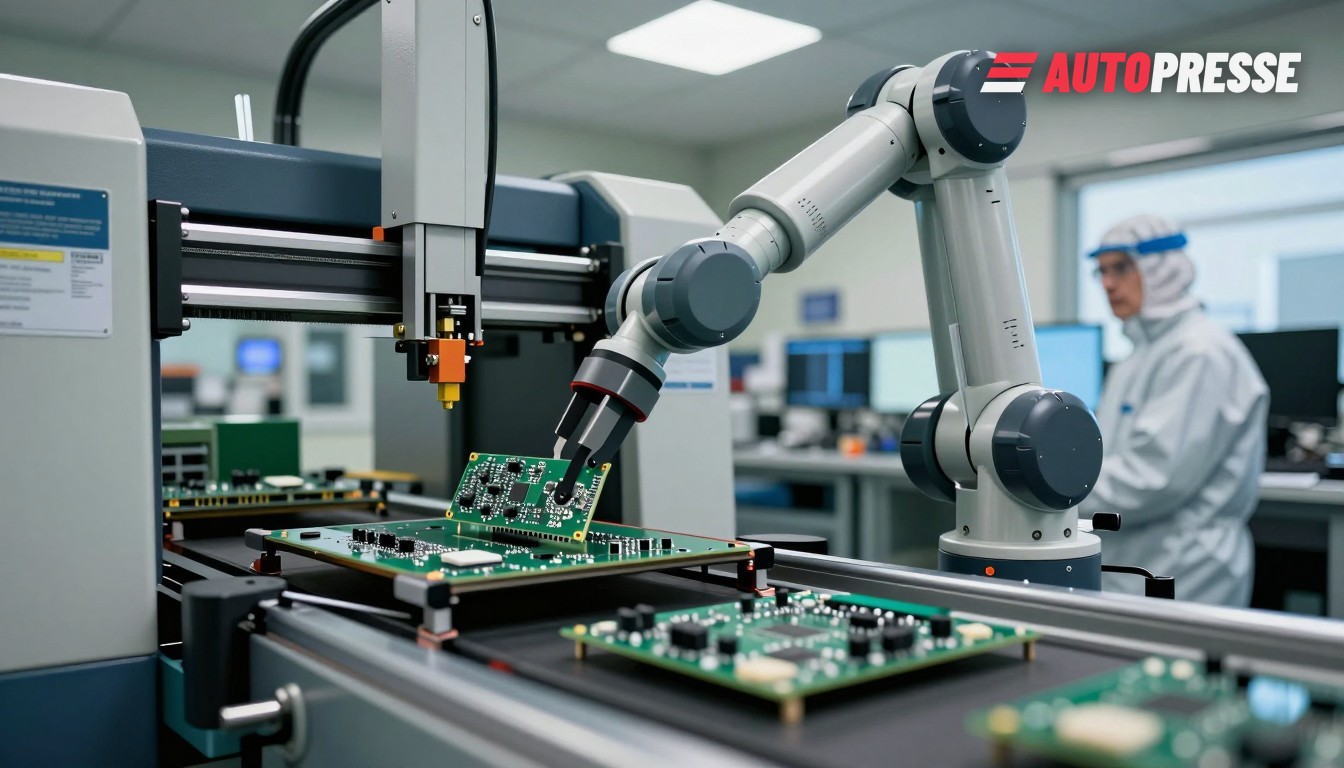
German and Austrian auto suppliers are confronting a new upstream bottleneck: printed‑circuit‑board (PCB) base materials such as FR‑4 laminates and glass cloth are on allocation, and lead times have widened from weeks to months. That squeeze — amplified by AI and data‑centre demand — is already changing procurement, component qualification and repair logistics for cars sold and serviced in Germany and Austria.
How long, how severe
Industry research shows the problem is not uniform but severe where it matters: investor slides and supplier reports in November 2026 put E‑glass laminate waits at 16–20 weeks for some suppliers, while other grades and suppliers report 8–12 weeks; higher‑performance grades can be longer if they are under allocation. The practical effect is simple: a circuit board cannot enter the factory until its laminate arrives, so the laminate wait becomes the board date.
Consultancy analysis and executive briefings find the pressure has spread from niche, high‑performance laminates into standard FR‑4 grades and into other electronic materials (copper, passives), producing material inflation and extended lead times through 2027; Roland Berger notes near‑term relief is unlikely before the second half of 2027 and models material inflation of roughly 25% for 2026 with further pressure into 2027.
How German and Austrian suppliers are reacting
Purchasers and board makers in Germany and Austria are taking a range of steps: reallocating existing quotas, qualifying substitute laminates, co‑designing panel formats to save material, and widening the approved vendor list — but qualification takes time and engineering hours. Germany’s electronics industry association (FED) warned in July 2026 that allocation schemes by laminate makers are being used and that stock levels are falling, explicitly citing the AI boom as a driver of higher demand.
Austrian integrators are especially exposed because local PCB fabrication is limited: market analysis estimates Austria imports roughly 75–90% of automotive PCBs, leaving Austrian tier‑1 integrators and module houses sensitive to any interruption in imports from Germany, Central Europe or Asia. That import dependence means even modest delays upstream become visible within weeks at assembly plants and in aftermarket repairs.
What this means for the market
For drivers and buyers: longer lead times for controllers, infotainment units or ADAS modules can translate into model launch slippages, longer waiting lists and rising vehicle option prices as OEMs and Tier‑1s try to push material inflation into contracts. For dealers and workshops: spare‑part availability and repair lead times for electronic modules will lengthen, complicating used‑car refurb and warranty work. For employees: procurement, test and quality teams face higher workload during requalification and supplier diversification. The electronics industry body has issued an alert and buyers are already prioritising strategic long‑term purchase contracts and engineering rework to survive allocation rules.
Practical mitigation is visible now: where possible, manufacturers shorten product variants, adopt more flexible panel and stack‑up specifications, and increase inventory of critical base materials — measures that raise near‑term costs but reduce the worst operational risk. Expect OEMs and higher‑tier suppliers in Germany and Austria to accelerate design‑for‑substitutability and to press for multi‑source agreements with laminate makers as a permanent sourcing change.
WorldTrader24 B2B-Fahrzeugmarkt für Händler anzeigen →
Sources: FED (Germany), Global Electronics Association, Roland Berger, MPBxChange, IndexBox