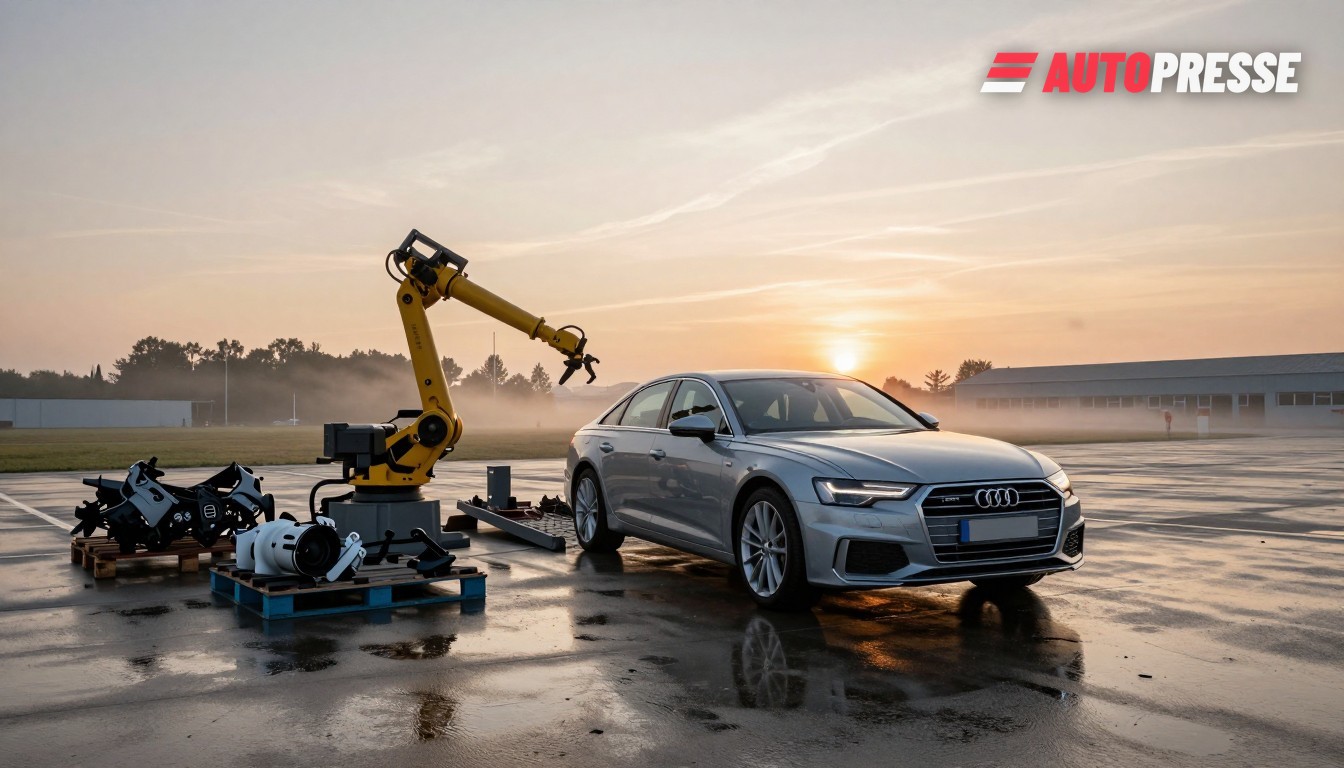
Germany and Austria’s supplier base is moving from crisis management to circular opportunity — and Audi’s new unit makes the shift unavoidably concrete for drivers, dealers and parts workshops. On 13 November 2026 Audi announced the creation of Audi Circular Solutions GmbH, a wholly owned subsidiary that will start operations in early 2027 and combine vehicle buy‑back, dismantling, used‑parts sales and access to recycled raw materials for the Audi supply chain.
Circular rules meet company action
The timing is not accidental: the EU’s new End‑of‑Life Vehicles rules — adopted to boost reuse and recycled content in cars — entered into force in mid‑2026 and require design and recovery steps that push OEMs and suppliers to reconfigure logistics and sourcing. At national level Germany adopted a National Circular Economy Strategy earlier in 2026 and Austria is running a series of FFG‑funded pilot projects aimed at sorting, reuse and industrial recycling for vehicles, creating public funding and technical roadmaps for industry players.
Audi’s new unit is explicitly pitched as a business, not only a compliance exercise: the company says Audi Circular Solutions will first launch a central sales channel for used genuine parts, then add vehicle purchases, dismantling and selected secondary‑raw‑material supplies to Audi’s procurement. The aim, Audi states, is to “turn the circular economy into a business model” and secure access to recycled inputs for production. Operations are planned to begin in early 2027.
Technology and pilots: Austria’s lighting group shows the way
On the supplier side Austria’s ZKW Group underlines how parts makers can combine product innovation with circular ambitions. In mid‑November 2026 ZKW published results from the FFG‑funded “Roadguard” demonstrator — an AI‑based lighting and warning system developed with research partners — showing how smarter components can support safety and enable new, serviceable modules that are easier to recover and reuse. ZKW frames this as an innovation push that sits alongside cost and competitiveness measures in Austria.
Meanwhile Austrian and German research programmes — listed in the FFG database and national project portfolios — are funding concrete pilots on battery reuse, parts sorting and plastics recapture that supply authorities say will lower raw‑material dependence and build industrial recycling capacity locally. These projects include short‑term action plans and roadmaps intended to help SMEs and mid‑tier suppliers industrialise recycling processes.
What this means for the market
For OEM procurement and Tier‑1 buyers the message is clear: circularity will become an explicit sourcing channel. Expect more OEM‑run used‑parts platforms, larger reverse‑logistics contracts and new supplier requirements for reclaimed content and documented dismantling. That will create commercial opportunities for firms able to scale dismantling, remanufacture and high‑quality sorting — and tighten margins for suppliers that rely on low‑cost virgin inputs. The regulatory framework from the EU and national strategies gives both carrots (funding, procurement) and sticks (reuse and content rules), so the economics for German and Austrian suppliers will increasingly depend on speed to industrialise recovery chains.
For dealerships and independent workshops the rise of OEM‑run used‑parts channels means new access to certified reman parts but also competitive pressure: workshops that add skills in dismantling inspection and certified reuse will capture more margin; those that do not may see parts cost pressure. For regional labour markets — especially in Austria, where circular tech projects are concentrated — public funding and demonstrators offer retraining and new plant opportunities, but implementation is uneven and will favour clusters with logistics and recycling assets.
Electric vehicle listings on WorldTrader24 →
Sources: AUDI, European Commission / Consilium, German Federal Government, FFG (Austrian Research Promotion Agency), ZKW Group, OECD