Germany and Austria’s supplier landscape is being recut not only by market cycles but by targeted public cash: the European Commission on 27 October 2026 authorised €319 million in Austrian state support for Infineon’s Villach upgrade under the EU Chips Act objectives, and Brussels cleared a €100 million Austrian cleantech support scheme on 5 June 2026. For drivers, dealers and parts workers across both countries, that means more local capacity for chips and cleantech components — but also tougher competition for bank funding and contracts.
Infineon’s Villach tie‑up: chips, grants and research
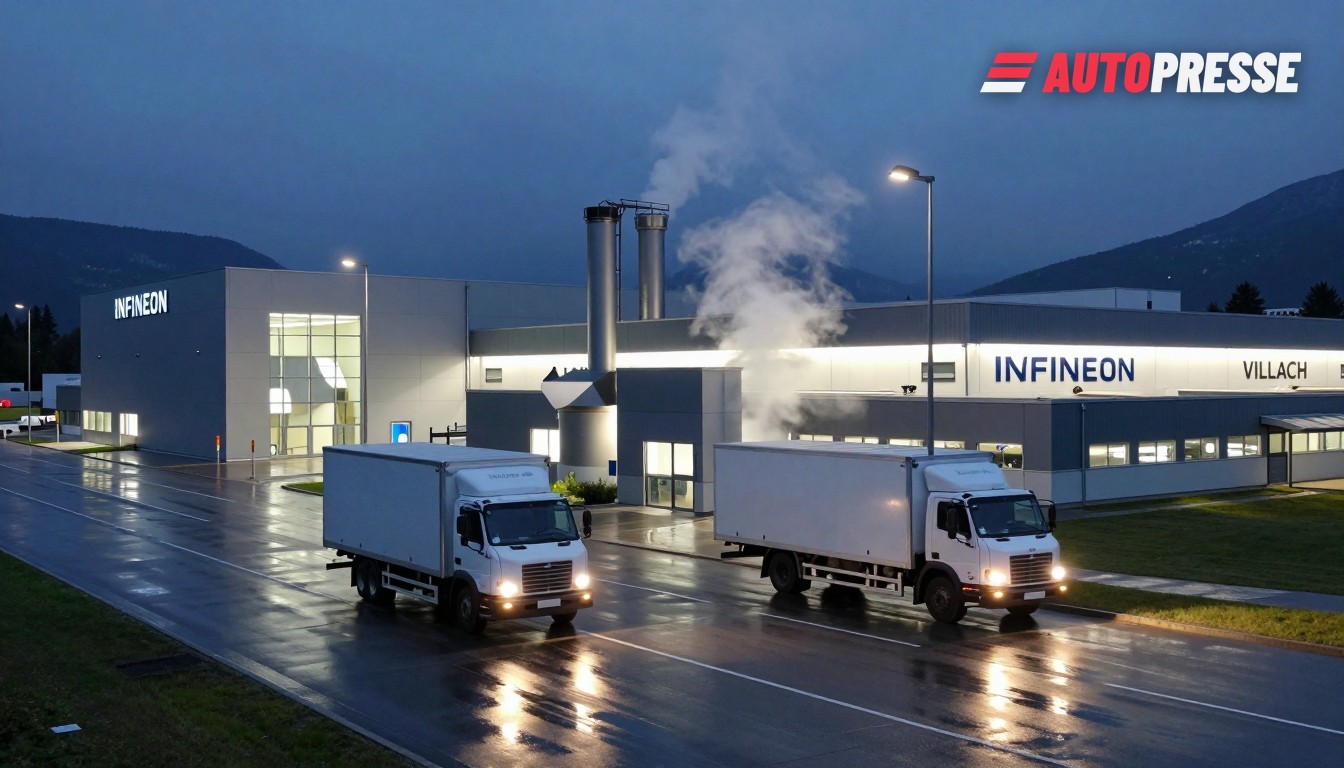
The Infineon decision published by the Commission on 27 October 2026 explicitly frames the €319m approval as support for upgrading and modernising the Villach semiconductor facility to strengthen Europe’s supply chain. The measure is presented as a first‑of‑a‑kind manufacturing support in Austria under the EU’s semiconductor strategy.
Infineon Technologies Austria also reported project milestones in November 2026: the company said partners completed the EU research project “Listen2Future” on 17 November 2026, demonstrating compact acoustic sensor technologies with applications across medicine, energy and industry — signalling that Villach is stacking near‑term product and research bets alongside factory upgrades.
Cleantech cash: €100m scheme to steer manufacturing investment
The European Commission’s approval of a €100 million Austrian cleantech manufacturing scheme on 5 June 2026 gives Austrian suppliers direct access to subsidised loans and grants aimed at low‑carbon production and components (the decision was published as part of the Commission’s list of cases where it raised no objections). The scheme was notified and approved under the Clean Industrial Deal State Aid Framework and is intended to accelerate manufacturing capacity for components relevant to electrification and industrial decarbonisation.
Independent consultancy Berylls’ November 2026 analysis underlines why the public cash is timely: its sector review (18 November 2026) shows supplier revenues under pressure and warns margins have compressed industry‑wide, making selective public support and early access to capital decisive for which plants and product lines survive in Europe.
What this means for the market
For suppliers: approval of both semiconductor aid and cleantech schemes lowers the upfront risk of large, capital‑intensive projects in Austria and makes investments in Villach‑scale capacity and low‑carbon tooling more bankable — but it also raises the bar for German sites that cannot access the same national envelopes.
For OEMs and buyers: more local chip capacity in Villach reduces some single‑source exposure for ADAS and power‑electronics modules; buyers should expect tender dynamics to shift toward suppliers who co‑locate R&D and qualification activities near Villach and Austrian cleantech hubs.
For employees and regions: the cleantech and chip support channels are likely to keep higher‑value activity in Austria’s industrial clusters, strengthening skilled‑labour demand in Carinthia and neighbouring regions even as German tiers face margin pressure and consolidation. Berylls’ November snapshot warns that weak margins across Europe mean public aid and focused bank lending will determine which plants secure long‑term order books.
In short: the recent EU approvals do not solve the sector’s profitability challenges, but they change the geography of investment. Austria has won clearer, EU‑backed levers to attract semiconductor and cleantech capital; German suppliers that cannot tap equivalent schemes will need faster cost or product pivots to stay competitive.
WorldTrader24 B2B vehicle marketplace for dealers →
Sources: European Commission, Infineon Technologies Austria, Berylls