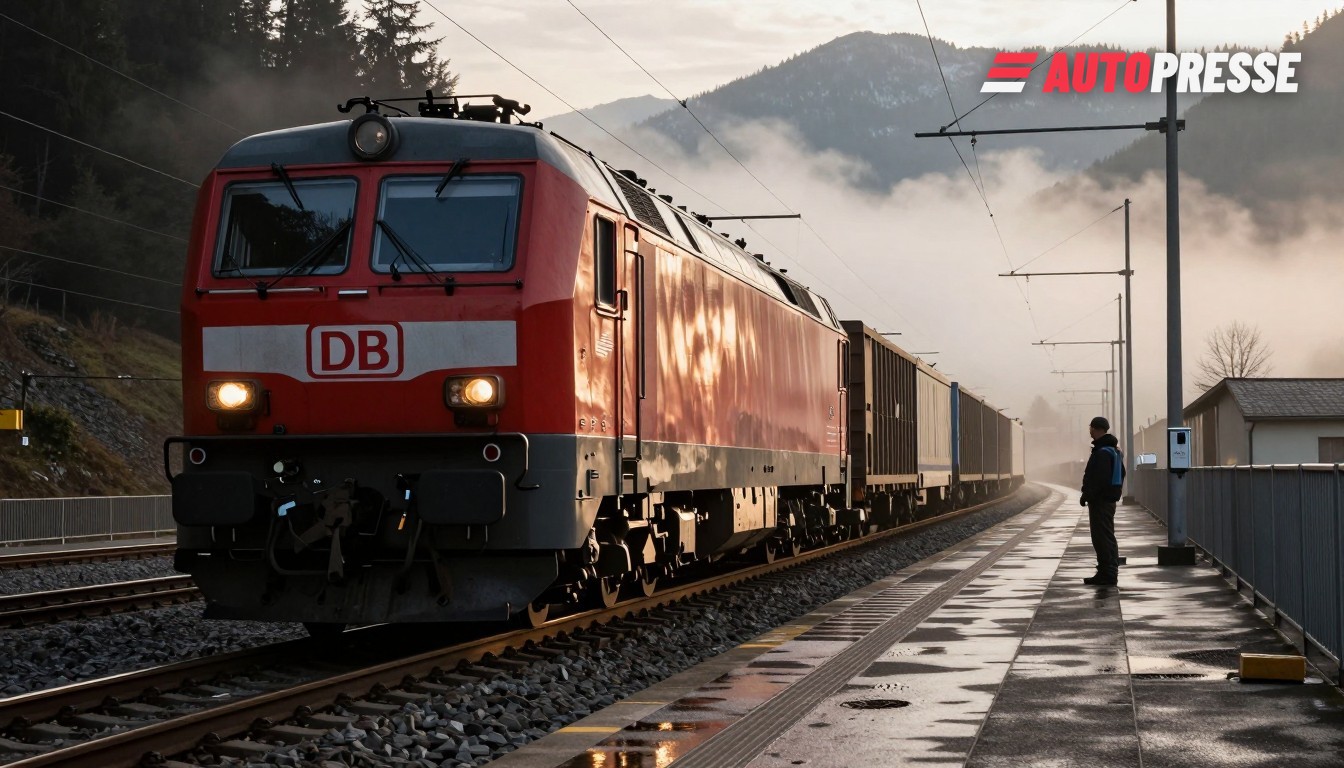
Germany–Austria rail freight has a new lever: by using distributed power (locomotives placed at both the front and rear of long trains) DB Cargo reports capacity uplifts of up to 30% on industrial routes between the two countries while running the same number of trains — a technical and operational change that can shift significant tonnage off the roads.
What DB Cargo changed and why it matters
The approach — widely described in recent combined‑transport briefings — uses distributed traction to increase axle load, reduce in‑train forces and raise allowable gross tonnages on steep or constricted Alpine and southern German corridors. DB Cargo’s pilots and early roll‑outs claim industrial customers can move substantially more freight per service without immediate increases in pathing or weekly train slots.
Those gains are not purely a locomotive swap: they form part of DB Cargo’s broader restructuring and efficiency programme approved under the German state‑aid decision that sets out new production models, scheduling changes and IT standardisation for rail freight from 2026 onward. The EU decision documents and accompanying material highlight increased train utilisation and revised production concepts as central to future capacity improvements.
Infrastructure and operational limits
Distributed power raises payload per train but does not remove constraints on the network: track gradients, axle‑load restrictions, signalling, pathing and terminal handling still cap how much additional traffic can be absorbed. Independent rail‑research and cost‑benefit assessments warn that valuable capacity gains on paper require parallel investments in sidings, electrification resiliency and terminal productivity to avoid new bottlenecks.
In cross‑border flows between Germany and Austria this is particularly relevant: steep Alpine approaches and busy hub nodes (single‑track sections, yard capacity at border interchanges) mean some corridors will benefit more than others, and shippers should expect phased improvements rather than an instant, network‑wide surge.
What this means for the market
For OEMs, tier‑1 suppliers and aftermarket players operating just‑in‑time or just‑in‑sequence logistics to German and Austrian plants, an effective 20–30% uplift on selected block‑train services can reduce reliance on trucks for long‑haul legs and lower variable transport cost per tonne — provided terminal throughput, last‑mile pick‑up and depot handling are adapted. But gains will be uneven: routes with tight pathing, limited electrification or short passing loops will still require road or short‑haul rail feeders.
For logistics providers and terminals the commercial opportunity is clear: a higher‑payload rail product increases the attractiveness of intermodal offers and can be sold as a reliability and CO₂‑reduction premium. Yet to capture that value operators must invest in driver training, Distributed Power System maintenance skills, and in terminal automation that reduces dwell and shunting time. The EU‑level restructuring framework that backs DB Cargo’s changes also expects complementary investment from infrastructure managers and national programmes.
Finally, shippers should re‑examine network design now: re‑routing consignments to corridors that support distributed power trains, consolidating flows into longer block trains and negotiating longer lead times for lighter‑value, high‑volume components will unlock the benefits faster than waiting for full network modernisation.
Immediate vehicle listings on WorldTrader24 →
Sources: UIRR combined‑transport brief (Q3.2026), European Commission / EUR‑Lex (DB Cargo state‑aid decision), Rail‑Research cost‑benefit analysis.