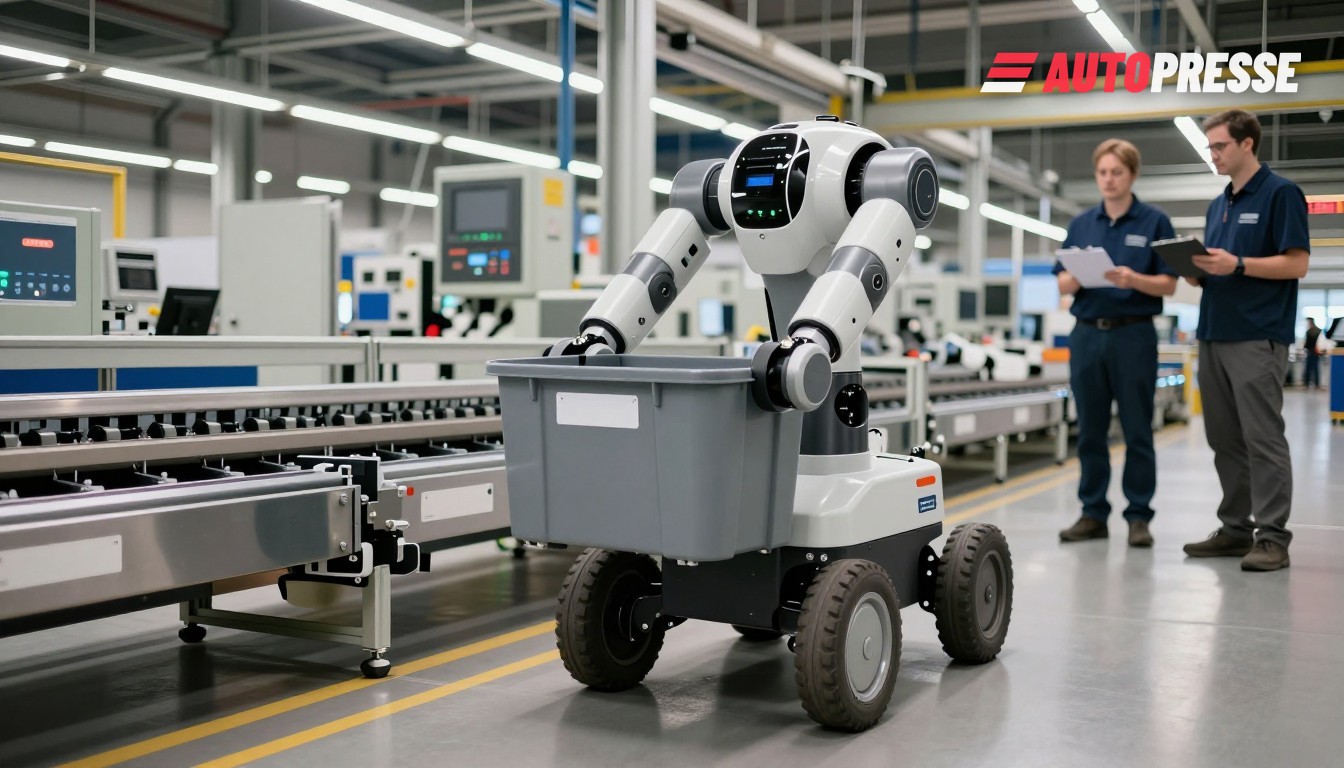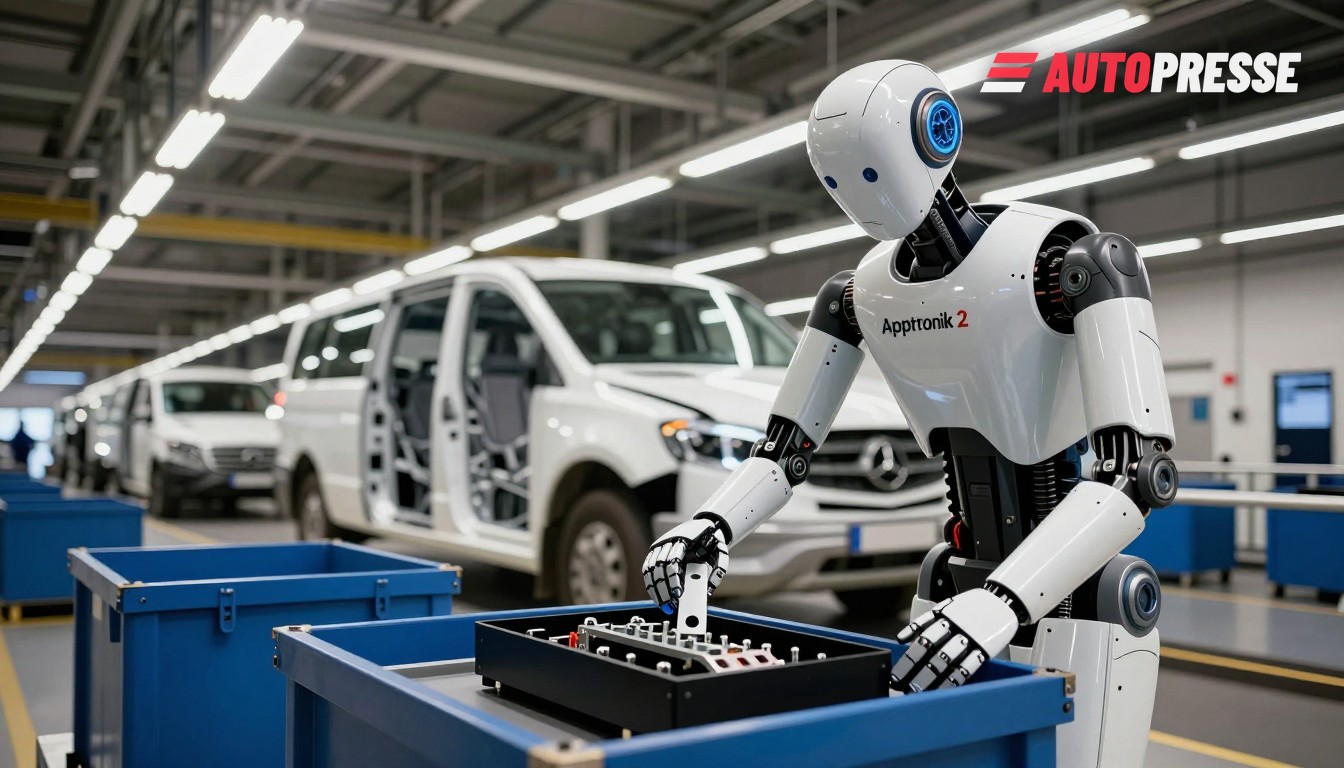
Germany’s carmakers are seeing a new kind of shop‑floor helper: vision‑language AI running humanoid robots on live assembly lines. Last month Google DeepMind published Gemini Robotics 2.5 and reported that Apptronik’s Apollo 2 humanoid used that model to sort and sequence metal brackets on active Mercedes‑Benz lines — including the Sindelfingen plant in Germany — with a published 96% success rate on the kitting task. This matters for drivers, dealers and factory workers across Germany and Austria because it signals real productivity gains at core manufacturing sites, not only lab demos.
What happened at Sindelfingen
Google DeepMind’s blog entry (published 10 November 2026) says Gemini Robotics 2.5 was tested with Apptronik’s Apollo 2 on live Mercedes‑Benz kitting stations in Kecskemét (Hungary) and Sindelfingen (Germany), where the robot picked parts from bulk bins and placed them into per‑vehicle sequencing trays. DeepMind reported the 96% figure as the headline result and said the model had been evaluated across more than 200 tasks, with task success rates 30–100% higher than the previous generation and task completion 20–30% faster in many cases.
What this means for the market
If humanoids can handle repetitive, dextrous kitting reliably, suppliers and OEMs can redesign line staffing, buffer inventory and logistics around new automation options. Faster, more capable robots reduce the manual strain on shift teams and could improve first‑time assembly rates — giving suppliers and plants a measurable route to cut cycle time and improve line uptime. Reported gains such as the 20–30% speed improvement are the figures procurement and factory planners will test in pilot‑to‑scale decisions.
But managers and unions will want hard numbers from longer runs: most published accounts (and DeepMind’s own post) do not disclose the trial sample size, intervention rate or how often a human operator had to step in. Independent verification over sustained production runs will be the market’s next test before widespread rollout.
For German and Austrian suppliers the short‑term effect is clear: expect renewed investment conversations around flexible automation, robot‑friendly jigs and parts presentation, plus a fresh demand for skilled technicians who can run, monitor and retrain these AI models inside the plant. Longer term, reliable physical AI could change the economics of low‑volume sequencing work in favour of local production rather than distant, lower‑cost sourcing.
Smart dealer and workshop AI — voice agents, market scanners and agentic assistants — will play a complementary role outside the factory, handling bookings, lead qualification and local marketing while parts‑kitting robots run the line. Solutions such as those developed by DaVinci AI (davinci‑ai.ai) — autonomous multi‑agent systems, phone and voice agents that qualify leads and book appointments, market scanning and rapid vehicle image/video production — help dealers and importers put these workflows into practice so that manufacturing gains are matched by smoother sales and aftersales operations.
Mercedes Benz listings on WorldTrader24 →
Sources: Google DeepMind, InfoQ