Germany is seeing a fresh wave of battery‑swap pilots across vehicle classes — heavy trucks, passenger cars and even fleets of e‑bikes — that could change how fleets, dealers and towns plan charging and asset ownership. Recent, verifiable moves include a second‑generation roll‑out from the eHaul/TU Berlin truck project, Nio opening another Power Swap station in Germany in October 2026, and Yamaha’s ENYRING announcing an e‑bike swap pilot in Berlin with aggressive station targets. These developments matter for German and Austrian operators because each vehicle class (trucks, cars, micromobility) brings different station design, ownership and standardisation challenges.
What has changed on the ground
Heavy‑duty swapping has moved from lab to logistics. The eHaul spin‑off (TU Berlin) has documented a two‑year practical test of an automated swap station near Lübbenau (Brandenburg) that began operation in late November 2023 and is now feeding learnings into a second‑generation, field‑ready system presented in 2026. Project partners report swap times of a few minutes and technical specifications shaped around DIN SPEC 91533. These tests show swapping can be compatible with real logistics operations.
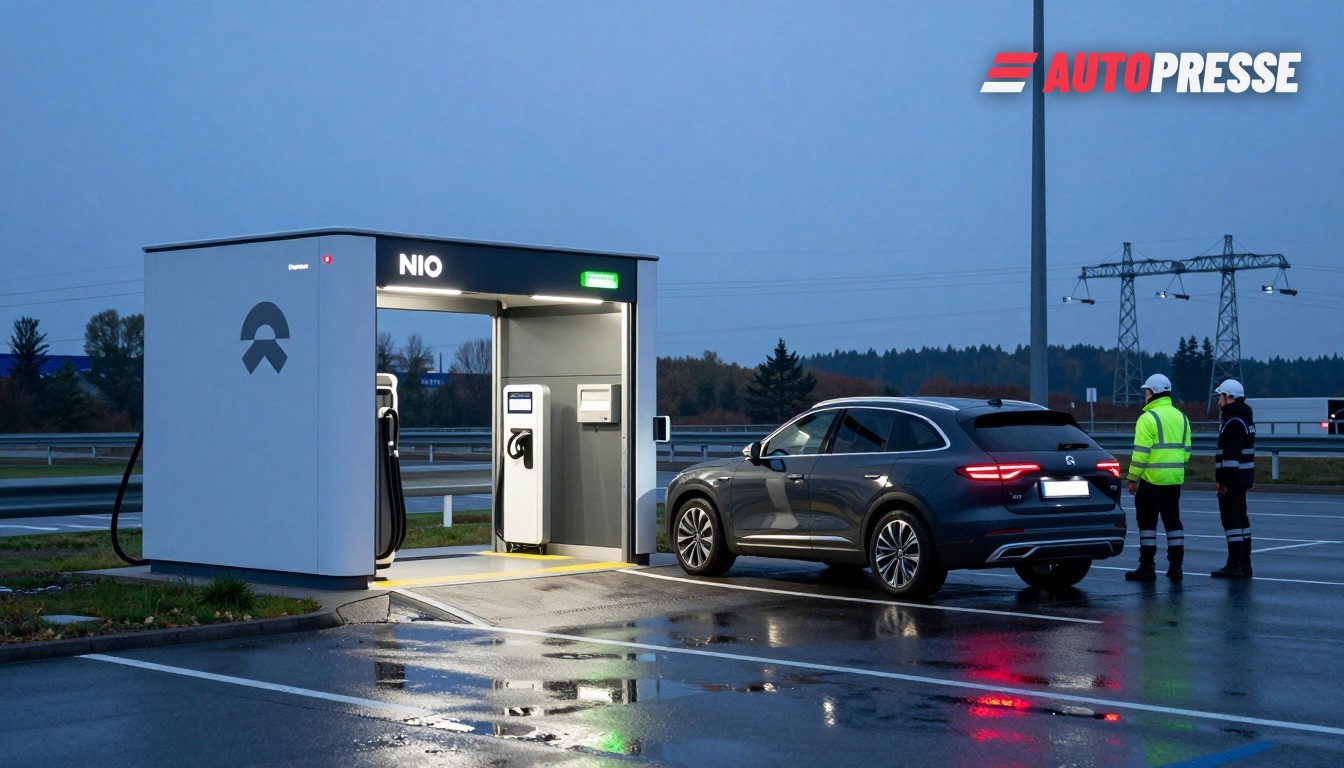
For passenger cars the picture is mixed but active. Chinese swap‑operator NIO added a new Power Swap station in Germany in late October 2026 (Staufenberg–Lutterberg on the A7), returning to small‑scale European openings after a slower 2026 rollout; NIO’s European network passed 300,000 cumulative swaps in June 2026. NIO’s experience underlines that car swapping works if there are enough compatible customers and a business model for battery assets.
Micromobility is joining the experiment. Yamaha’s ENYRING announced a Berlin pilot for e‑bike battery swapping in November 2026, aiming to deploy dozens of swap points and target fleet partners — a use case where standardised, small batteries and dense city deployment make swapping commercially attractive.
Standards, scale and where Austria sits
Europe-wide standardisation has advanced: IEC published battery‑swap system standards (IEC 62840 series) in 2025 and Fraunhofer IML’s white paper and other EU studies note active work to align interfaces and safety rules for truck and some light‑vehicle swap concepts. Yet the International Energy Agency (IEA) and Fraunhofer analyses stress that most large‑scale swapping today remains concentrated in China, meaning Europe must solve financing, asset‑ownership and interoperability before swaps scale widely. Austria has followed pilots in neighbouring Germany closely but — unlike dense Chinese corridors — faces a sparser market that favours targeted fleet and micromobility swap deployments over broad public networks.
What this means for the market
Fleet operators and logistics planners should watch truck‑swap pilots closely: automated swap stations can cut dwell time on routes and reduce grid peaks at depots, but require compatible vehicle architectures and pooled battery assets. Passenger‑car swapping will need clear commercial models for battery ownership before it becomes mainstream in Germany or Austria. Micromobility and dedicated fleet services (municipal bikes, delivery fleets) are the nearest‑term winners because of standardised, small packs and predictable routes. Policymakers must prioritise interoperability, insurance and asset‑accounting rules to attract private investment; operators should model total‑cost‑of‑ownership including battery‑asset leasing to test swap viability.
Electric vehicle listings on WorldTrader24 →
Sources: TU Berlin (eHaul), EV.com (NIO), Yamaha/ENYRING, Fraunhofer IML, IEA Global EV Outlook 2026