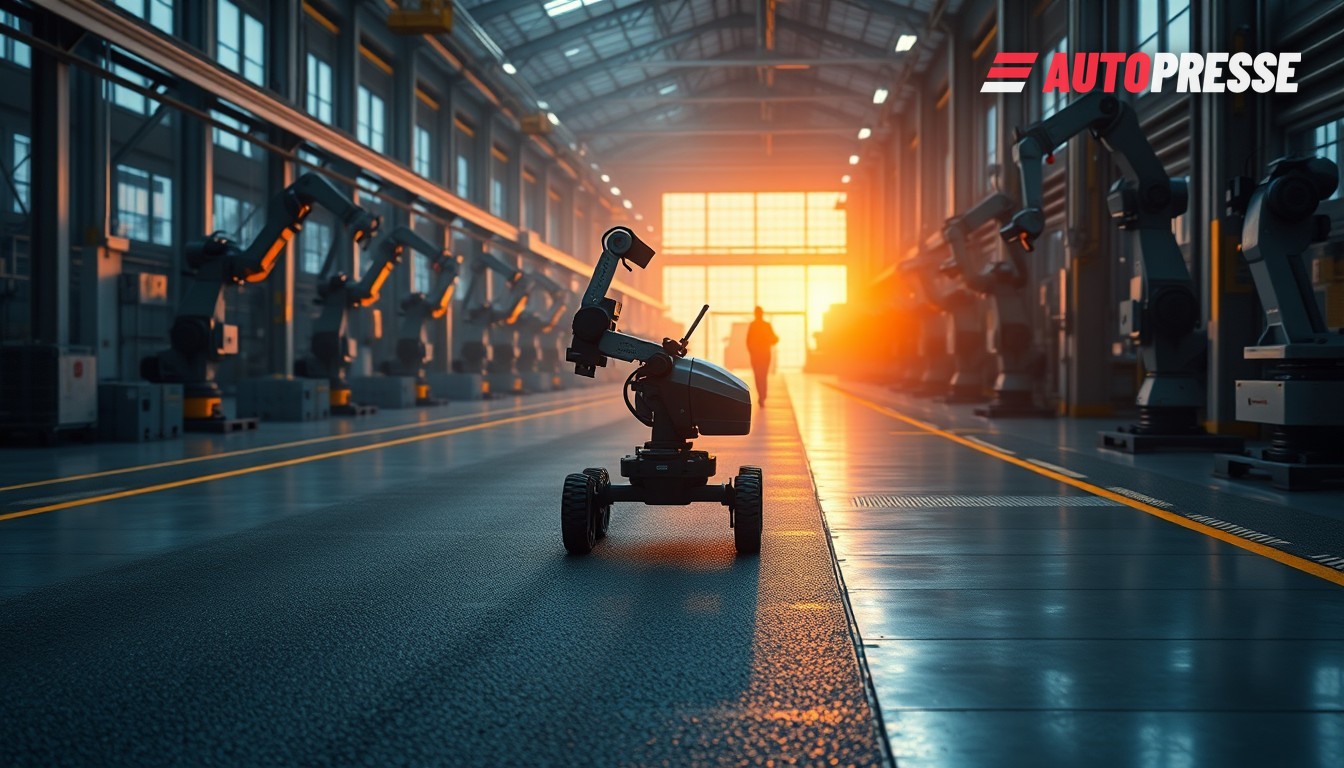
German testing giant TÜV SÜD and consultancy Accenture this week presented a joint “Physical AI Safety Suite” concept at NVIDIA GTC Berlin (announced Oct. 21, demonstrated Oct. 22). The package combines digital twins, AI agents and NVIDIA simulation tools to speed independent safety assessment of physical‑AI systems such as autonomous mobile robots (AMRs) and vision‑driven manipulators used in automotive production and logistics — a direct answer to speed and safety bottlenecks faced by carmakers and suppliers in Germany and Austria.
What the Safety Suite does
The concept shifts parts of the traditional, manual certification workflow into simulation: factory layouts, mixed human‑robot zones and AMR routes are validated in Omniverse and Isaac Sim models before hardware touches the shop floor. TÜV SÜD and Accenture say the digital process can reduce the time to bring an automated facility online by roughly 30% compared with conventional iteration and on‑site testing. The partners demonstrated the approach at Accenture’s stand (#3056) and in a joint session at GTC Berlin on Oct. 22.
“Too often, companies test automation concepts against industry standards after the equipment, layouts and workflows have already been established,” said Sarat Maitin, Supply Chain and Engineering Lead for Accenture in Central and Eastern Europe. He told attendees that moving assessments earlier — into the digital twin phase — helps avoid costly rework and supports continuous monitoring of deployed systems.
Why carmakers and suppliers should care
German and Austrian vehicle plants are already increasing use of physical AI for intralogistics, parts sequencing and automated in‑plant driving — a trend underlined by an industry milestone announced Oct. 27: BMW Group and partner Embotech said automated driving technology has moved one million production vehicles across four BMW sites in the UK and Germany, operating around the clock to shift cars inside factories. Faster, standardized certification could make similar AMR and automated‑driving deployments easier to scale at other German and Austrian plants.