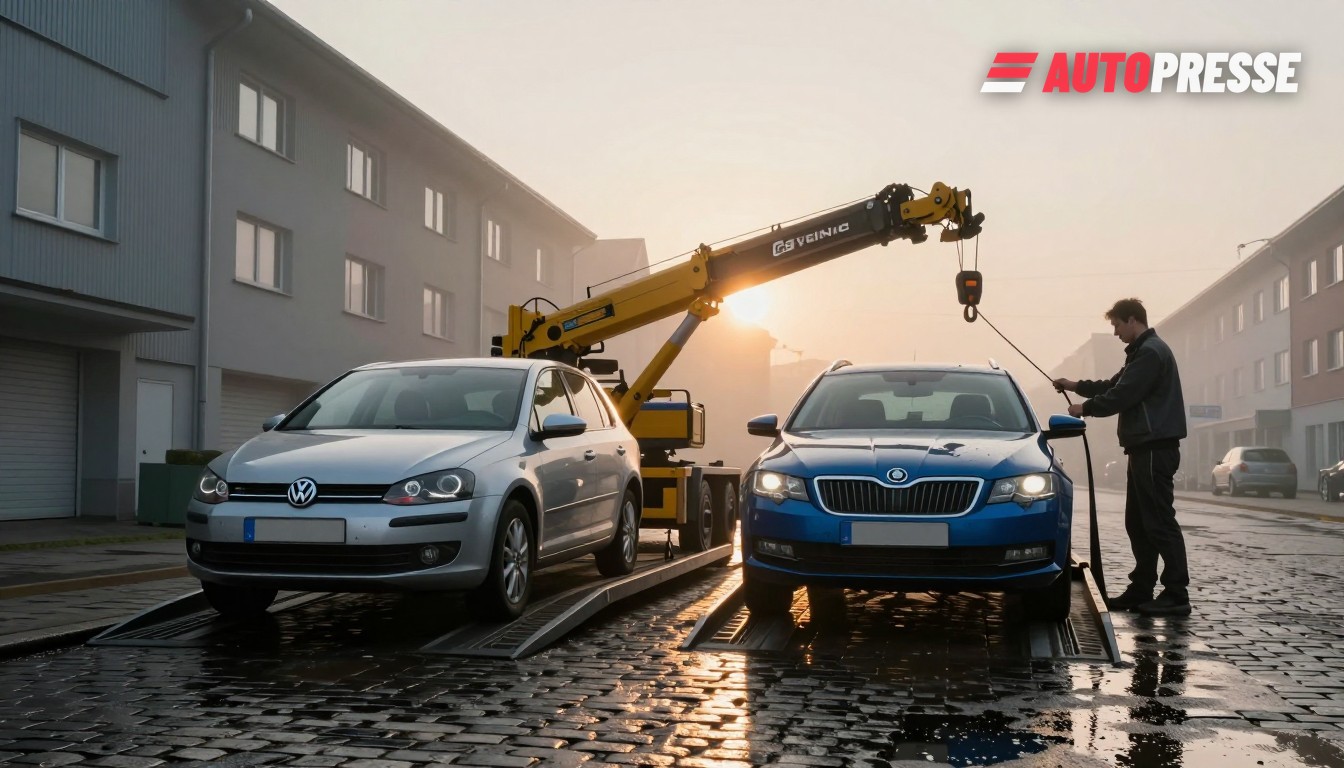
Buyers, dealers and workshop staff in Germany and Austria face a practical but often overlooked gap right now: dealer asking prices in Austria are running noticeably below comparable German listings, even as new‑car activity in Austria picks up through 2026. That pricing spread matters for private buyers, trade‑ins, export arbitrage and dealer margins across the two markets.
Numbers and recent shifts
On 16 November 2026 EuroCarIndex reported the median dealer asking price in Austria at €25,800 across 34,497 dealer adverts; the site also lists popular dealer medians such as Volkswagen Golf €20,000 and Škoda Octavia €21,000.
German listing snapshots give a higher central value: Wiveda’s price index shows the median asking price of active German listings at €27,490 as of 1 November 2026, while AutoScout24’s AGPI average for October 2026 was €26,728 (down −0.56% month‑on‑month). Those figures show Germany’s dealer asks sit several hundred to a couple of thousand euros above Austria’s median.
The used market itself remains active but with limited upward momentum: DAT reports 540,596 ownership transfers in October 2026 and 5,347,462 transfers year‑to‑date, noting that used EVs have moved from “languishing” to sought‑after in recent months while residual values differ by powertrain (three‑year BEVs at about 49.5% of former list price, petrol cars around 57.9%).
Cross‑border flows and dealer supply
Platforms and remarketers are responding: OPENLANE says it has expanded its German dealer offering and increased auction volumes — boosting flow of young dealer cars and making cross‑border and wholesale sourcing easier for dealers in both countries. That rise in centralised dealer supply increases the speed with which price differentials are traded across borders.
At the same time Austria’s new‑car market showed strength in 2026: Statistik Austria reported 265,282 passenger‑car new registrations in January–October 2026 (+10.7% year‑on‑year) and that 67.6% of new cars had an alternative drive (electric/hybrid) over the same period — a backdrop that keeps dealer pipelines busy with young used stock entering the market.
What this means for the market
For buyers: Austrian dealer asking prices offer near‑term savings on paper, but import costs (NoVA, VAT where applicable, transport and registration) and the limited transparency between asking and final sale prices mean the headline gap may narrow for private importers. Dealers and remarketers who can move cars quickly — and who understand tax/registration frictions — will capture most of the arbitrage.
For dealers and wholesalers: expect continued pressure on pricing of three‑to‑four‑year petrol and diesel cars while demand for recent BEVs remains comparatively firm (DAT). Centralised remarketing and auction houses are scaling supply lines, which accelerates price discovery and compresses margins on the most commonly traded models.
For employees and workshops: more cross‑border movement and a larger share of younger electrified stock in Austria mean stronger demand for EV servicing skills in Austrian dealer networks and an ongoing need for German workshops to adapt parts, training and used‑car inspection routines. Statistik Austria’s registration mix underlines that fleet and workshop work will continue to shift toward electrified vehicles.
Skoda models available now on WorldTrader24 →
Sources: Statistik Austria, Wiveda, AutoScout24 (AGPI), DAT, EuroCarIndex, OPENLANE