On 4 November 2026 the European Parliament’s Environment Committee voted to lower the 2035 fleet‑wide CO2 reduction target for new passenger cars from 100% to 87.5%, while creating credits and “super‑credit” multipliers for EU‑made low‑emission vehicles and low‑carbon steel. The committee adopted the draft by 48 votes to 30 (with two abstentions), opening a December plenary for a mandate to negotiate with member states and the Commission.
What Brussels changed — and how
The committee text would let manufacturers offset a capped share of remaining fleet emissions with credits for EU‑made low‑carbon steel and count small, highly efficient electric cars built in the EU more heavily in fleet averages (small EVs would count as 1.4 vehicles; some highly efficient EVs as 1.2). It also relaxes the van targets and clarifies that some vehicles running exclusively on eligible renewable fuels could be treated as zero‑emission for the purpose of compliance. The draft contains transitional limits on steel credits (small percentage caps in the early years) and is explicitly a negotiating position, not a final law.
Industry groups gave a cautious welcome: the European Automobile Manufacturers’ Association (ACEA) described the committee position as pragmatic but said more certainty for production and investment is still needed. Analysts warned that the political adjustment does not end the EV transition but changes the compliance calculus for European factories and suppliers.
How Germany and Austria are responding
Germany’s and Austria’s carmakers gain more regulatory breathing room to sell hybrids and very‑efficient combustion models after 2035 — but the two governments face separate, immediate pressures from Brussels. On 9 November the European Commission published its 2026 Climate Action Progress Report and said it will ask nine member states, including Germany and Austria, to submit corrective action plans under the Effort Sharing Regulation because their projected emissions fall short of the 2030 national trajectories. That request shifts some EU pressure from tailpipe standards to national measures across transport, buildings and other sectors.
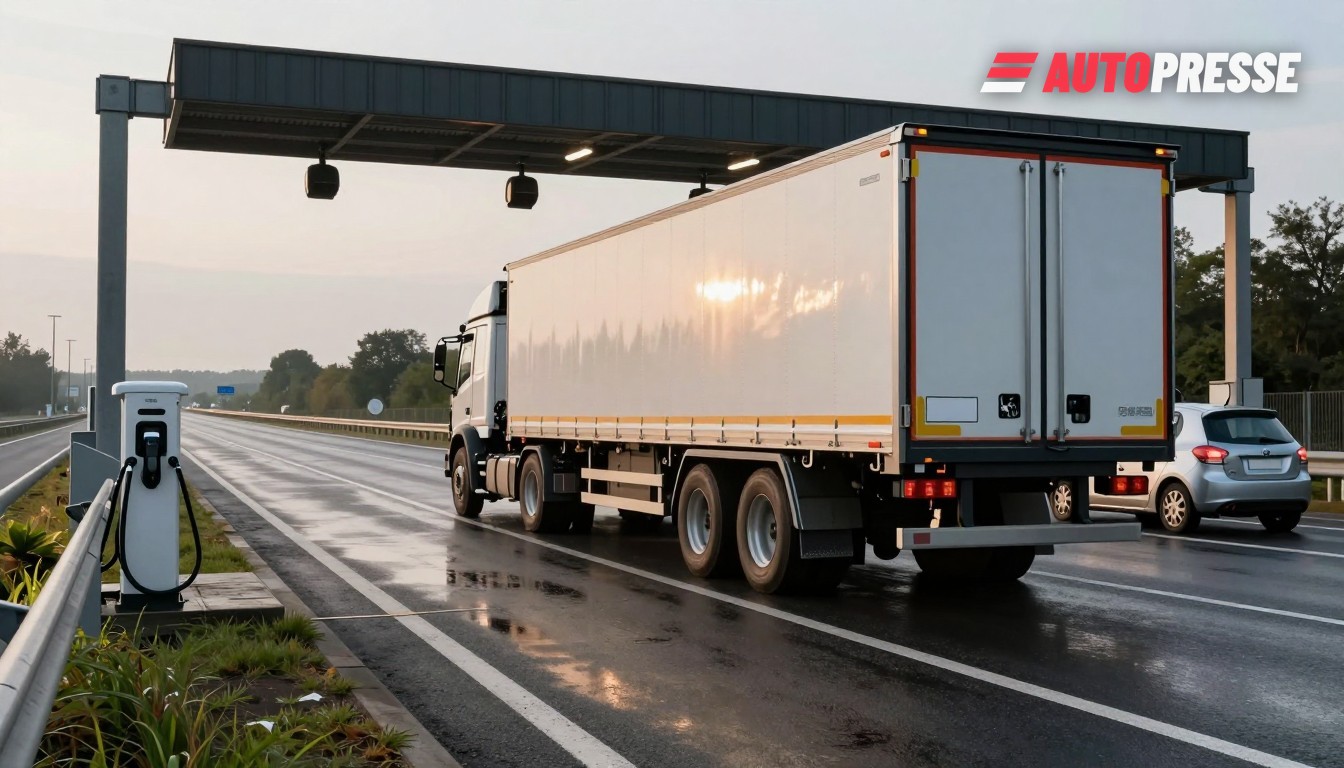
At the same time, the Eurovignette/road‑tolls reform agreed at EU level lets member states vary heavy‑truck charges by CO2 class and adopt discounts for low‑emission HDVs (with national transposition deadlines). That change — already agreed in Council texts this year — will affect freight economics on German and Austrian motorways and cross‑border routes, altering logistics costs for suppliers and dealers.
Austria’s government is pushing the opposite lever: official statistics show strong BEV growth at home — Vienna recorded a renewed monthly BEV record in October 2026 with 8,434 new battery‑electric registrations and a rising BEV share, a point ministers used to stress continued support for electrification. That domestic momentum will be weighed against the Commission’s corrective‑plan request.
What this means for the market
For OEMs and suppliers in Germany and Austria the committee vote buys extra flexibility in product and plant planning: hybrids, very efficient small cars and locally sourced low‑carbon steel now have explicit political value in compliance calculations. But Brussels’ corrective‑plan process and the Eurovignette toll rules push national governments to accelerate non‑vehicle measures (freight, buildings, energy‑system decarbonisation) — moves that will influence operating costs for factories, margins for logistics and the pace of demand for EVs and low‑emission trucks.
Negotiations will continue: the Environment Committee position goes to the December 2026 plenary, then into trilogue with the Council. German and Austrian policy choices in the coming months — corrective plans, toll transposition and national support for local battery and charging supply chains — will determine whether loosening EU fleet targets translates into a slower EV market or simply a more complex compliance landscape for German and Austrian industry.
Electric vehicles available now on WorldTrader24 →
Sources: European Parliament, European Commission, Council of the EU, ACEA, Austrian Federal Ministry for Climate Action