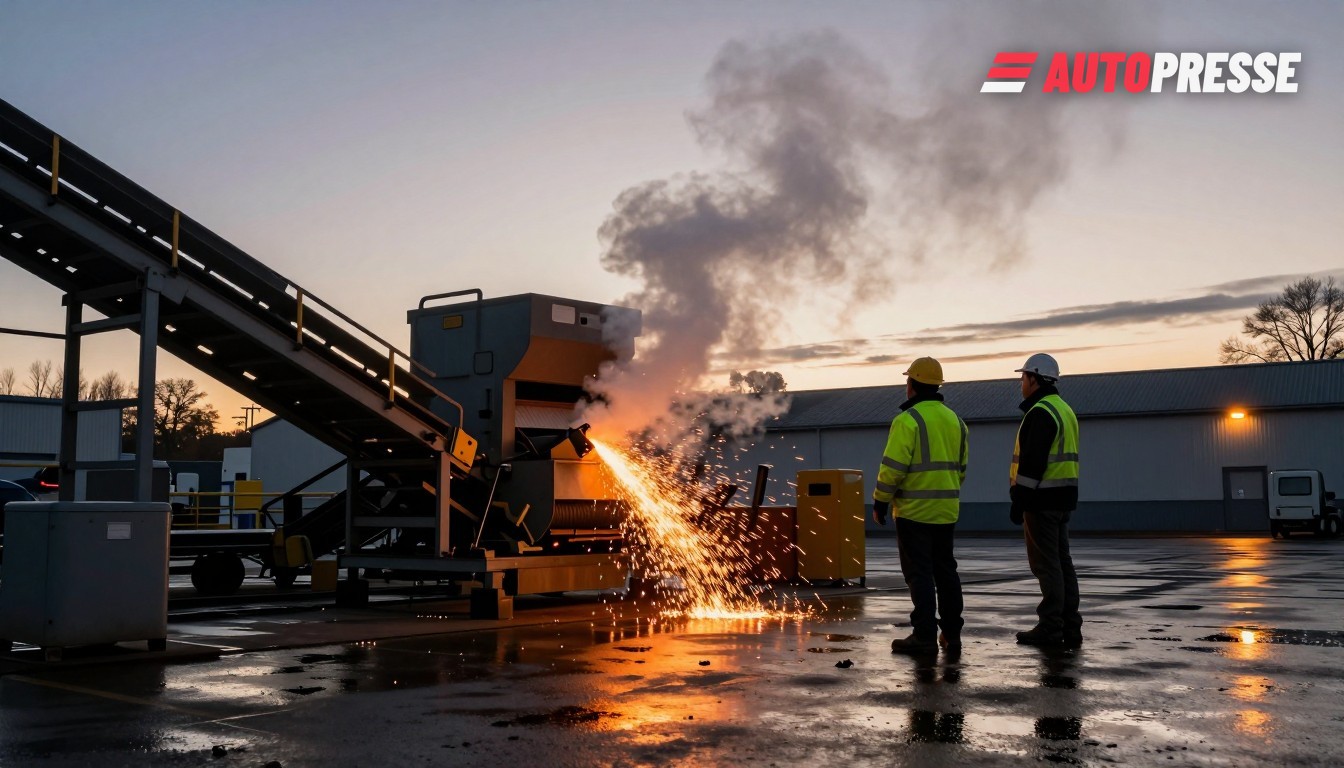
This autumn Germany and Austria are seeing two supplier trends collide: industrial-scale battery and magnet recycling is finally arriving, while legacy metal and tubular suppliers are trimming capacity after trade shocks. The shift matters to OEMs and dealers that rely on secure raw‑material flows, and to thousands of workers in supplier towns from Lower Saxony to Styria.
Recyclers go industrial — patents, capacity and partnerships
European planners now count hundreds of thousands of tonnes a year of announced battery‑recycling capacity — the EU’s circularity report lists total new EV battery recycling capacity in Europe at about 422,180 t/year and shows multiple German projects, including Duesenfeld’s Wendeburg site at 9,000 t/year announced capacity. These announced capacities underpin a rapid build‑out of industrial recycling in Germany.
That industrialisation is being underpinned by legal and technology wins. On 14 July 2026 the German Federal Patent Court rejected a nullity action against Duesenfeld’s core patent for a low‑temperature battery‑drying and recycling process, confirming the patent’s validity — a ruling recyclers say secures a protected route to scale and to licensing deals.
Large engineering suppliers are joining the build‑out: ANDRITZ has an ongoing cooperation with Duesenfeld on lithium‑ion recycling equipment and engineering, moving the sector from lab demonstrations into factory installations.
Market analysts put the commercial case behind the expansion: the Germany battery‑recycling market reached about USD 814.3m in 2025 and is forecast to grow to roughly USD 1.62bn by 2034 (CAGR ~7.7%), signalling demand for industrial capacity close to vehicle and cell manufacturing clusters.
Traditional metal suppliers feel the squeeze
At the same time established suppliers exposed to heavy industry and tubular exports face immediate pressure. voestalpine announced a capacity adjustment at its Kindberg tubulars plant that will cut around 150 jobs by the end of March 2027; the company cites heavy US import tariffs and weak demand for seamless tubes as drivers of the move. The company and works council are negotiating a social plan to be completed by the end of November 2026.
That contrast — fast investment in circular‑materials plants versus job losses in traditional metal lines — is already reshaping supplier footprints. New magnet‑recycling capacity (Bitterfeld and other German sites) has begun commissioning phased capacity for NdFeB magnets, showing how manufacturers and suppliers seek to substitute virgin imports with recycled rare‑earth feedstock. Permits and first‑shift outputs at Bitterfeld point to initial annual capacities from a low‑hundreds of tonnes up to several hundred more as plants ramp.
What this means for the market
For OEMs and parts buyers the near term means more available recycled black‑mass and magnet feedstock suppliers located inside Germany — reducing some exposure to overseas bottlenecks — but it also raises a logistics and qualification challenge: OEMs must approve recycled streams and re‑engineer purchasing to use them. Dealers and workshops should expect stabilising prices for some battery metals over the next 24 months as announced recycling capacity comes online, but local job losses in metal and tube plants will keep supply‑chain risk concentrated in regions that supply body‑in‑white and powertrain parts.
For employees and regional policymakers the message is clear: invest in recycling‑engineering skills, rapid certifications for circular materials, and social plans for communities losing legacy industrial roles. The coming 18 months will show whether circular suppliers can absorb capacity and jobs vacated by older steel and tubular lines — and how fast German and Austrian supply maps re‑centre on secondary materials.
B2B vehicle marketplace for professionals on WorldTrader24 →
Sources: Bardehle Pagenberg / Mondaq, EU Circularity report, ORF (Steiermark), Peculiar Materials, IMARC, ANDRITZ