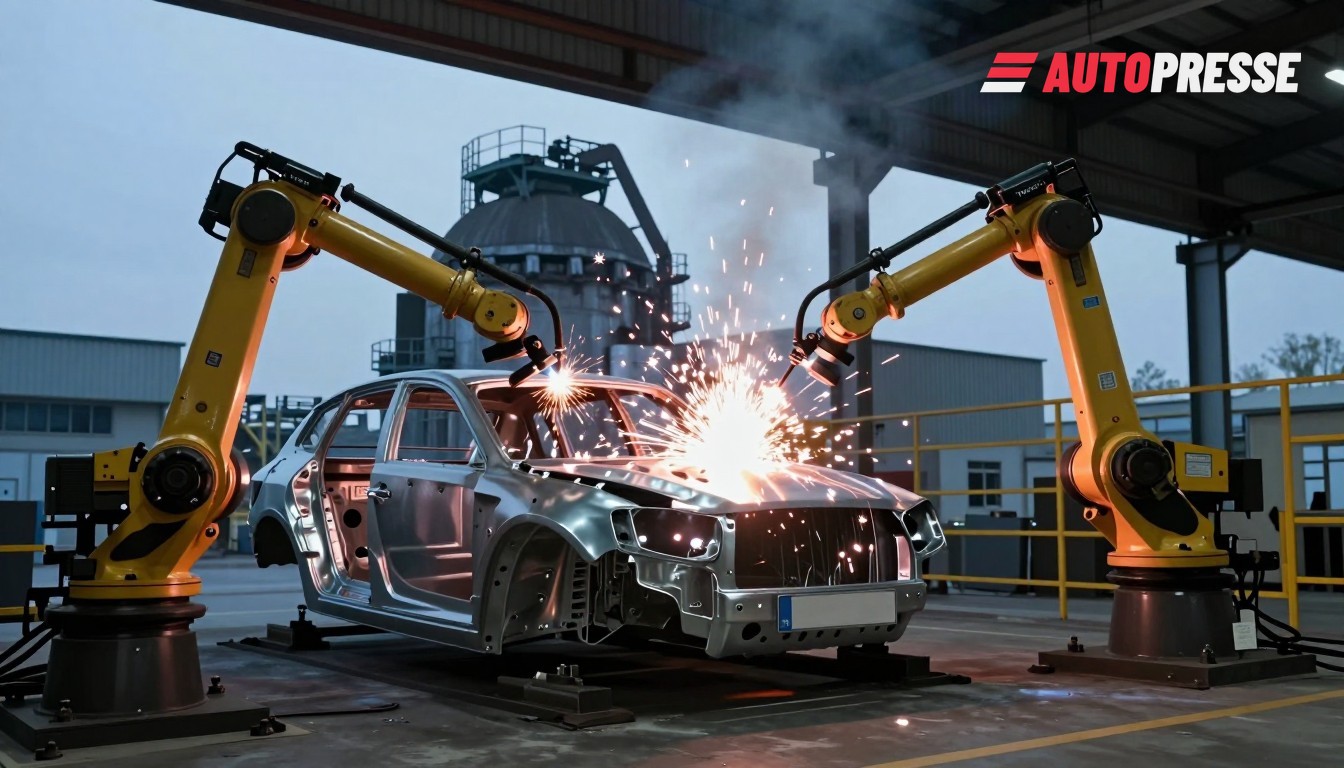
Germany and Austria’s supplier belt is being reshuffled in real time: smaller tier‑suppliers are entering protective‑shield or insolvency procedures after losing anchor contracts, while recyclers and industrial buyers are closing gaps by taking over capacity and feedstock. That matters to buyers, dealers and plant workers across both countries — from parts plants in Saxony‑Anhalt to profile mills in Upper Austria.
Who's selling, who is failing
In southern Germany the aluminium die‑caster Julius Schüle filed for protective‑shield (Schutzschirm) proceedings at the Aalen court on 18 September 2026; the company said operations will continue while it seeks an investor and noted wages are covered through November 2026. “Our aim is to position the company competitively for the years ahead,” managing director Michael Eidecker said.
In Magdeburg another supplier — Weber Magdeburg, a cylinder‑head maker employing about 120 people — entered preliminary insolvency in mid‑October after Porsche pulled its orders, local reporting shows. The administrator is now exploring stabilisation or sale options.
Buyers and recyclers consolidate capacity — Austria in play
At the other end of the market, buyers and recyclers are adding capacity fast. Clarios completed acquisition of three Ecobat recycling sites in Germany and Austria (Freiberg, Braubach and Arnoldstein) on 4 May 2026 to expand lead and polypropylene recovery and “build a more resilient and sustainable supply chain,” the company said. The deal increases regional recycling throughput and claims to strengthen compliance with forthcoming EU battery rules.
Large industrial portfolio moves continue in Austria: voestalpine sold its BÖHLER Profil unit to US buyer Kadant — a transaction announced in January 2026 and completed at the end of April 2026 for about €157.0m, the purchaser’s filings show. The buyer renamed the business Kadant Profil and said it would retain the workforce at the Bruckbach site.
Meanwhile the WKW Group’s decision to close WKW Hungária’s Győr plant before year‑end — a move that affects roughly 470–500 workers according to local reports — has pulled unions and suppliers into cross‑border disruption; trade‑union organisers told media they planned an international demonstration on 9 November to defend automotive jobs. The shutdown underlines how restructurings in Germany’s supplier groups ripple into Austrian and regional supply chains.
What this means for the market
The picture is two‑speed. On one side, creditor‑led restructurings and insolvency filings are concentrated at smaller, contract‑dependent suppliers (aluminium die‑casters, cylinder‑head shops) that lose anchor OEM work and struggle with overcapacity. On the other, recyclers and strategic industrial buyers are consolidating upstream capacity — buying plants, recycling sites or profile mills to lock in raw materials and margins. The net effect: short‑term job and supply pain in Germany’s supplier clusters, but more concentrated, vertically integrated supply chains in Austria and Germany as recyclers and industrial groups (and foreign buyers) absorb capacity.
For fleet managers, dealers and OEM purchasing teams the takeaway is clear: expect tighter negotiation leverage for surviving suppliers, accelerated supplier rationalisation in 2027, and more procurement emphasis on recyclate content and EU‑compliant material chains as buyers try to lock raw‑material security. For workers it means active restructuring and investor searches at affected sites — protective‑shield filings explicitly aim to keep operations running while buyers are sought.
B2B vehicle marketplace for dealers on WorldTrader24 →
Sources: Clarios, Foundry‑Planet (Julius Schüle), Kadant filings/voestalpine announcement, Telex (WKW Győr), TerraWorldNews (Weber Magdeburg)