Two concrete moves this autumn are rewriting the supplier map in Germany and Austria for the next five years. On 27 October 2026 Infineon confirmed a €1.1 billion upgrade of its Villach site and the company and the European Commission published details that Austria will make the project eligible for a €319 million state‑aid contribution. Three days earlier, on 3 November 2026, Schaeffler announced a new performance‑improvement programme that will cut roughly 2,660 jobs in Germany by 2028 and close several sites. These are not abstract trends: they change where parts, chips and engineering work are bought—and who will staff the lines.
Infineon’s Villach leap: chips move closer to carmakers
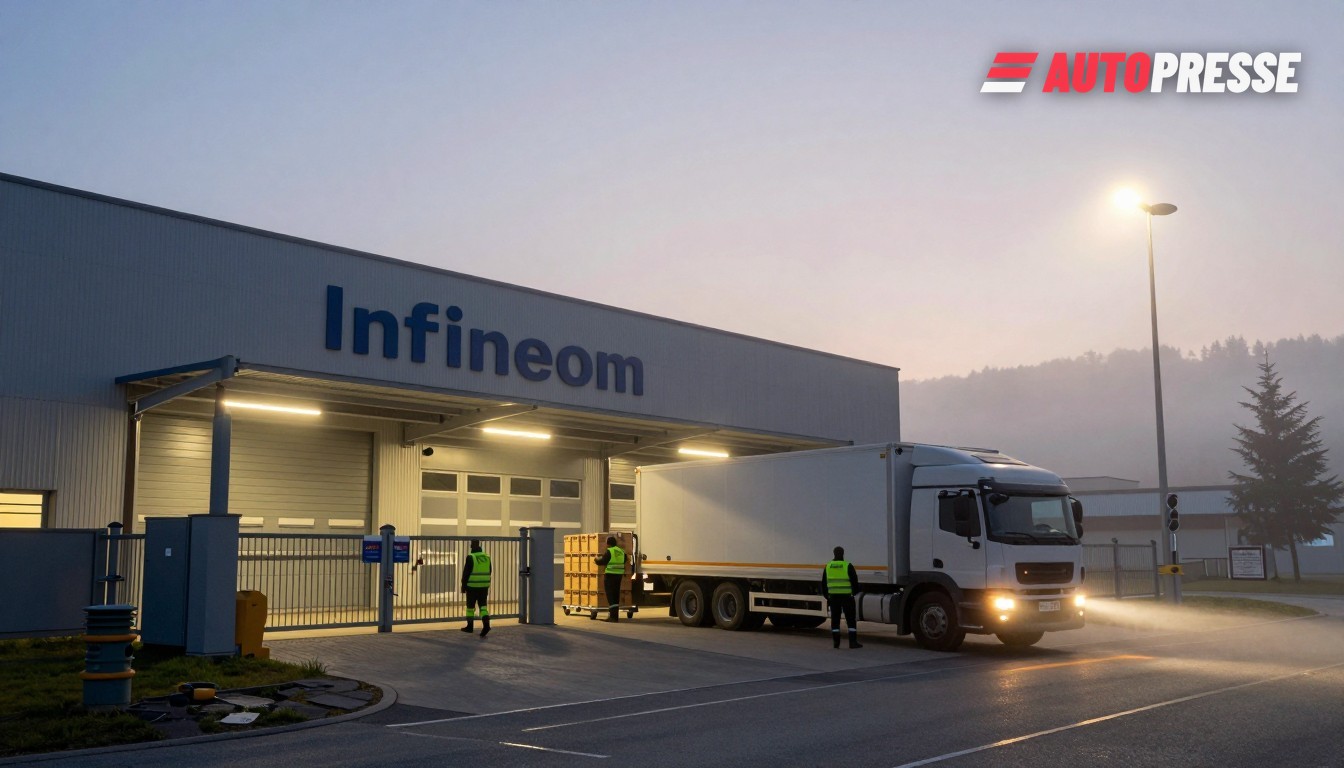
Infineon’s October announcement lays out a plan to scale high‑volume gallium‑nitride (GaN) power‑semiconductor production on 300‑millimetre wafers at Villach, a capability the company and the European Commission describe as “first‑of‑a‑kind” in the EU. The Commission’s October 27 approval of €319 million in Austrian state aid explicitly named the Villach upgrade and underlines its strategic weight for power electronics used in EV inverters, on‑board chargers, charging infrastructure and wider energy‑efficiency applications. Infineon said the investment responds to fast rising demand for power semiconductors from AI data centres, robotics and xEVs and noted Infineon Austria employed about 5,800 people, roughly 4,800 of them in Villach.
The practical effect for German and Austrian suppliers: higher‑value silicon and power‑electronics content will be sourced closer to OEMs and tier‑1s in Central Europe, compressing lead times for modules and opening new procurement options for local board‑assembly, thermal‑management and supplier toolmakers. Bloomberg and Infineon both flag that the private portion of the commitment totals roughly €1.1 billion and that the timeline will unfold over several years.
Schaeffler’s programme: fewer plants, more pressure on mid‑tier suppliers
Schaeffler’s 3 November press release sets clear, dated targets: net reductions of 3,460 positions in Europe, including about 2,660 jobs in Germany, with implementation mainly in 2027–2028 and expected recurring annual savings of €300 million from 2030. The company listed specific plant closures and capacity reductions in Germany and elsewhere, and said one‑off restructuring costs will be about €480 million. The measures aim to lower cost‑per‑employee and to concentrate technological expertise in regional clusters.
The immediate supplier consequences are twofold. First, demand for legacy powertrain components will shrink where Schaeffler removes capacity (notably at several German sites named in the release), pressuring mid‑tier firms exposed to combustion‑engine content. Second, as Schaeffler pivots some activity toward robotics and defence technologies, demand will shift toward higher‑margin engineering services, sensors and mechatronics — fields where German and Austrian specialist suppliers can compete, but where lead‑times for qualification are long and investment risk is high.
What this means for the market
Together, the two moves tighten a new polarity across the German‑Austrian supplier landscape. Infineon’s Villach upgrade accelerates localisation of advanced power‑electronics capacity in Austria and creates procurement opportunities for European board assemblers, thermal suppliers and test houses. Schaeffler’s cost‑cutting compresses volumes for legacy mechanical parts and forces mid‑tier vendors—already facing consolidation and private‑equity interest—to reprice, rationalise or chase new electrification content. For dealers, workshops and regional workforces this means faster change in component lifecycles, a need for semiconductor‑aware parts logistics and more retraining demand in Germany and Austria during 2027–2028.
B2B vehicle listings for dealers on WorldTrader24 →
Sources: Infineon, European Commission, Schaeffler, Bloomberg, Infineon analyst call