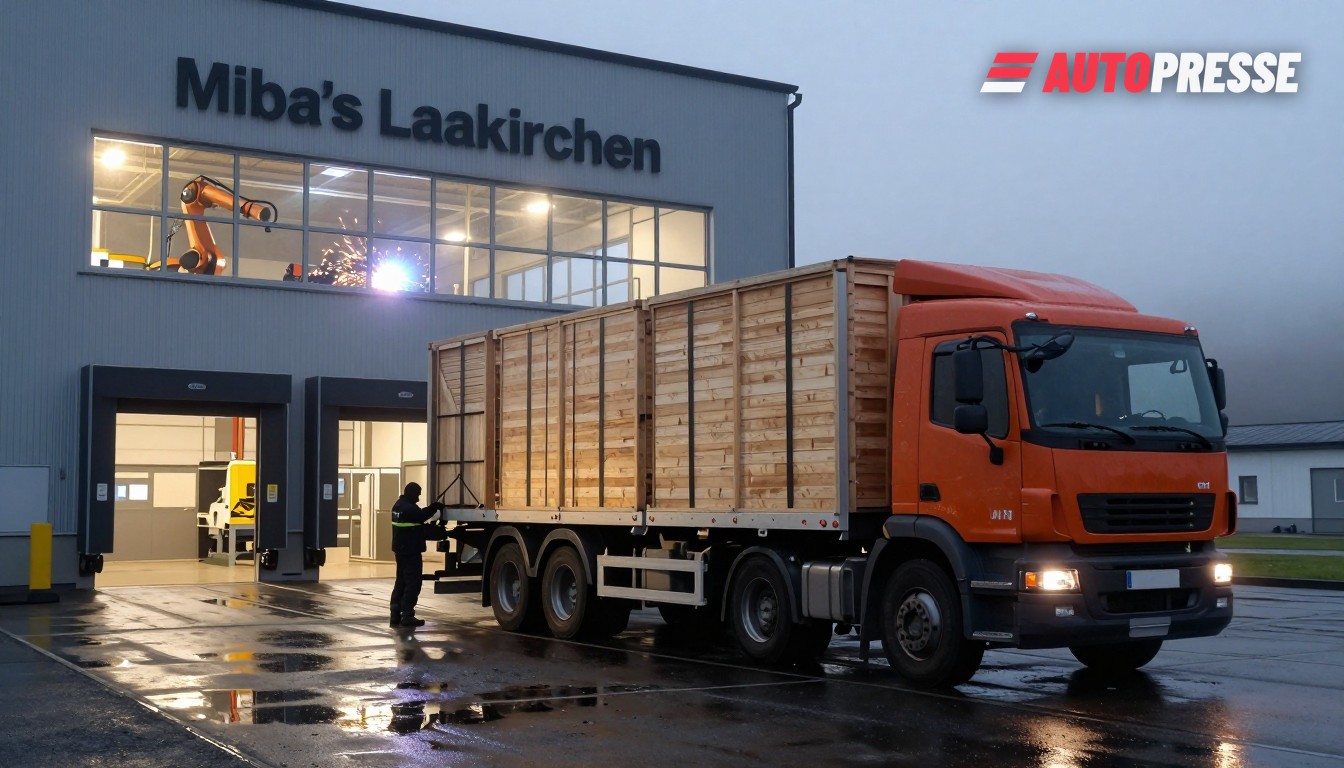
The supplier map for Germany and Austria is changing fast — and drivers, dealers and workshop owners will feel it in parts availability, maintenance costs and local jobs. In October Miba AG (Laakirchen) struck the largest deal in its history, agreeing to buy RENK’s slide‑bearings business (about €130m sales, c.500 employees) — while earlier in 2026 Phoenix Contact E‑Mobility sold its passenger‑car charging‑inlet assets to TE Connectivity and began exiting OEM supply. At the same time Germany’s largest supplier, Bosch, confirmed a major jobs restructuring and Schaeffler detailed site closures: the combined effect is faster consolidation, more cross‑border ownership and a squeeze on smaller tiers.
Miba buys RENK’s slide‑bearings unit — the facts
On 22 October 2026 Miba announced it had signed an agreement to acquire RENK Group’s slide‑bearings business; RENK describes the divested unit as a business with around 500 employees across five plants in Germany, the US, Brazil, China and Japan and annual revenue of approximately €130 million. The transaction is subject to regulatory approval and the parties have not publicly disclosed the final purchase price (RENK described the consideration range as "low to mid three‑digit million" in investor materials). Miba said the deal strengthens its industrial bearings footprint and is the biggest acquisition in its history.
Reshuffles and exits: Phoenix Contact, TE and larger German tiers
Phoenix Contact E‑Mobility publicly confirmed on 3 March 2026 that it is exiting the passenger‑car (OEM) business; TE Connectivity completed an asset transaction for the charging‑inlet activities (announced end of February 2026) to secure continuity for OEM programs. That deal illustrates a wider trend: specialised e‑mobility and connector assets are moving into larger global connector groups rather than remaining in smaller European independents.
Meanwhile Bosch told Reuters on 10 June 2026 that it is executing a major restructuring in its automotive unit and that the group plans deep personnel reductions in mobility activities as it closes a multi‑billion euro cost gap; Reuters reported the number of roles affected in the core automotive business as around 22,000 as part of measures through the end of the decade. Schaeffler’s Q3 2026 transcript details a net reduction of ~3,460 positions (about 2,660 in Germany), with 16 European sites affected and four German sites earmarked for closure; Schaeffler expects one‑off restructuring charges of about €480 million and a sustainable earnings improvement target of ≈€300 million per year from 2030.
What this means for the market
Practical consequences are already visible. Consolidation — Miba’s purchase and Phoenix Contact’s asset sale — concentrates specialised capacity under fewer owners, which can stabilise long OEM supply chains but also raise dependency on cross‑border logistics and single suppliers for critical parts. For workshops and dealers, the near‑term risk is tighter local stock and longer lead times for uncommon components; for employees, announced site closures and mobility‑unit restructurings in Germany mean further local job pressure through 2028–2030. Investors and procurement teams are responding: European supplier M&A and asset deals accelerated through 2026 as buyers sought scale and continuity, according to sector M&A reports.
WorldTrader24 B2B vehicle marketplace for dealers →
Sources: Miba, RENK, Phoenix Contact, TE Connectivity, Reuters, Schaeffler, BDO, ORF