Vienna Airport (Flughafen Wien) has quietly strengthened its role as a regional hub for high‑value and time‑sensitive freight in 2026 — a development drivers, dealers and parts logisticians in Austria and southern Germany should watch. Vienna reported cargo (air cargo plus trucking) of 237,983 tonnes for January–September 2026, a 2.0% increase year‑on‑year, with the January–October total at 268,986 tonnes (+2.8%).
Vienna’s freight mix is changing — pharma and high‑value goods lead
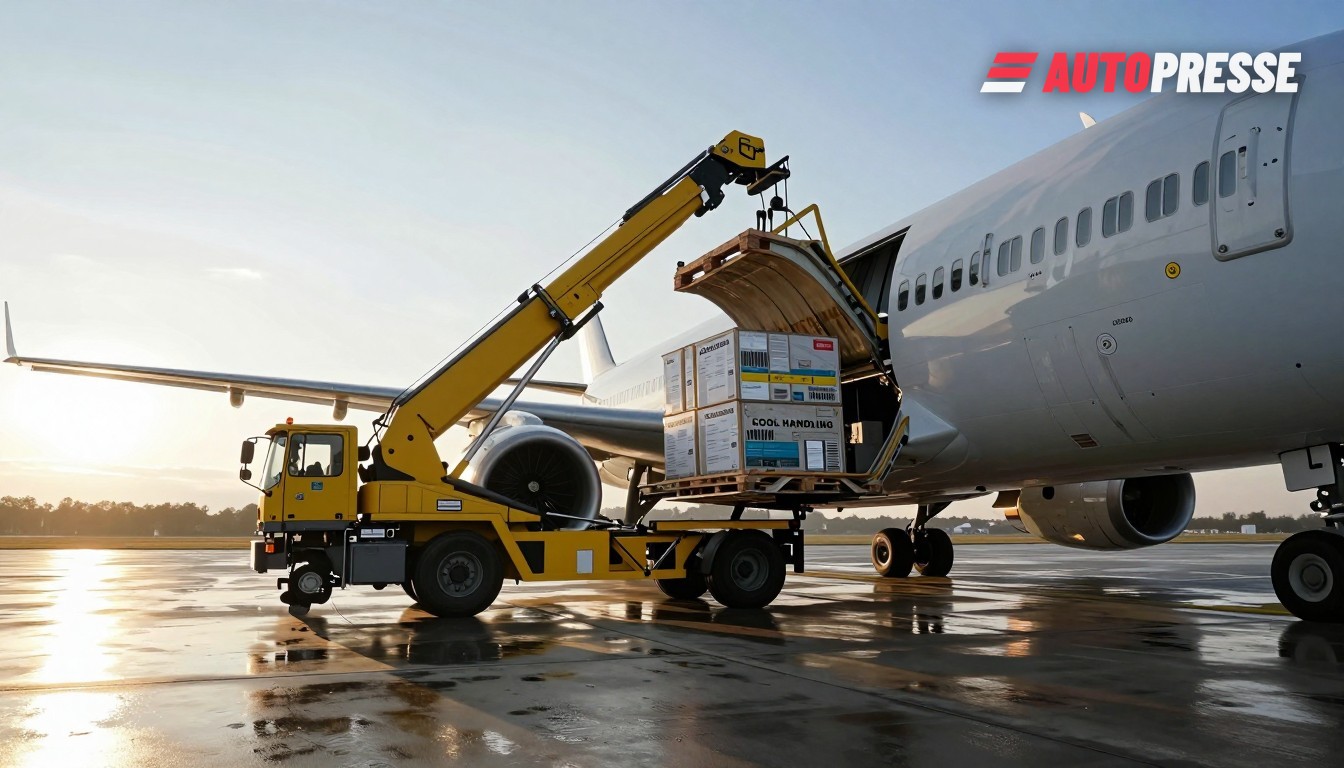
Flughafen Wien’s own figures show particularly strong growth in pharmaceutical and medical shipments: pharmaceutical cargo rose 22.4% in H1 2026 to 2,497 tonnes, while medical freight and other high‑value consignments accounted for much of the passenger‑belly and trucked cargo increases. The airport highlights dedicated cool‑chain handling and long‑term handling contracts with Asian cargo carriers as part of that strategy.
At the same time, European airfreight volumes are unevenly distributed: ACI/industry reporting singled out Leipzig/Halle among the fastest‑growing large cargo airports in September 2026 (Leipzig/Halle +13.2% for the month), underlining that a handful of hubs are capturing volume growth even as the market normalises after the pandemic shocks.
Why automotive logistics care
Air freight remains a niche by tonnage but commands a disproportionate share of value and urgency — and that matters to carmakers, parts suppliers and dealer networks. Practical logistics guides and industry market studies note that airfreight is the default option for emergency spare parts, prototypes and small, high‑value electronic modules where downtime or warranty repairs would otherwise be very costly. For automotive supply chains, this means more shipments of sensors, ECUs, injectors and other compact, high‑value parts move by air when schedules or quality demands make sea or rail impractical.
For Austria and southern Germany — regions with dense automotive manufacturing and aftermarket networks — Vienna’s upward shift in medical and high‑value cargo offers an accessible hub for urgent shipments to OEM plants and dealer workshops across the Alps. That matters for dealers who need faster turnaround on warranty parts, for suppliers that sell small‑batch EV electronics, and for logistics providers reconfiguring next‑day lanes to match demand.
What this means for the market
Short term: expect more specialised ground‑handling capacity and premium forwarding lanes feeding Vienna for temperature‑controlled and urgent shipments; that will raise options (and costs) for urgent automotive spares.
Medium term: parts distributors and OEMs should reassess inventory strategies: keep baseline stock on rail/sea flows, but plan dedicated air contingencies for critical SKUs. Forwarders and integrators that can combine cool‑chain, dangerous‑goods and rapid customs handling will gain market share.
Finally, airports that strengthen niche handling (pharma, high‑value electronics, urgent parts) will be able to capture higher‑margin flows even if overall tonnages grow only slowly — a structural opportunity for Vienna and other specialised hubs in the German‑Austrian logistics map.
Sources: Flughafen Wien AG (Vienna Airport), STAT Times, Aviation.Direct, WinsailLogistics, ReportsInsights