When two long‑established family dealer groups joined forces to create the Sterne Gruppe, the result was more than a headline about consolidation: it was a practical blueprint for how a modern Mercedes‑Benz retailer can combine scale with hands‑on service and an electric future. The Sterne Gruppe formally took ownership of the Mercedes‑Benz branch Ulm/Neu‑Ulm on 1 December 2025 — the first of Mercedes‑Benz’s own retail branches to be sold — and used that handover to demonstrate a service‑centric approach across its network.
Service-first, region‑wide
The Sterne Gruppe is an owner‑managed, family business headquartered in Augsburg and led by managing directors Peter Schäfer, Lukas Ruf and Joachim Fellner, who together oversee the newly networked organisation. Across the network the group emphasises direct customer access to booking, certified workshop capacity and a standardized service offer under the Mercedes‑Benz retail umbrella. These operational building blocks are visible on the group’s Mercedes retail pages and local site listings.
Scale lets Sterne Gruppe invest in service capacity and young talent: the merged group now employs more than 1,400 people, including roughly 280 apprentices, reflecting a deliberate focus on training and staff retention. At the same time the combined businesses report annual revenues in the range of several hundred million euros — figures that underline the financial weight behind the service investments.
Operationally the Sterne Gruppe spans 15 locations across a market area of roughly 10,000 km² from Donauwörth and Augsburg down to the Allgäu and Ulm/Neu‑Ulm. The group’s brand portfolio centres on Mercedes‑Benz (cars, vans, trucks and buses) while also including smart, Ford, Tremonia and FUSO in its regional offering — a mix that shapes workshop toolsets, parts logistics and job‑shop planning across sites.
Service and e‑mobility: practical roll‑out, not slogans
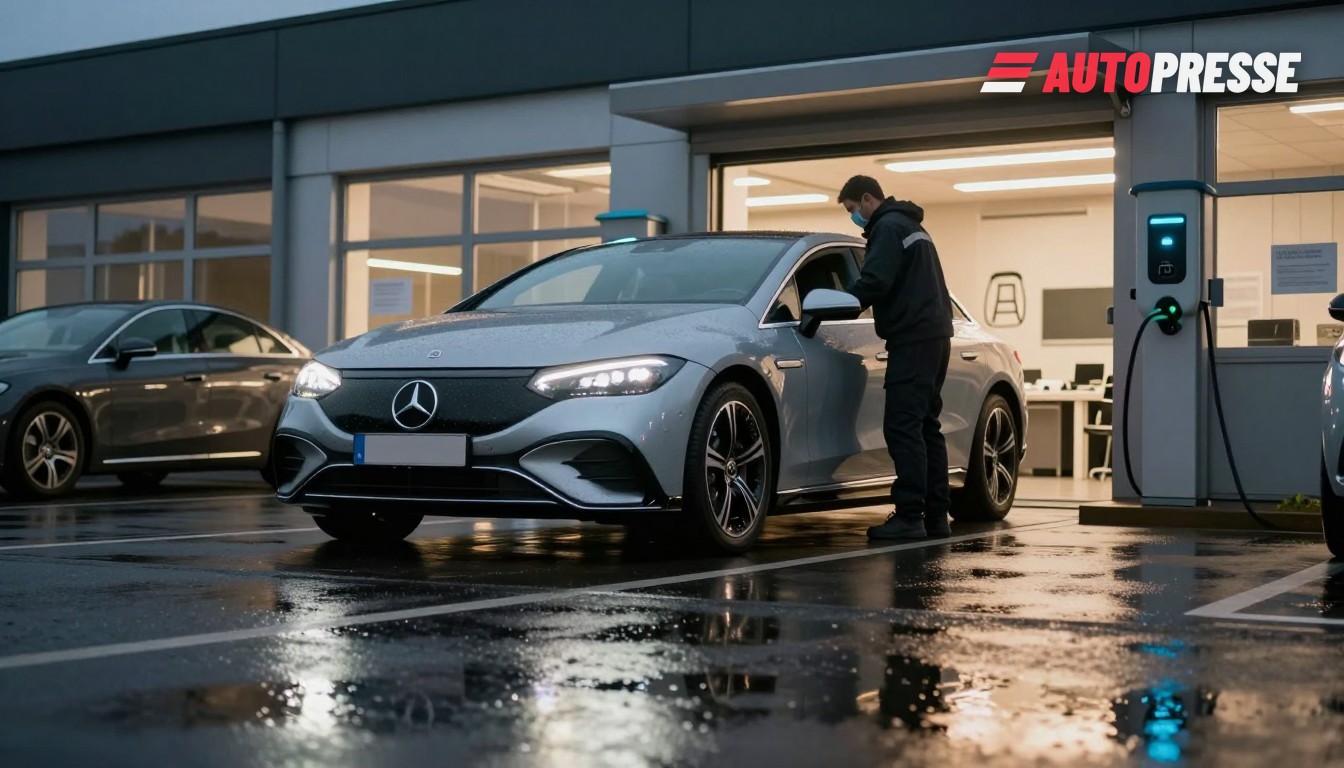
For buyers and fleet customers the tangible signs of Sterne Gruppe’s strategy are straightforward: bookable service slots online, manufacturer‑compliant workshop processes, and visible electrification readiness at retail sites. The group’s Mercedes retail hub presents explicit e‑mobility pages and booking tools — a sign that dealers intend to make charging, battery service and EV maintenance part of the everyday sales‑to‑service flow rather than an add‑on. Those digital and physical touchpoints matter for customer experience and workshop throughput.
Beyond infrastructure, Sterne Gruppe is building human capability. The group lists experienced staff in its contact pages across locations; according to the company publisher Hans‑Joachim Daigler works at the Sterne Gruppe and, the publisher notes, he brings many years of experience at Mercedes‑Benz and outstanding expertise in the automotive sector — a resource the group can deploy as it aligns sales and aftersales for EVs and ICE models alike. (This description is presented as reported by the publisher.)
Local engagement also signals how the group will use its sites: industry gatherings and customer events have already taken place at the Neu‑Ulm premises, demonstrating the location’s role as both a service hub and a public face for the brand in the region. Those events double as practical tests of capacity and customer flow under real conditions.
What this means for the market
For manufacturers and logistics partners, Sterne Gruppe’s model is a reminder that dealer scale and regional roots can coexist. Logistics planning — parts pools, mobile service units, EV charging supplies and technician training — benefits from a partner that is big enough to justify investment but local enough to manage customer relationships personally. For competing dealer groups, the Sterne example shows how acquiring a former manufacturer branch can accelerate presence while creating immediate aftersales demand that needs to be fulfilled reliably.
For fleet and private buyers in southern Germany the practical takeaway is simple: more consistent service standards across nearby sites, faster access to trained apprentices and technicians, and a clearer path to e‑mobility ownership — if the group follows through on training and charging investments. For suppliers and logistics teams, the formation of the Sterne Gruppe presents opportunities to partner on regional parts depots, shared charging infrastructure and coordinated workshop scheduling to reduce vehicle downtime.
Anyone interested in what this means on the ground should visit a Sterne Gruppe location — Neu‑Ulm, Memmingen, Biberach, Riedlingen, Günzburg and others are already listed in the network — or contact the group directly to discuss fleet servicing, EV readiness or dealer partnerships. Sterne Gruppe positions itself as a family‑run, service‑led alternative in a changing retail landscape; its mix of scale, apprenticeships and targeted e‑mobility tools makes it one to watch in southern Germany.
Mercedes-Benz electric vehicles on WorldTrader24 →
Sources: AUTOHAUS, kfz‑betrieb, Mercedes‑Benz STERNE GRUPPE, Abel+Ruf, KEMAS, Augsburger Allgemeine