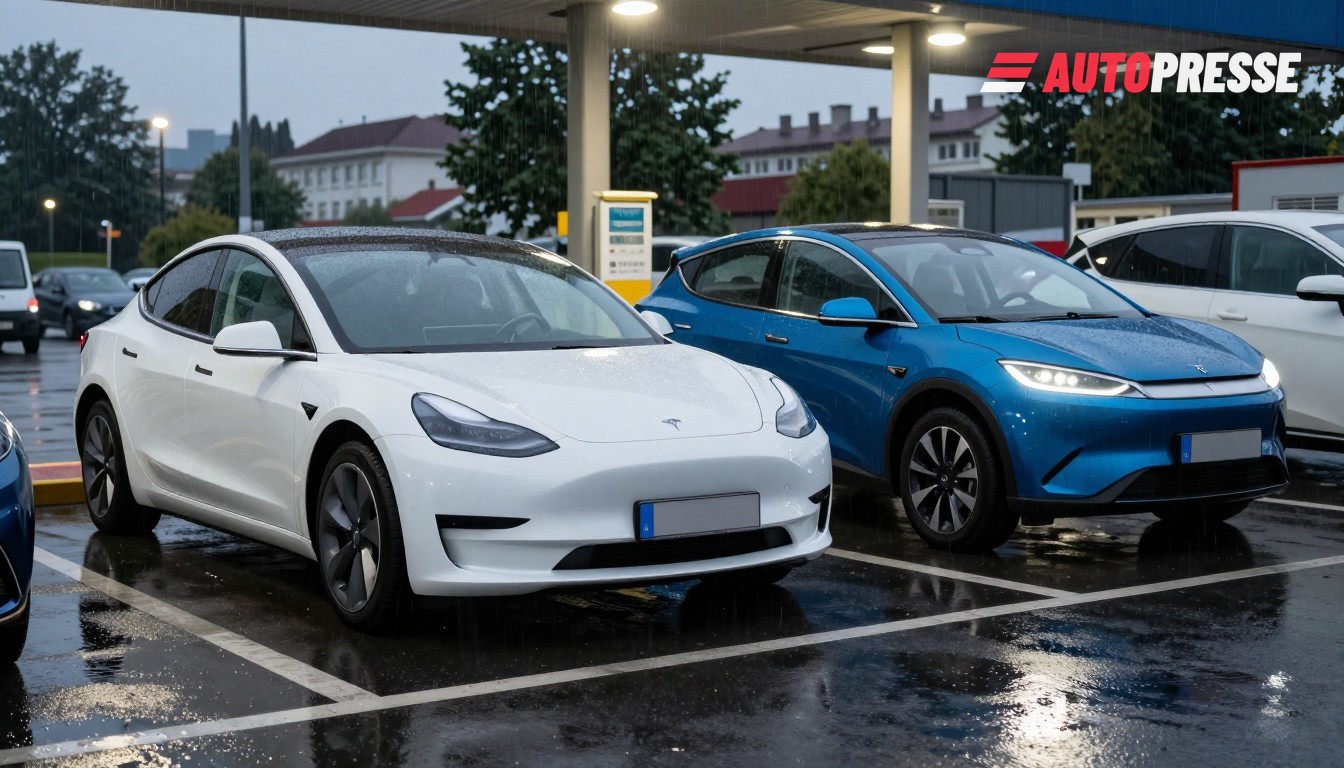
Germany and Austria are now two-speed markets: new‑car buyers increasingly choose battery electric vehicles (BEVs), while used‑car markets show a clear split between weakening wholesale values and rising retail prices for used EVs. That divergence is already reshaping dealer margins, remarketing strategies and cross‑border flows for fleet and trade buyers.
New‑car electrification versus production pressure
In Germany, new‑car electrification hit a fresh high in October 2026: electric vehicles (BEV + PHEV + FCEV) accounted for 48.2% of registrations, with pure BEVs at 94,086 units — a 37.0% share of the market that month. At the same time domestic vehicle production fell and exports weakened, a reminder that factory output is not keeping pace with changing demand.
Austria mirrors the move to battery power: October 2026 saw 8,434 BEV registrations — 34.9% of new cars that month — and January–October 2026 totals show steady BEV growth at national level. The Austrian statistics office and the federal mobility ministry reported sustained double‑digit rises in new car registrations year‑to‑date.
Two used‑car markets: wholesale slides, EV retail climbs
Behind the headline electrification sits a paradox in the used market. AUTO1 Group’s European wholesale price index fell to 132.0 in October 2026 (down 0.9% month‑on‑month and 5.0% versus October 2025), signalling softer wholesale values across Europe. That trend compresses margins for sellers who must turn stock quickly via dealer‑to‑dealer channels.
By contrast, consumer‑facing asking prices for used electric cars are rising. AutoScout24’s October AGPI shows the average listed price for used EVs in Germany at €39,658 (up 1.7% in October), while inventory of listed EVs fell (supply −7.2%) even as demand momentum eased from September’s spike. AutoScout24 Austria reports a similarly strong used‑EV trend: used‑EV asking prices and buyer interest are well above last year. AutoScout24’s sales director highlighted that used EVs are following a distinct path from the rest of the market.
At the transaction level the picture is even starker: consumers buying used cars typically pay far less than listing or dealer retail prices — the DAT Report 2026 notes average used‑car transaction prices around €18,310 — underlining the gap between wholesale/transaction levels and online retail asking prices.
What this means for the market
Dealers and remarketers in Germany and Austria face a choice. Faster wholesale turnover risks forced discounts as the AUTO1 index weakens; yet hold‑and‑retail strategies can capture the premium buyers pay for used EVs today, especially for late‑model, well‑specified examples where demand outstrips available stock. AutoScout24 data show fewer EVs for sale and rising listed prices — a tactical opportunity for retailers with finance and aftersales capacity.
For fleet operators and trade buyers, cross‑border arbitrage remains attractive: Austria’s accelerating BEV fleet creates upstream demand for recent used EVs, while Germany’s larger churn and deeper wholesale channels supply volumes — albeit at softer prices. Production and export headwinds in Germany add uncertainty to supply flows, which may push more near‑new cars into the used‑EV retail channel rather than onto export streams.
In short: the market is bifurcating. Wholesale indices warn of a reset in bulk values; retail platforms show a narrow but real premium for used BEVs. Dealers who align stock policy, reconditioning and finance offers to close the gap stand to protect margins — those who chase fast volume at auction risk being squeezed.
Electric vehicle listings on WorldTrader24 →
Sources: VDA/KBA, Statistik Austria, BMIMI, AutoScout24, AUTO1 Group, DAT