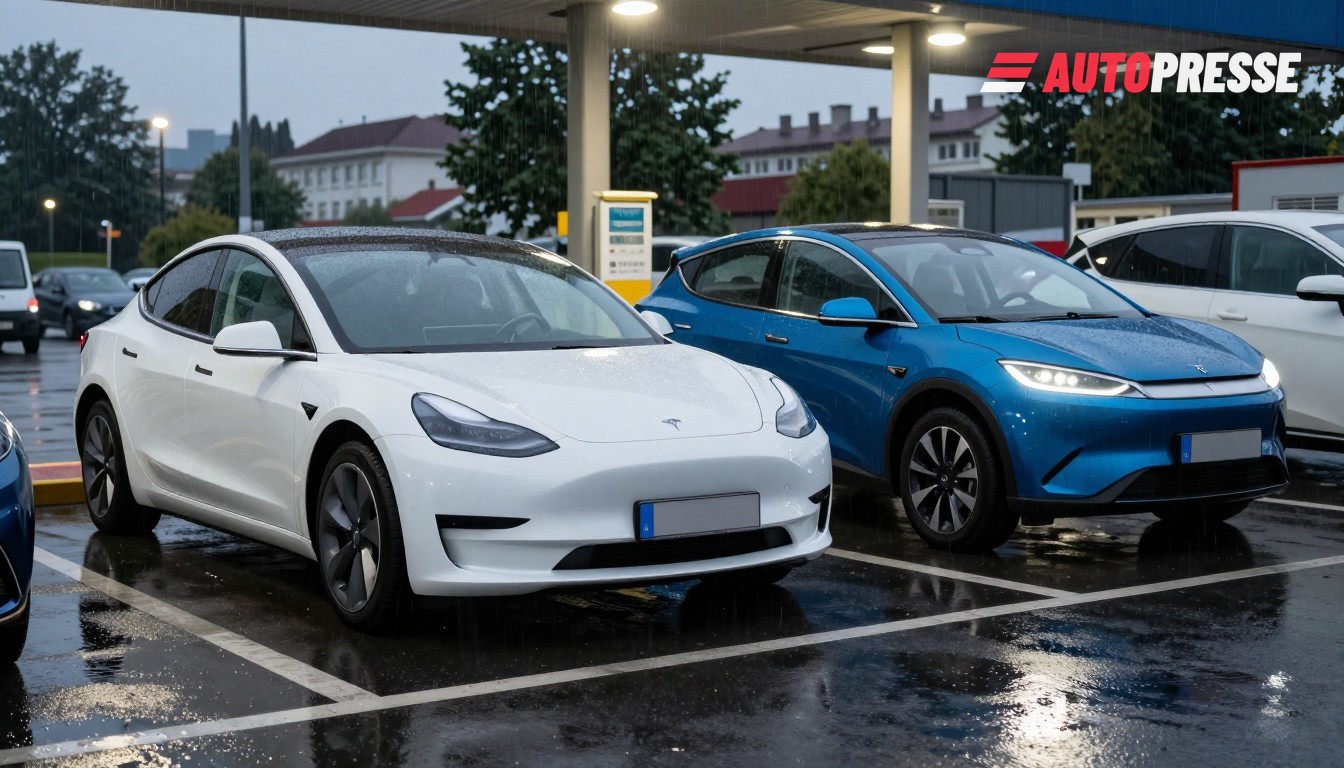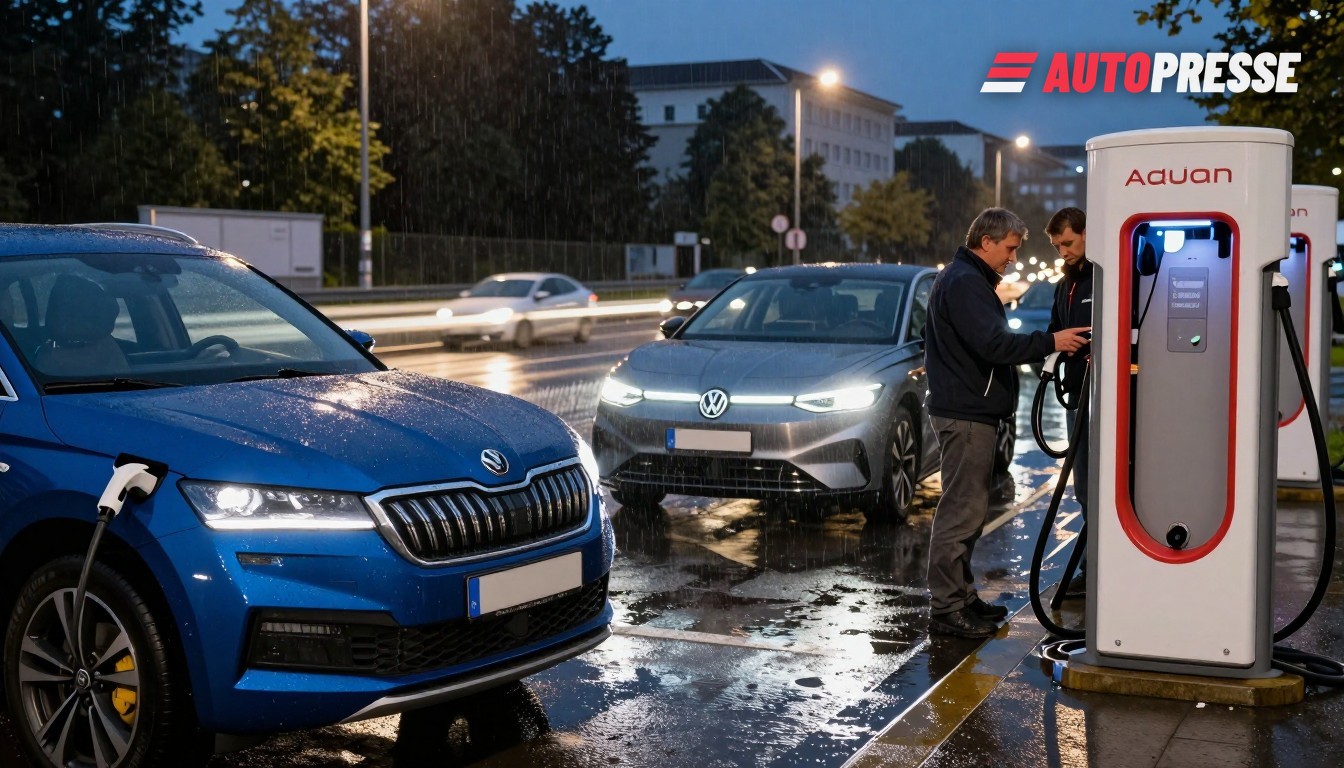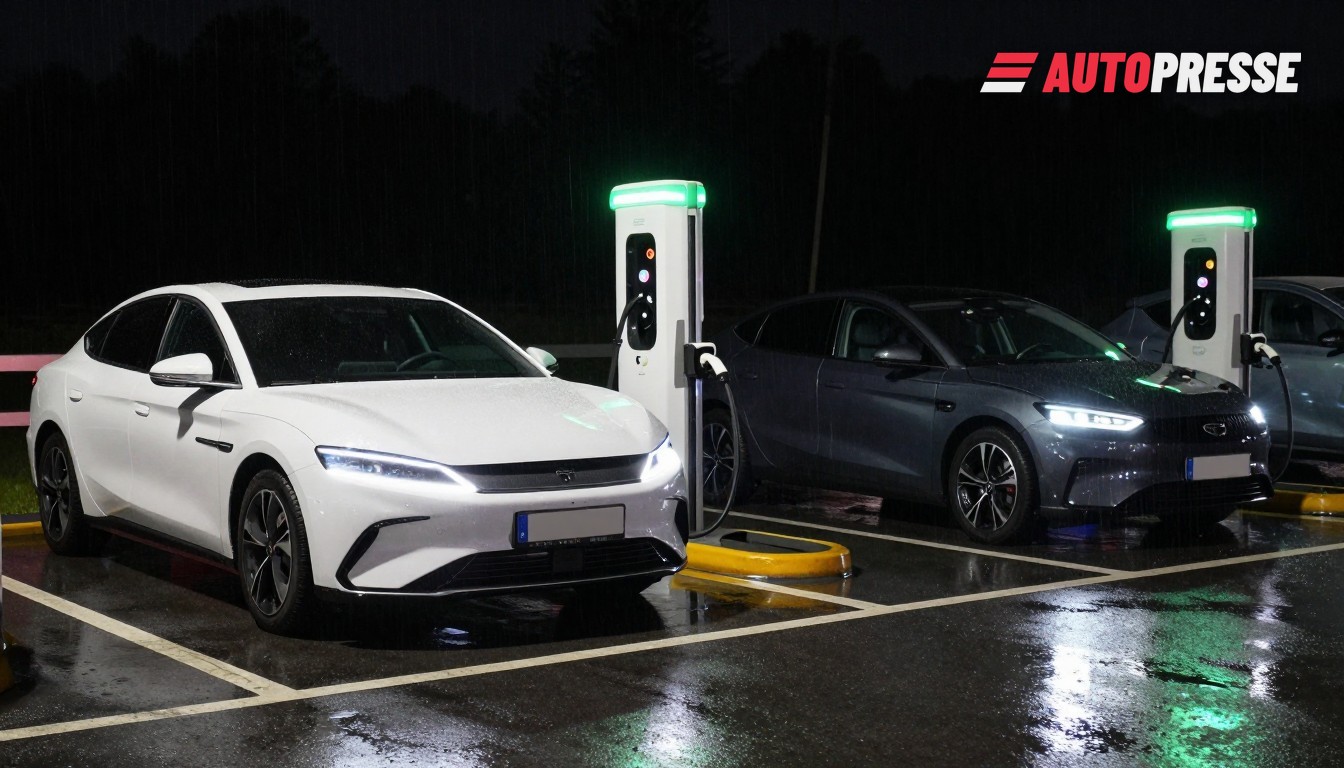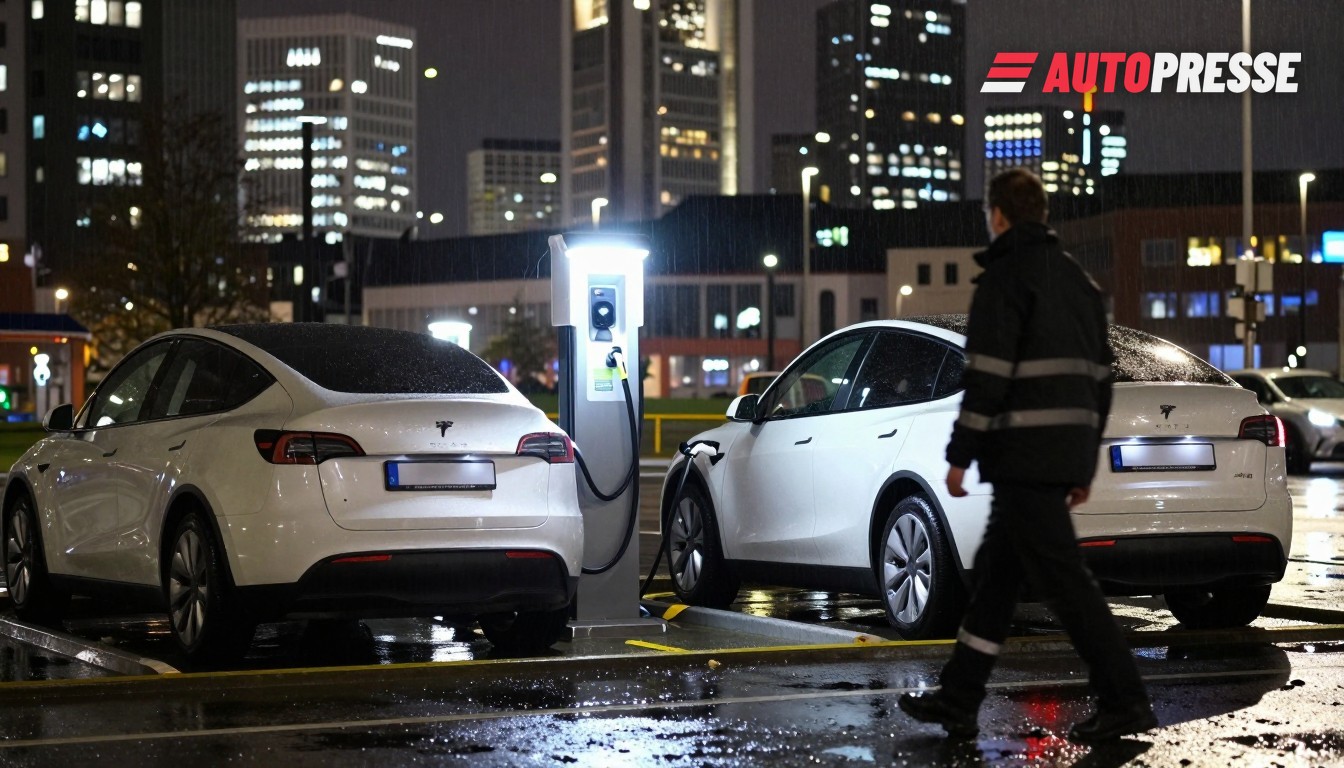
Many people in Germany and Austria who searched for AutoPresse’s “Market Report July 2026” are effectively asking: how has the market moved since July? New national data published in the first two weeks of November answers that — battery-electric vehicles (BEVs) now make up 37.0% of new-car registrations in Germany (October 2026), and Austria’s statistics show EVs overtook petrol and diesel in October as well. These figures change the picture for buyers, dealers and fleet managers across both countries.
The fresh numbers — Germany and Austria
Germany: The Kraftfahrt-Bundesamt reported that October 2026 saw 254,492 new passenger-car registrations; of those, 94,086 were battery-electric — a 37.0% share and a 79.5% year-on-year increase in pure BEV registrations for the month. Over January–October 2026 BEV registrations reached 698,230, up 61% year-on-year. These month and year totals were published in the KBA press material and summarised by industry (VDA) on 3–4 November 2026.
Austria: Statistik Austria’s release of 10 November 2026 shows 265,282 new passenger cars registered January–October 2026 (up 10.7%). In October alone Austria recorded 8,434 new BEVs (+63.3% vs Oct 2025); BEVs accounted for 34.9% of October registrations and — for the second month running — outnumbered petrol and diesel cars by 2,494 units. Statistik Austria quoted Manuela Lenk to explain the shift toward alternative drives.
Why this matters to buyers, dealers and fleets
The October surge means two practical effects for the market. First, dealer forecourts and remarketing channels must absorb faster-moving EV volumes and shifting model mixes: national brand rankings show both legacy OEMs and Chinese brands rising in the EV tables — a context in which BYD and other imports are changing competitive dynamics for 2026 stock and pipeline planning. Second, fleet buyers and leasing houses will face supply and delivery distortions driven by strong BEV demand and model-specific bottlenecks. The KBA data for October also show that without BEVs the overall German market would have contracted sharply month-on-month.
What this means for the market
Dealers: Expect inventory turnover to favour well‑equipped BEV examples and to require fast retraining on battery sales, charging and residual‑value guidance. Workshops: invest in high‑voltage diagnostics and V2G/V2H skills; grants and training programmes will speed that need. Fleet managers and corporate buyers: revise TCO models to reflect higher EV market share and tightening delivery windows for popular BEV models — early ordering and delivery coordination are now table stakes. Consumers: rising EV shares mean more choice but also longer waits for some in‑demand trims; used‑EV pricing will be the next important swing factor as more fresh BEVs enter the market.
Electric vehicle listings on WorldTrader24 →
Sources: Kraftfahrt‑Bundesamt (KBA), Verband der Automobilindustrie (VDA), Statistik Austria