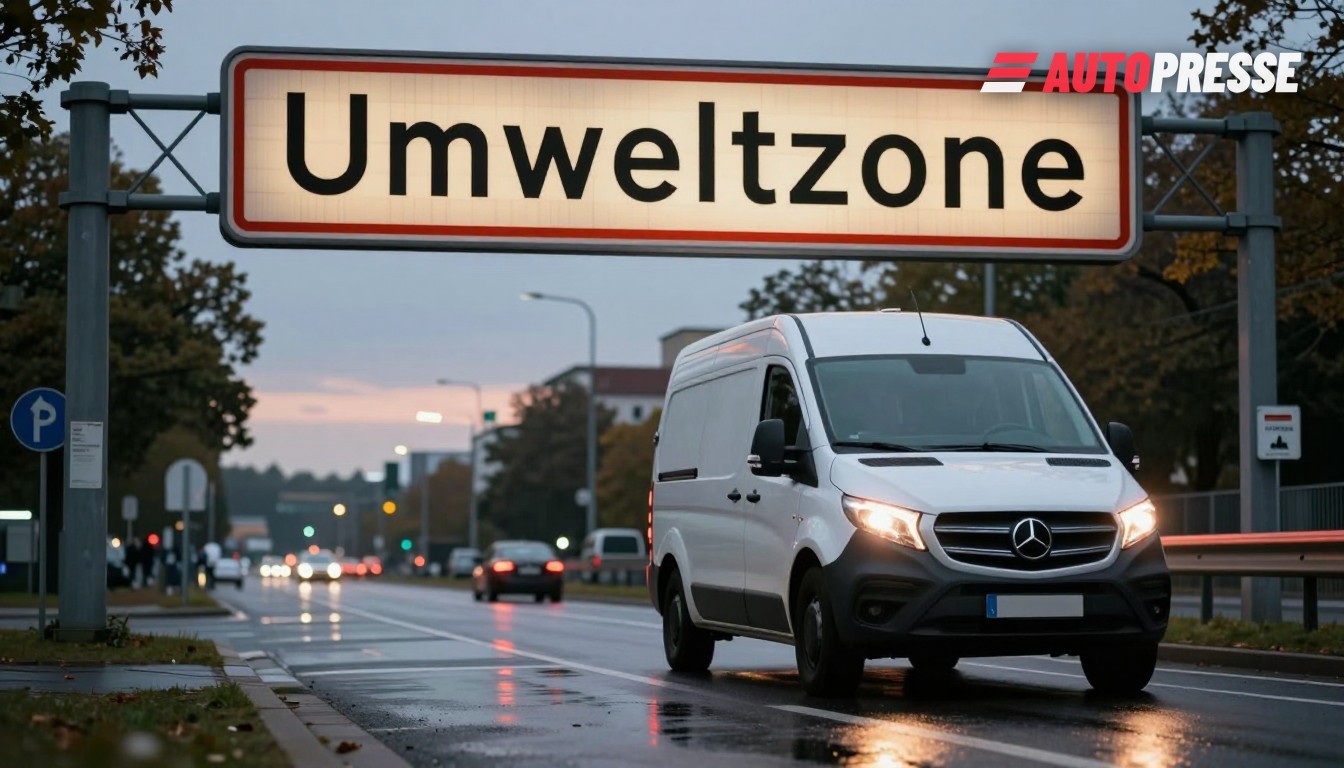
Germany has removed the obligation to carry the green ‘Umweltplakette’ for vehicles that carry an official E‑plate: from 1 October 2026 the E‑registration itself is accepted as proof to enter designated environmental zones. The federal change is a legal amendment to the 35th implementation regulation of the Federal Immission Control Act (35. BImSchV) and was published in the Bundesgesetzblatt on 30 September 2026. This matters to drivers, fleets, dealers and service workshops across Germany and Austria because it removes one small administrative step for electric cars — but it also creates legal uncertainty for vehicles registered abroad.
What changed in Germany
The formal amendment (Zweite Verordnung zur Änderung der 35. BImSchV) entered the Bundesgesetzblatt on 30 September 2026 and took effect on 1 October 2026. Under the new rule, battery electric vehicles, externally chargeable hybrids and fuel‑cell vehicles that bear an E‑plate or an equivalent marking under §11 of the German Vehicle Registration Regulation no longer need to additionally display the green particulate/NOx sticker when entering an Umweltzone. The change was implemented by federal regulation and applies immediately; municipalities continue to set and sign their local Umweltzonen.
Austria and cross‑border friction
Austria continues to rely on a mixture of national and municipal access rules: environmental zones, time‑limited loading windows and regional truck bans remain under local competence, and Austria still issues its own markings and access rules for city zones. International guidance from travel organisations notes that rules for foreign vehicles vary by country and by city, and that drivers from Austria should still check local requirements before entering German Umweltzonen. The OEAMTC and ADAC travel pages underline that while Germany now accepts the E‑plate as sufficient proof, questions remain about recognition of foreign special markings and the procedure for non‑E vehicles: without an E‑plate or an accepted national equivalent, the green sticker remains the safe proof of access and fines for non‑compliance still apply.
What this means for the market
Practical effects are immediate but limited. For German dealers and authorities the change reduces paperwork: the E‑plate replaces a second sticker, cutting a small administrative cost and simplifying fleet management for manufacturers and rental companies. For workshops and registration offices it changes the demand profile for issuing and affixing the green sticker. For cross‑border fleets, courier and parcel operators and dealers that sell cars across the border the change increases the need for clear procedure: Austrian‑registered EVs without a German E‑plate should either obtain the green sticker or carry documentation proving their electric drive, because enforcement practice and signage remain municipal responsibilities. Travel advice and enforcement guidance from ADAC and ÖAMTC therefore remain the practical reference for drivers.
Politically, the German step is a small deregulatory move at federal level that leaves local access regulation untouched; it also illustrates the wider EU challenge of harmonising urban vehicle‑access rules where member states (and cities) retain broad powers. European projects to harmonise Urban Vehicle Access Regulations (UVAR) are under way, but the rollout and camera‑based controls remain fragmented across Germany and Austria — so companies with cross‑border operations must keep city‑by‑city checklists.
WorldTrader24 B2B vehicle marketplace for dealers and fleets →
Sources: Bundesgesetzblatt / 35. BImSchV, Kfz‑Innung Sachsen West/Chemnitz, ADAC, ÖAMTC, OECD