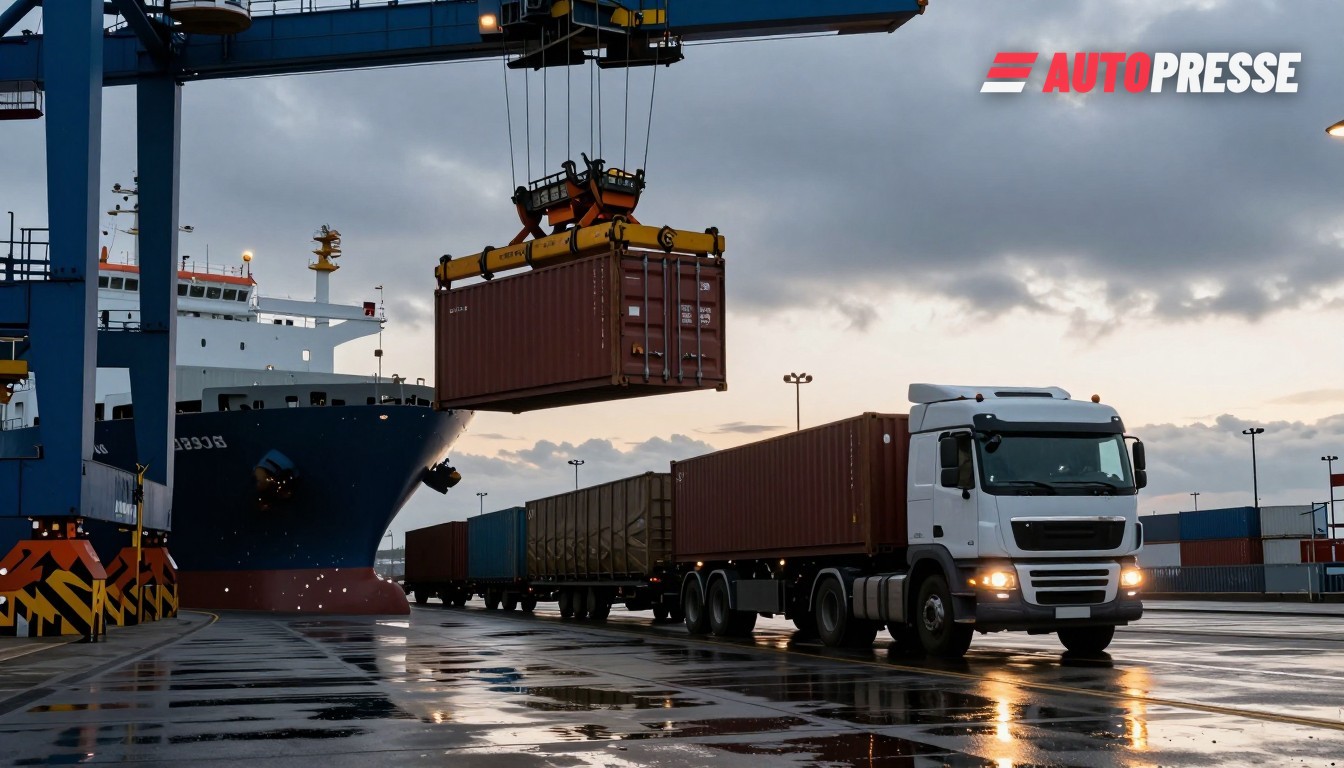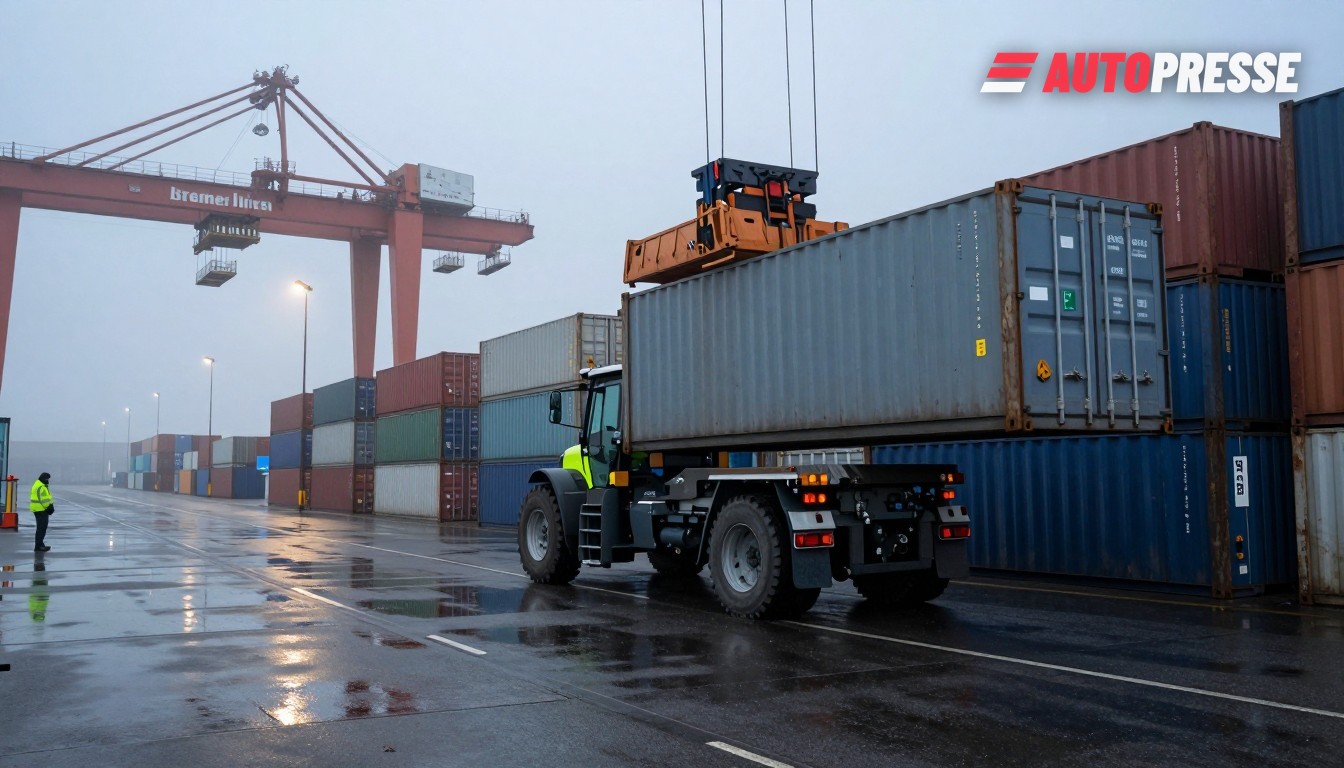
German and Austrian manufacturers, parts suppliers and freight forwarders face an unexpected choke point this winter: an increase in empty container moves that is consuming terminal capacity and inland handling resources, raising costs and delaying inbound parts. The imbalance is forcing a scramble for depot space and local container services from Hamburg to Bremerhaven and into Austrian industrial corridors, with knock‑on effects on production planning and just‑in‑time deliveries.
Why empties have become a landside problem
Shipping groups and terminals now say the constraint is not ocean capacity but landside handling. A.P. Moller‑Maersk’s CEO warned in the carrier’s Q2 (Aug. 13, 2026) earnings call that “that around 4% market growth will be 7–8% because the trade becomes more imbalanced,” meaning terminals are processing far more moves than loaded cargo figures suggest. The extra work is mostly empty‑box repositioning and yard handling — tasks that still consume crane hours, truck slots and depot capacity.
Ports operators feel the pressure. Hamburger Hafen und Logistik (HHLA) reported handling 4.20 million TEU in January–September 2026, down 7.7% year‑on‑year, and said ongoing automation work and landside constraints are affecting operations — a sign that throughput is being reshaped by non‑ocean factors at Germany’s largest container gateways.
How Germany & Austria are adapting
Terminal congestion and variable river levels have pushed shippers to seek alternatives: more scheduled air‑cargo lift from Frankfurt, greater use of inland depots, and commercial container traders that buy, repair and re‑deploy used boxes near manufacturing clusters. Frankfurt Airport’s cargo throughput grew in October 2026 — up 4.5% to 187,701 tonnes — showing airfreight can absorb some time‑sensitive imports when seaports and inland links are uncertain.
At the same time, logistics providers are expanding depot capacity and services in northern Germany and along key inland corridors. Market research and trade notices show a rising business case for container‑depot investment around Hamburg and Bremerhaven, where proximity to OEM and supplier clusters makes short‑term storage, cleaning and repair commercially attractive. Operators that can offer same‑day empty returns and local sale/lease options are being favoured by exporters and parts buyers who want to avoid long repositioning cycles.
Operational bulletins from forwarders confirm the reality on the ground: vessel waiting times, yard occupancy and short‑notice terminal pauses are driving customers to accept higher landed costs or to re‑route cargo via alternative gateways. Freight forwarder updates in early November recorded vessel waiting‑time fluctuations and advised shippers to re‑price door‑to‑door schedules accordingly.
What this means for the market
Automakers and tier‑suppliers should expect higher logistics volatility through the winter months and into Q1 2027. Practical steps firms are already taking include buying or long‑leasing local SOC (shipper‑owned) boxes, pre‑booking depot repair slots, increasing buffer stocks for critical parts, and pricing contracts to include landside repositioning risk. For freight buyers, airfreight remains an expensive but useful fallback for critical components: Frankfurt’s recent cargo growth shows capacity exists but at a premium. For terminals and depot investors, the case for more inland empty‑container capacity — and faster repair/turnaround services — is now commercial reality rather than theoretical demand.
WorldTrader24 B2B vehicle marketplace for dealers →
Sources: A.P. Moller‑Maersk (Q2 earnings call transcript / Roic AI), HHLA (reported volumes, Forwarder News), Fraport (traffic figures Oct 2026 / StatTimes), Kuehne+Nagel / myKN port operational updates, HTF Market Intelligence.