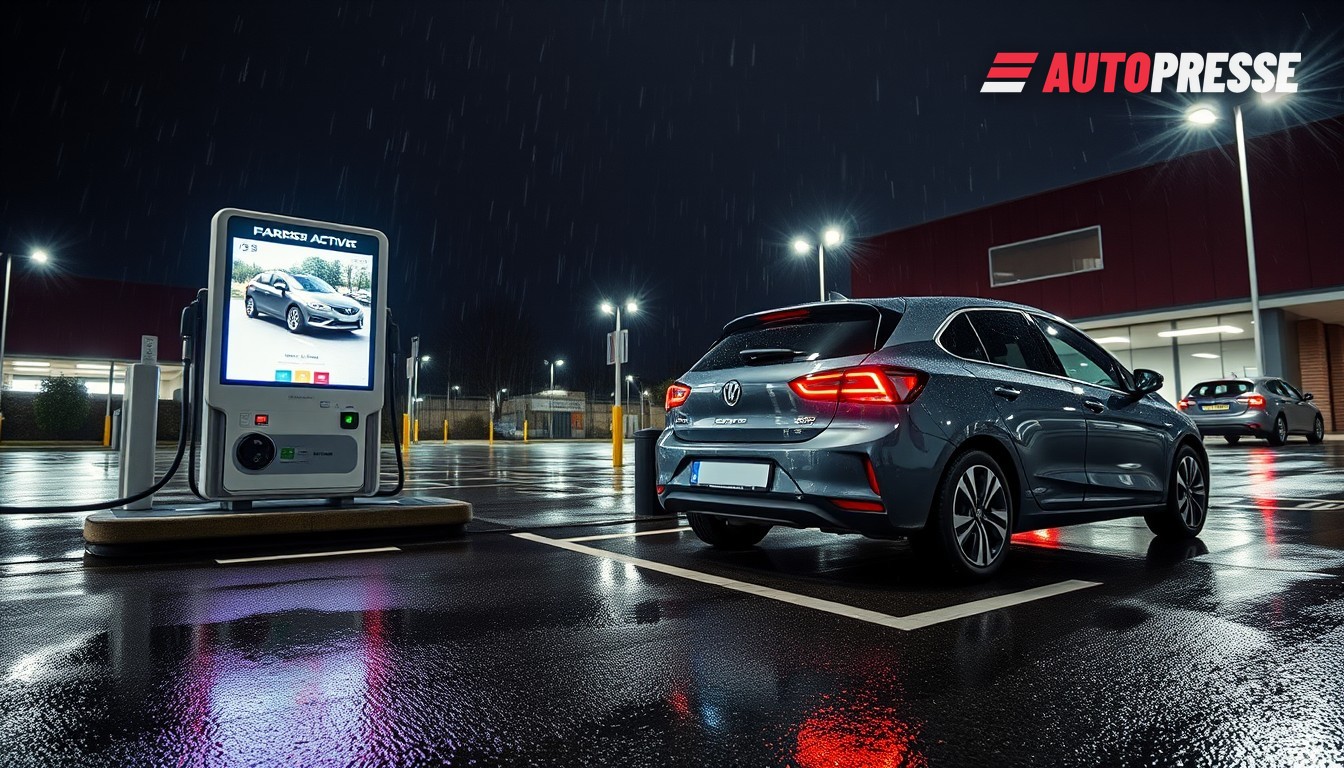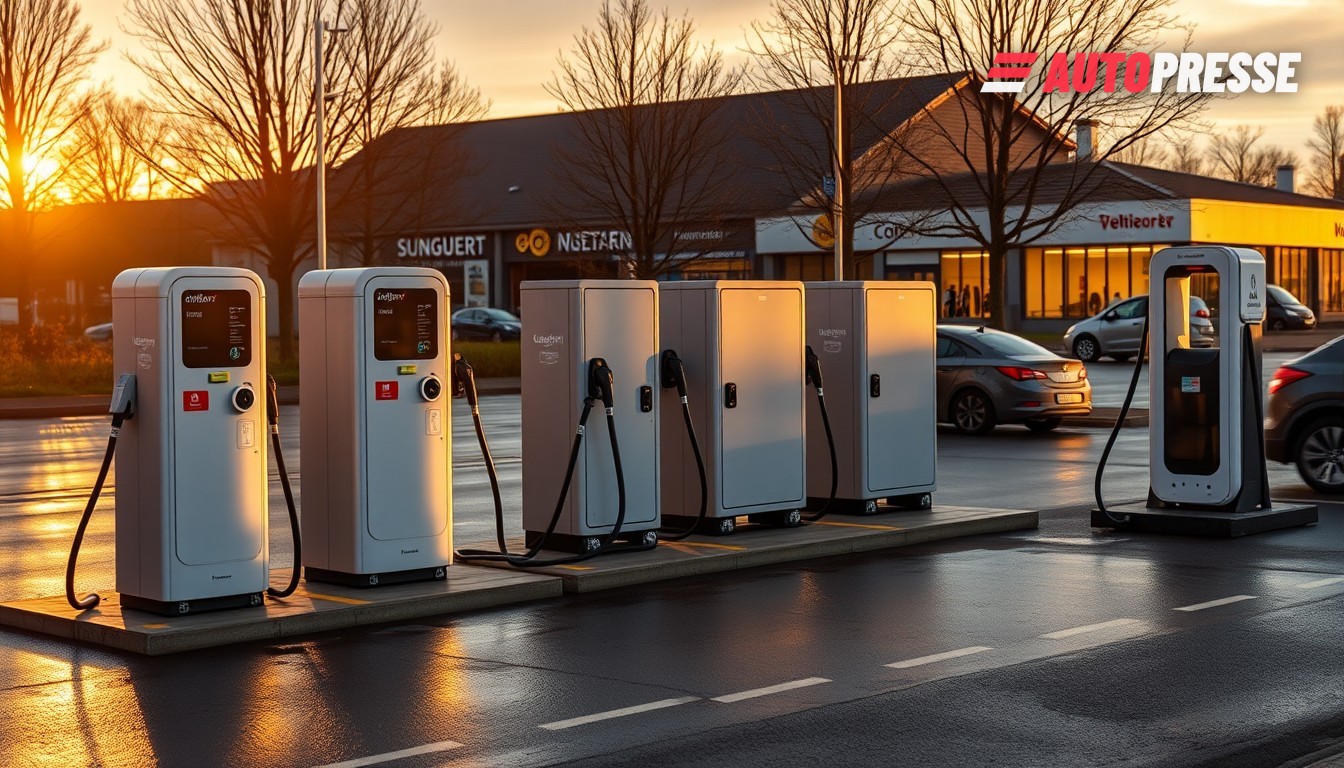
Drivers in Germany and across DACH may notice fewer “no‑power” weekends at motorway chargers: Ionity has put a 1,028‑kWh (1.028‑MWh) battery energy storage system into operation at its Wertheim charging park in Baden‑Württemberg, letting the operator add chargers without waiting for a medium‑voltage grid upgrade.
How the Wertheim installation works
The storage system — supplied by Sungrow and built from four modular units — can deliver up to 500 kW of peak power. At Wertheim Ionity used the battery to increase the site from four Alpitronic HYC400 chargers to six in immediate operation; two additional ABB chargers (up to 350 kW) are due to follow. Ionity says the battery bridges the long lead time for a medium‑voltage connection upgrade, which can take up to three years.
Roll‑out and next sites
Wertheim is the first site with this external BESS in Ionity’s network. The company told electrive it plans to roll out roughly 50 battery storage systems across its European charging parks in 2027, with a combined capacity of more than 20 MWh. A second project under development is a new build at Hemsbach: twelve fast chargers, a photovoltaic canopy of >223 kWp and a battery of more than 2 MWh are planned there.
What this means for the market
For drivers the immediate gain is more usable chargers at busy motorway stops; for Ionity and other charge‑point operators the benefit is economic and regulatory. Batteries let operators defer or avoid costly grid reinforcements, reduce peak grid demand charges and store onsite solar to lower energy bills. Electrification plans that stall on grid capacity could therefore be accelerated by modular BESS — but the approach also shifts complexity to equipment procurement, permitting and maintenance.