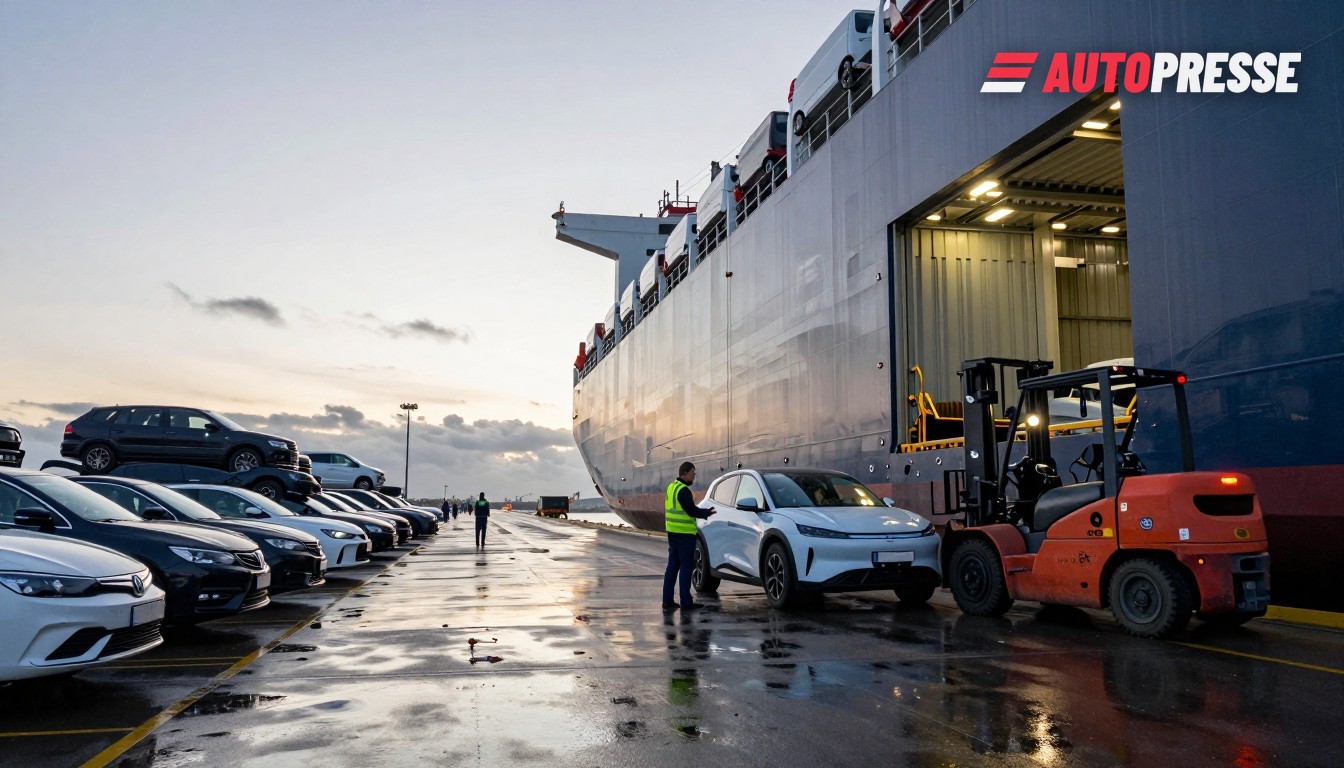
Germany’s car trade shifted noticeably in the first half of 2026: between January and July 2026 roughly 2.0 million new passenger cars were exported from Germany (value €73.5bn), a 4.0% drop versus the same period a year earlier. At the same time imports to Germany rose by 16.0% — driven in particular by a surge of vehicles from China. These changes are already reshaping flows through German and Austrian logistics chains.
Numbers and the new mix
Official figures show that, for January–July 2026, cars with conventional combustion engines still represented the largest share of German exports (52.7%), while battery‑electric vehicles accounted for 28.1% and hybrids 19.2%. Exports to the United Kingdom, the United States and Italy together took 32.7% of shipments (UK ~258,000 units; US ~245,000; Italy ~147,000). At the same time Germany’s imports of new cars reached about 1.3 million units (Jan–Jul 2026), up 16.0% year‑on‑year — with imports from China rising strongly (China’s deliveries to Germany rose by about 120.9% in the same period). These shifts mean more inbound volume to northern German ports and inland hubs, and a changing product mix to distribute to dealers and fleets.
Across the EU context, Germany remains by far the largest exporter of motor cars: in 2024 Germany accounted for 54.7% of cars exported from the EU. That structural weight gives German ports, rail corridors and distribution centres an outsized role when global sourcing or destination patterns change.
Austria: stronger domestic demand, different pressures
Meanwhile Austria recorded a clear rise in new registrations: Statistics Austria reports 164,529 new passenger‑car registrations in January–June 2026, +15.0% year‑on‑year. Alternative‑powertrain cars made up 65.5% of new registrations in that period (40,060 BEVs and 60,910 petrol‑hybrids). The Austrian market’s stronger domestic demand shifts logistics pressure toward local dealer delivery, short‑term registration flows and more last‑mile handling in urban centres.
What this means for the market
1) Port and terminal routines: A higher share of imports — and a faster rise in imports from China — increases the need for roll‑on/roll‑off capacity, quay release efficiency and inland clearance throughput at northern ports and inland terminals that serve Germany and Austria. Rail and barge links from ports to inland distribution hubs will face more mixed loads (BEVs, hybrids, ICE) and more complex pre‑delivery inspections.
2) Dealer and dealer‑logistics impact: With export volumes down but imports and domestic registrations up, dealers and regional distribution centres will see inventory composition change faster than volumes. That raises demands on vehicle preparation (different battery handling rules), temporary storage and transport insurance under fluctuating values — especially where unit values have fallen faster than volumes.
3) Freight modal mix and capacity planning: The numbers point to continued reliance on multimodal chains — Ro‑Ro shipping, inland barges, car‑carrier trains and specialised truck fleets — but with planners needing to manage faster swings in country‑of‑origin and powertrain mix. Germany’s central role in EU car exports means capacity reallocations there ripple through neighbouring Austria and central Europe.
Logistics providers, terminal operators and OEM distribution teams now need to translate these statistical shifts (Jan–Jul 2026 export and import figures; H1 2026 Austrian registrations) into operational moves: slotting for mixed powertrain checks, more flexible inland routing and a closer coordination with customs and registration offices to avoid bottlenecks.
WorldTrader24 B2B vehicle marketplace for dealers and fleets →
Sources: Statistisches Bundesamt (via DATEV), Statistics Austria, Eurostat