Germany and Austria’s auto supplier sector has entered a new phase of consolidation: large sites are being shut, mid‑tier firms are seeking court protection and small plants face relocation — developments that will matter to drivers, dealers and local workforces across both countries.
Recent moves: closures and restructuring
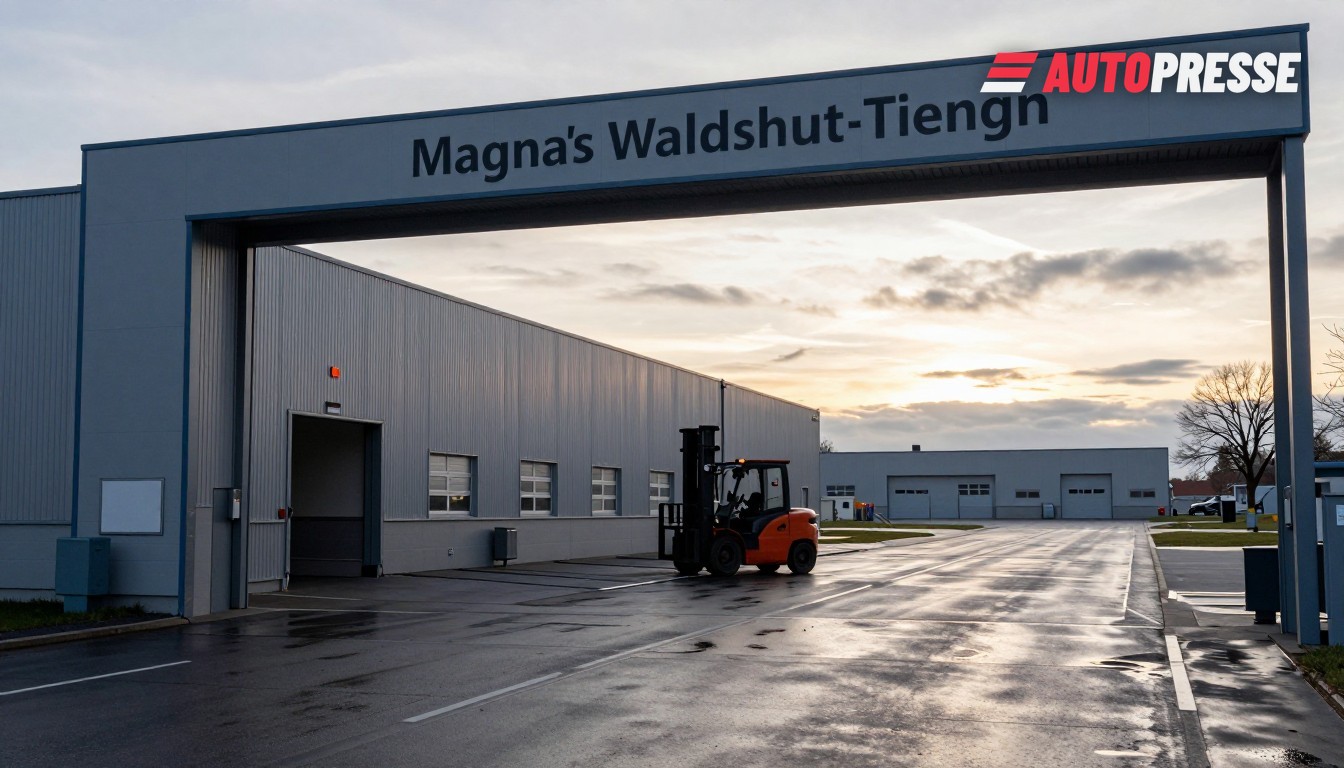
In Germany the supplier giant Magna told employees at its Waldshut‑Tiengen site it plans to close the factory, putting 255 jobs at risk; the company said the location is "not future‑proof" and expects the plant to shut in spring 2027. The site manufactures electronic components for carmakers and was one of several recent reductions at the group.
In Austria, the Pollmann Group disclosed that three domestic entities — Pollmann International GmbH, Pollmann Austria GmbH and Pollmann Werkzeugbau GmbH — filed for restructuring proceedings at the Regional Court of Krems an der Donau on 1 September 2026. Pollmann stressed the objective is to continue operations and that subsidiaries in the Czech Republic, Mexico and China are unaffected.
Smaller, long‑running cases also continue: Veritas Austria will close its Mieders (Stubaital) plant at the end of 2026, affecting about 80–90 employees; company management told regional press that rising personnel costs (up roughly 25% over five years) and a decision to move production to a lower‑cost country were decisive factors.
Why now: the insolvency and cost pressure backdrop
These company actions sit inside a wider European trend: PwC’s automotive performance analysis documents sharply higher supplier stress — major insolvencies rose in early 2025 and PwC found that nearly one in six insolvencies involved an automotive supplier, a 65% increase versus 2024; its Q2‑2025 survey showed around 90% of suppliers signalling the need for performance improvements. That combination of weaker volumes, margin pressure and limited access to capital helps explain why companies are pursuing closures, restructuring or sale processes.
What this means for the market
For local labour markets the immediate effect is blunt: hundreds of jobs are exposed at individual sites and shop‑floor teams face repeated reorganisations. For OEMs and dealers the risk is rising complexity in parts sourcing as mid‑tier suppliers trim capacity or consolidate — that raises the cost and lead‑time premium for local, specialised components. For the supplier landscape it accelerates M&A and investor searches for stranded assets, while buyers increasingly look to re‑qualify suppliers or shift volumes to lower‑cost locations.
Policy makers and works councils will be pushed to negotiate transition packages and to promote industry‑specific retraining; several companies already emphasise continuity of production during their restructuring processes. For fleet operators and repair networks the short term means watching inventories and orderbooks more closely — local parts availability may be uneven in 2027 as plants close and volumes re‑route.
B2B vehicle listings on WorldTrader24 for dealers →
Sources: Pollmann International, ORF Tirol, tagesschau.de, PwC