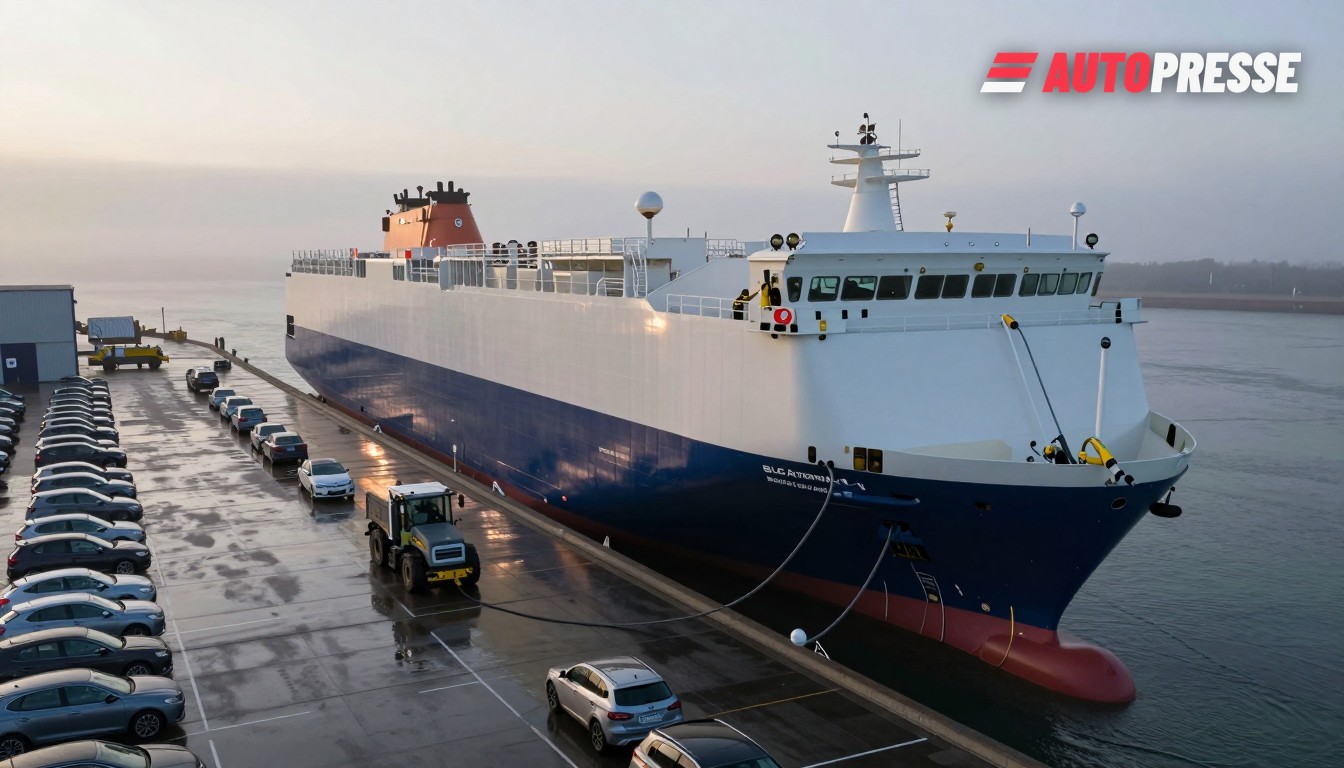
Europe’s finished‑vehicle supply chain has moved from congestion to cost: car‑carrier freight rates and second‑hand ship values have climbed in 2026 even as German ports race to modernise terminals and add hinterland capacity. That combination is already reshaping how cars bound for Germany and Austria are routed, processed and priced — a headache for fleets, dealers and logistics managers ahead of the year‑end peak.
Car‑carrier markets tightened through 2026 as owners placed newbuild orders to replace ageing tonnage. Industry tracker Forwarder News reports a surge in the car‑carrier orderbook and cites Riviera data that a standard car carrier was earning about $61,700 a day on a one‑year charter — “the highest in more than a year” — while second‑hand values rose in H1 2026. Forwarder News also notes projections of roughly 800,000 Chinese hybrid/EV units moving to Europe in 2026, a volume that will keep demand for Ro‑Ro slots strong.
Ports invest; terminals strain and adapt
German terminal operators are responding with equipment and platform upgrades rather than waiting for the market to cool. BLG – operator of the AutoTerminal Bremerhaven – is running an ATB 2.0 modernisation programme and told investors it expects a slight rise in imports from China in 2026 while expanding inland and value‑added services. The group also ran a Europe‑wide premiere at Bremerhaven in January 2026 when a pure car carrier took shore power while alongside, signalling investment in greener handling infrastructure.
At the Port of Hamburg, throughput and intermodal capacity remain large and growing: HHLA reported Port of Hamburg container throughput at 8.3 million TEU for 2025 and emphasised automation and intermodal expansion in its 2025 report — moves that also affect Ro‑Ro scheduling and berth availability for vehicle carriers.
Even so, finished‑vehicle handling volumes remain competitive: BLG’s reporting and market summaries show the AutoTerminal in Bremerhaven processed about 1.25 million vehicles in the most recent year reported, underlining the sheer scale of vehicle flows through northern German hubs. Terminal capacity and berth windows therefore matter to Austrian importers who routinely use Bremerhaven and Hamburg as maritime gateways.
What this means for the market
Short‑term: expect higher sea‑freight costs and tighter delivery slots. With charters at multi‑thousand‑dollar daily rates and a fresh wave of newbuilds not due to deliver until 2028, carriers and forwarders will prioritise the best‑paying trades — pushing up spot prices and creating uneven availability for smaller importers and some fleet orders. Forwarder News’ charter figures and the projected China→Europe volumes make this dynamic measurable in 2026.
Medium term: German port investment and inland terminals will blunt the worst delays but not the cost shock. BLG’s ATB 2.0 modernisation, shore‑power trials at Bremerhaven and the opening of inland locations (Ahlhorn among them) increase processing speed and sustainability, but they do not instantly add ocean lift. HHLA’s drive to lift intermodal throughput helps move cars inland faster — an important benefit for Austrian supply chains that rely on rail and road links from northern ports.
For dealers, fleet buyers and logistics teams in Germany and Austria the message is practical: build freight‑cost and schedule buffers into procurement plans now, consider alternative transit windows (earlier sailings, intermodal routes) and push for terminal SLAs when negotiating imports. Expect some re‑routing and tighter remarketing windows for used vehicles as carriers and terminals chase higher margins.
B2B vehicle listings on WorldTrader24 →
Sources: BLG Logistics (pressroom and 2025 annual report), Forwarder News, Automotive Logistics, HHLA Annual Report 2025