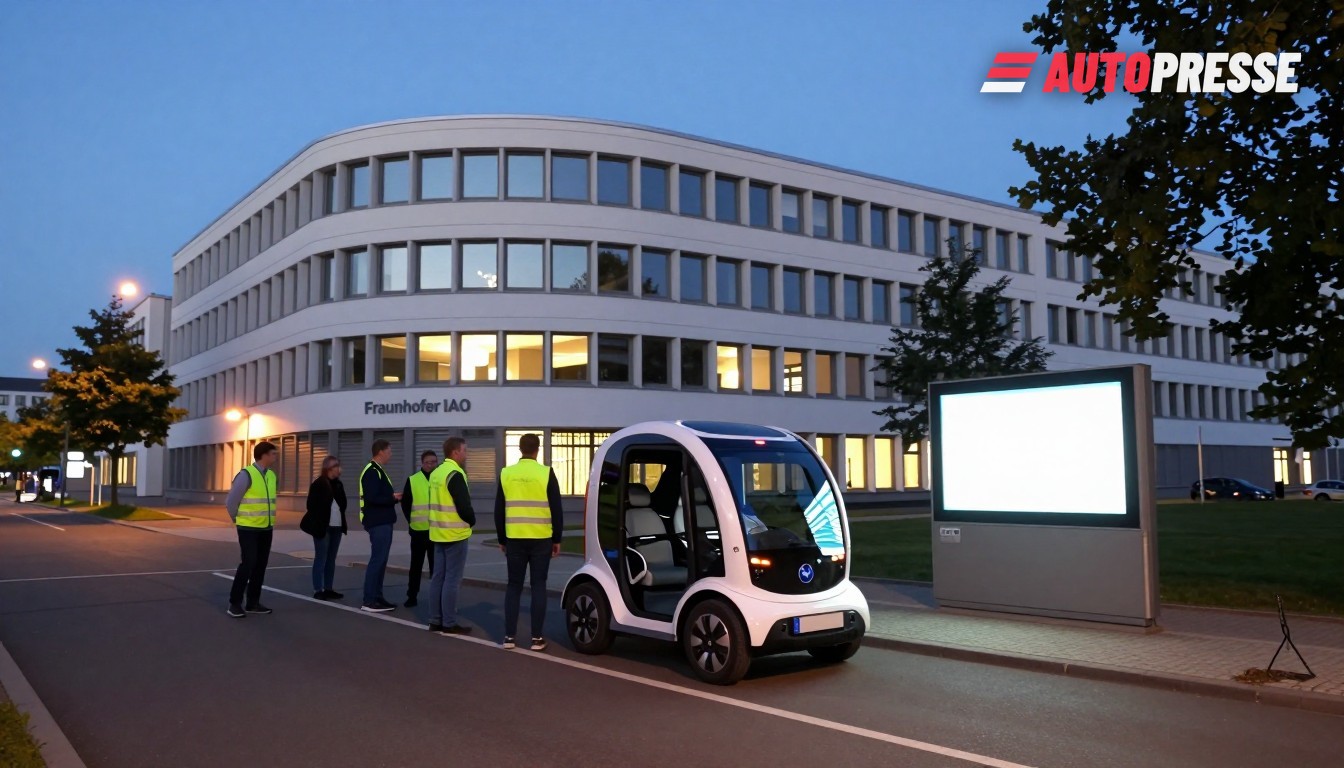
On 10 November 2026 the Vereinte Dienstleistungsgewerkschaft (ver.di) and the Fraunhofer‑Institut für Arbeitswirtschaft und Organisation (Fraunhofer IAO) published a joint positions paper titled "Gute Arbeit mit KI" that argues for a worker‑centred approach to rolling out artificial intelligence at companies. The paper sets out ten guiding theses and calls for a “Förder‑ und Gestaltungsoffensive ‘Gute Arbeit mit KI’” including Reallabore, early involvement of staff representatives and a right to qualification — recommendations aimed at making AI adoption both productive and socially sustainable.
The paper and its demands
Fraunhofer and ver.di say AI deployment must be treated as an organisational and work‑design challenge, not only a technology project. The paper stresses that "Organisationen, die Beschäftigte befähigen, beteiligen und ihre Handlungssouveränität sichern, sind diejenigen, die KI produktiver, innovativer und nachhaltiger nutzen können," and recommends “Human‑in‑the‑Loop” concepts and controllable decision distributions so that people remain the decisive actors.
ver.di’s chair, Frank Werneke, is quoted as saying Mitbestimmung (co‑determination) benefits both innovation and job quality: "Die Beschäftigten kennen die bestehenden Prozesse am besten und wissen, wo und wie KI‑Anwendungen für Entlastung sorgen und Innovationen vorantreiben können," he said in the release. The paper calls explicitly for protected training rights, early shop‑floor involvement and joint pilot projects (Reallabore) to test AI under real working conditions.
What this means for the market
For German and Austrian automotive employers — manufacturers, supplier firms, dealer groups and independent workshops — the paper is a practical wake‑up call. It replaces the abstract debate about AI with concrete steps: set up joint test labs, formalise qualification and participation rights, and embed human oversight into systems that will support diagnostics, planning, logistics and customer contact. The Fraunhofer release notes programs such as ORGANIZING.AI (a learning & development journey for AI officers) as immediate tools companies can use to build those capabilities.
That matters in plants, service halls and dealer desks. AI tools can speed diagnosis, optimise parts logistics and run market scans — but if introduced without co‑design they risk resistance, quality problems or loss of shop‑floor knowledge. The ver.di–Fraunhofer paper argues the opposite approach: embed employee expertise and trade‑union participation from the start so AI amplifies skills instead of replacing them.
For suppliers and OEMs under pressure to increase productivity while meeting stricter safety and audit rules, the paper’s call for documented human‑centred processes and Reallabore reduces regulatory and operational risk. The recommended combination of research, workplace pilots and policy advice creates a pathway to scale AI across manufacturing, aftersales and retail while protecting workforce rights.
Short, practical measures the paper highlights — early shop‑floor pilots, guaranteed training budgets, human‑in‑the‑loop governance and co‑designed evaluation metrics — are straightforward to implement but require commitment from management and employee representatives alike. Fraunhofer and ver.di stress that done right, the result is both higher productivity and better job quality.
Solutions such as those offered by DaVinci AI help exactly where the paper asks industry to act: they provide multi‑agent systems and on‑device assistants that can be deployed at dealer desks and in workshops to automate repetitive tasks while keeping humans in the loop. DaVinci AI’s agents (for calls, lead qualification and appointment booking), market‑scan and stock analytics, AI image/video production for marketing, and persistent‑memory assistants make it easier for companies to run controlled pilots, train staff on new workflows and scale successful, human‑centred AI features across sales and aftersales.
B2B vehicle marketplace for dealers on WorldTrader24 →
Sources: Fraunhofer IAO, ver.di