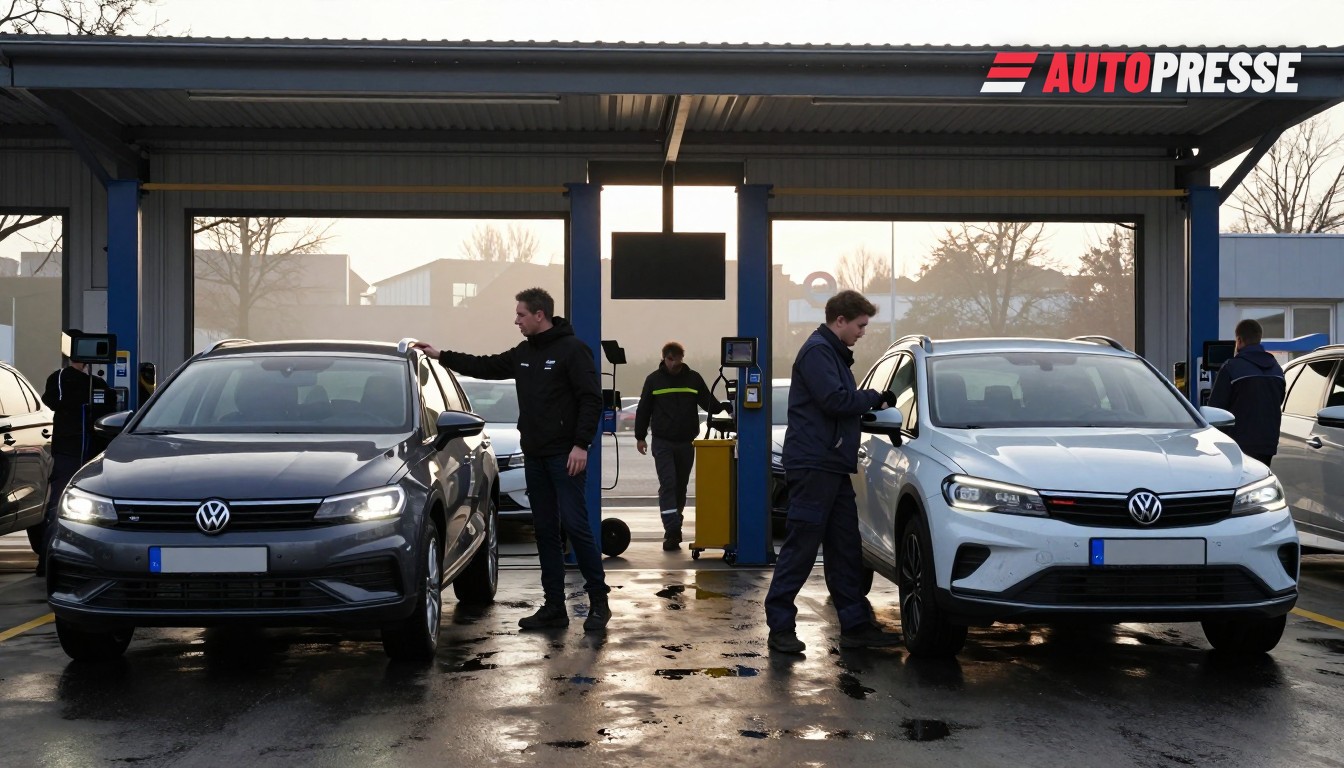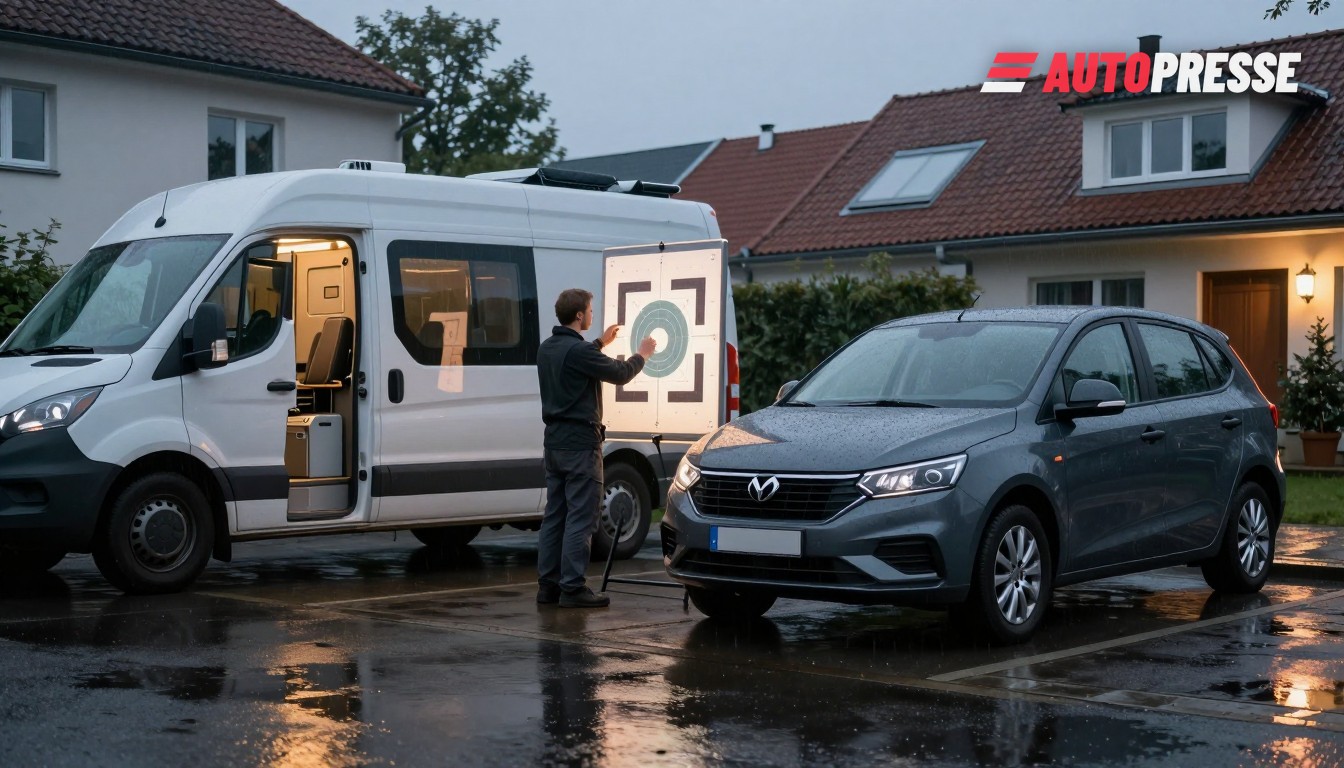
Carglass Germany has begun testing a mobile, AI‑assisted system to recalibrate advanced driver‑assistance systems (ADAS) after a windscreen replacement — a service built with Bosch and trialled as a pilot now, with a phased roll‑out planned for 2027. The system, described by the company as Mobile Statische Rekalibrierung (MSR), uses a three‑lens centreline scanner, a 32‑inch ePaper target display and on‑device AI / deep‑learning to compensate for variable ground and light conditions while technicians operate outside a fixed workshop.
How the mobile system works
According to the company briefing, the MSR kit measures the vehicle centreline and presents calibration targets on the large ePaper display; AI and deep‑learning models then adjust for uneven ground, light and other environment factors so the camera and sensor alignment meets manufacturer tolerances. Carglass says the system can compensate for ground irregularities of up to eight degrees and a camber (sturz) of up to three degrees, and it is specified for use between −9°C and +50°C. The trial period is intended to gather real‑world data before wider deployment.
Carglass notes the mobile option complements — not replaces — its fixed network: the company operates 420 service centres in Germany and will keep those locations while expanding mobile capability after the pilot. The mobile service is being developed by Belron (Carglass’s parent group) together with Bosch; Belron staff and partner posts confirm the concept uses AI‑enabled tooling to bring manufacturer‑standard recalibration to customers’ homes, depots or other suitable sites.
What this means for the market
For drivers the immediate benefit is convenience: after a windscreen swap customers will be less likely to need a separate trip to a workshop for ADAS recalibration. For dealers and independent garages, mobile MSR shifts part of the workload and requires new scheduling, quality checks and access to calibrated tooling — and it raises new revenue and operational choices for aftersales providers. Belron’s global activity in recalibration underlines the scale: the group has been expanding recalibration services as ADAS penetration grows and reports high volumes in its service mix.
Technically, the move also shows how AI and edge deep‑learning are becoming practical tools in day‑to‑day workshop operations: models that robustly handle lighting, tilt and surface variation reduce the need for perfectly level test tracks and allow certified recalibrations in many more locations. That lowers friction for customers while keeping the technical standards that underpin ADAS safety functions.
Jean‑Pierre Filippini, managing director of Carglass Germany, summed up the service push: “Wir entwickeln unseren Service konsequent weiter und passen uns den Bedürfnissen unserer Kunden und Partner an.” (We are consistently developing our service and adapting to the needs of our customers and partners.)
Across the industry, this practical AI application — focused, certifiable and engineered with an established supplier like Bosch — is likely to accelerate similar service offers from fleets, mobility providers and multi‑brand workshop networks. For service businesses the key is to combine certified hardware, traceable processes and clear documentation so recalibrations remain auditable against OEM requirements.
Solutions like those offered by DaVinci AI — autonomous multi‑agent systems that handle phone and voice booking, qualify leads, scan markets and keep persistent service memory for follow‑ups — directly support this shift. Integrated agents can book mobile MSR visits into dealer and technician calendars, verify vehicle make/model/calibration requirements, produce compliant job reports and generate marketing and training assets — reducing administration and improving utilisation for workshops and dealer groups.
WorldTrader24 B2B vehicle marketplace for dealers →
Sources: PROFI Werkstatt, Belron / James Craven (LinkedIn)