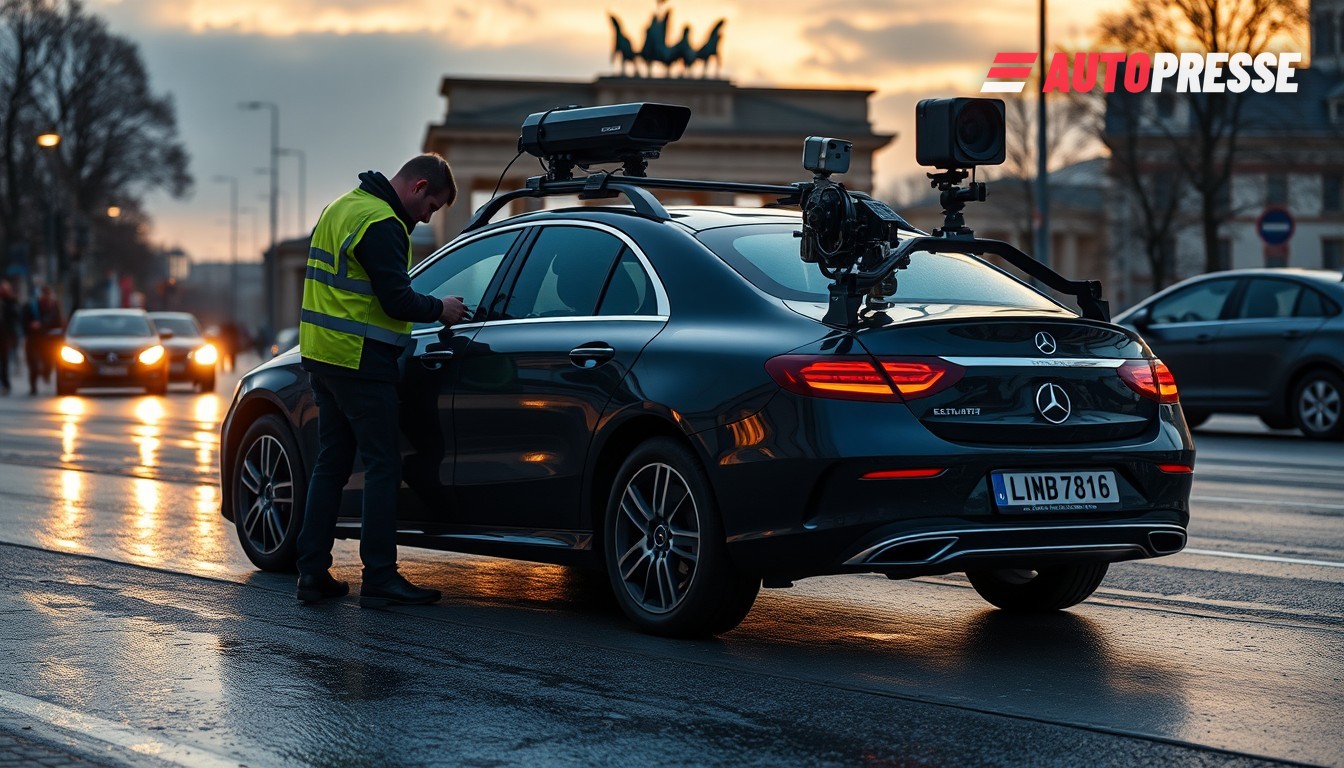
In a tightly observed demonstration in Berlin, Nvidia’s driving model Alpamayo handled complex city streets in a Mercedes CLA with only one human takeover on a demanding route — a development that matters for drivers, dealers and suppliers across Germany and Austria as OEMs accelerate software-led driving features.
What happened
Golem.de’s on-road test on 28 October 2026 shows Alpamayo steering a production Mercedes CLA on a deliberately complex Berlin route — including narrow side streets, heavy bicycle traffic and partially blocked lanes — and required a single manual intervention when an especially tight turn and mixed traffic created a hazardous moment. The journalist reported the system drove defensively, kept legal speeds and displayed detected road users on the instrument cluster during the run.
The demonstration used a Drive AGX Orin compute unit temporarily installed in the boot, a visual model of roughly 300 million parameters in the tested variant, six of ten surround cameras and five radars as inputs. Nvidia’s test setup achieved an end‑to‑reaction latency of about 150 ms and — in this configuration — supported speeds up to roughly 130 km/h, the report says; Mercedes aims to clear Drive Assist Pro up to higher limits in regulation and rollout planning.
Nvidia, Mercedes and Volvo: the stack behind the wheel
Behind the demo stands a recent string of partnerships: Nvidia has expanded its DRIVE/Hyperion ecosystem and is offering the Alpamayo stack (compute, Halos OS and driving models) to multiple European OEMs. Press materials from Nvidia describe Alpamayo and Hyperion as a full-stack route for advanced driver assistance and a path toward higher autonomy levels in future vehicles. Several manufacturers including Mercedes‑Benz and Volvo Cars recently named Nvidia technologies as part of their next‑generation automated‑driving plans.