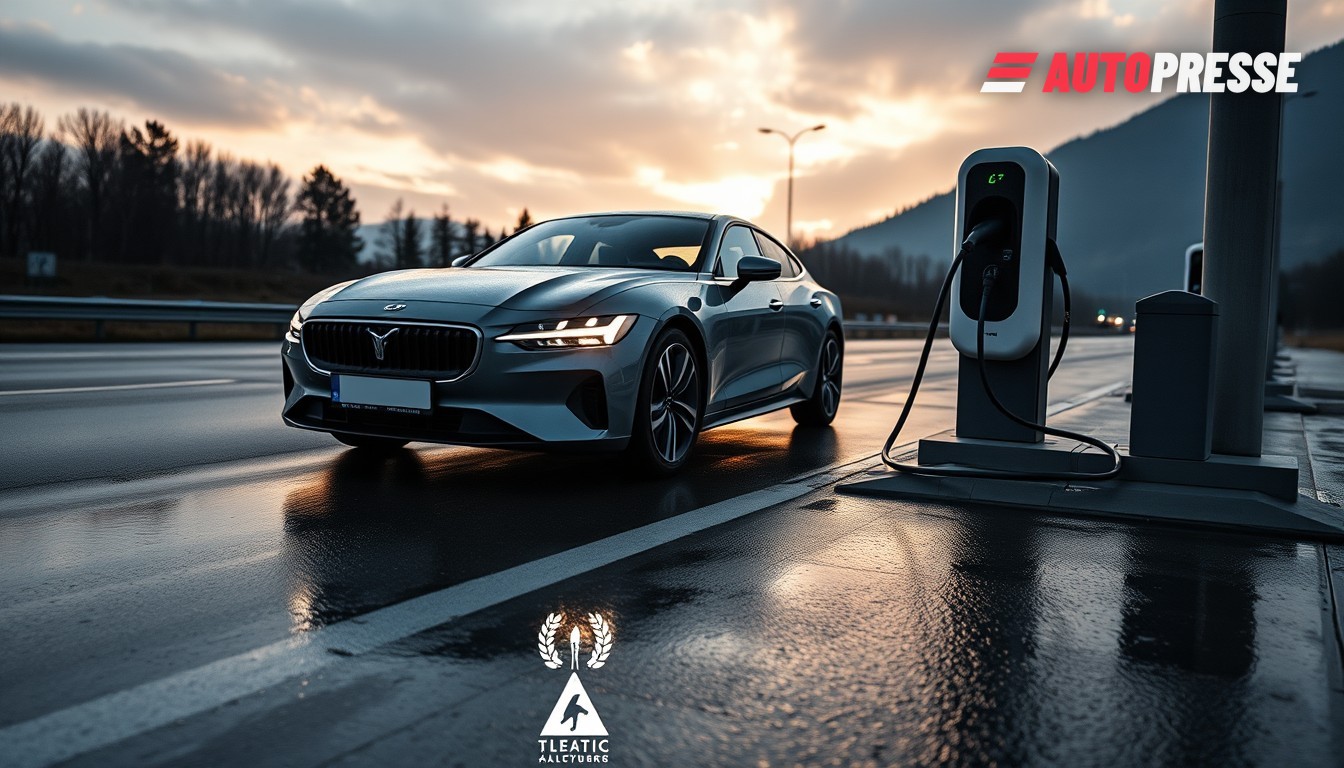
The big news for Austrian drivers: Polestar has begun selling the model‑year 2027 Polestar 3 in Austria, bringing an 800‑volt electrical architecture, substantially faster DC charging and higher motor outputs. That matters to buyers, fleets and dealers in Austria and Germany because it shortens fast‑charging stops, raises performance numbers and shifts the value equation for large premium EVs.
What changed and how the car performs
Polestar’s Austrian pages and local reporting state the updated Polestar 3 is offered in three versions in Austria: Rear Motor (92 kWh) from €79,900, Dual Motor (106 kWh) from €86,900 and Performance (106 kWh) from €103,400 — all exempt from Austria’s NoVA tax. The new Rear Motor puts out 245 kW (333 PS), the Dual Motor 400 kW (544 PS) and the Performance 500 kW (680 PS). WLTP ranges are quoted up to 647 km for the Dual Motor.
The headline technical change is the switch from a 400‑volt to an 800‑volt architecture. That lets the Dual Motor and Performance cars accept up to 350 kW at suitable chargers (the Rear Motor is rated up to ~310 kW) — Polestar Austria lists 10–80% charging in 22 minutes on 800‑volt chargers. On existing 400‑volt stations the car is limited to about 120 kW. These figures come from the Austrian announcement and corroborating industry coverage.
Polestar also fitted a new NVIDIA DRIVE AGX Orin central computer and a newly developed permanent‑magnet synchronous rear motor across the range; the company says existing Polestar 3 owners will be offered a free retrofit of the new central computer. Independent first‑drive and charging checks cited by local outlets confirm the car can initially draw very high power (around 350 kW) at an 800‑volt station, with average delivered power falling as the battery passes 80%.