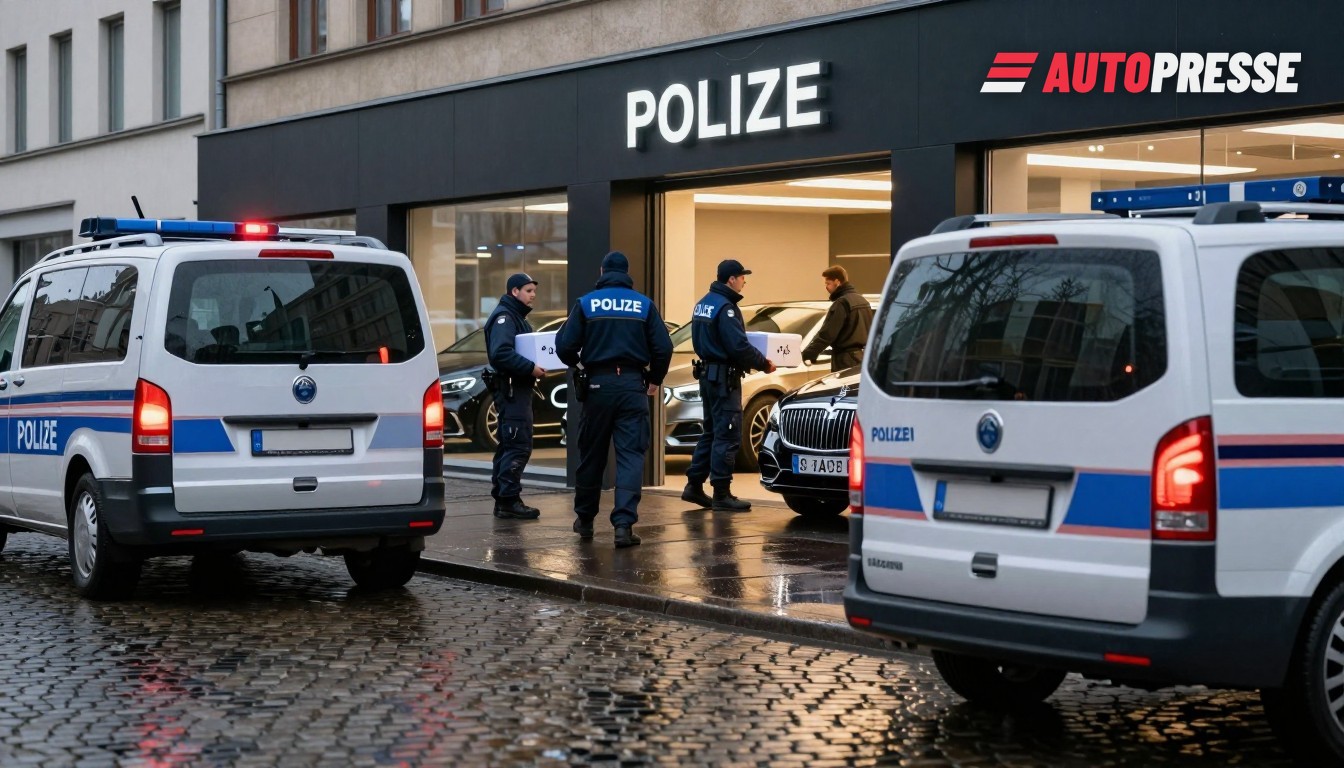
Law enforcement in Germany and Austria carried out coordinated raids this week that led to the arrest of 13 people and the seizure of cars, cash, property and frozen bank accounts as part of an EPPO‑led probe into large‑scale VAT fraud in the trade of high‑value vehicles. The action — code‑named “JAVELIN” by the European Public Prosecutor’s Office — is focused on a cross‑border carousel scheme investigators say cost EU tax authorities roughly €100 million.
How the scheme allegedly worked
According to EPPO, searches took place on 4–5 November 2026 across Austria, Croatia, Czechia, Germany and Poland and involved more than 900 tax and police officers. Thirteen people were arrested in Germany and Austria and more than 50 suspects are under investigation. EPPO says seizing orders of roughly €26 million were executed and dozens of luxury cars, cash, crypto assets, a firearm and luxury watches were confiscated. “All persons are presumed innocent until proven guilty by the competent courts of law,” the office added.
Prosecutors describe a classic VAT carousel built around imports and onward sales of expensive vehicles: cars were imported or declared as sold cross‑border to so‑called “missing traders” in Berlin who bought at net prices but then allegedly collected VAT from German buyers and disappeared without remitting the tax. Intermediary “buffer” companies then helped conceal the chain before cars left the country again or were resold, enabling fraudulent VAT refund claims. EPPO estimates illicit profits generated by the scheme at about €100 million.
Where Austria and Germany feature
The Austrian Federal Ministry of Finance (BMF) says Austrian investigators focused on vehicle deliveries worth around €80 million within the Austrian investigation strand, and that the revenue loss tied to those activities in Austria exceeds €10 million. Austrian authorities report 12 house searches in Tyrol and Vorarlberg and that 84 employees of the Austrian financial administration took part in domestic measures; three suspects were arrested in Austria and two Austrian nationals were detained by German forces.
German participation in the JAVELIN operation included prosecutors in Mannheim and Berlin and tax investigation offices across several federal states, with airport and state police units assisting in searches and seizures. German action reportedly included freezing bank accounts and executing property seizures in Berlin, among other measures.
What this means for the market
For dealers, buyers and insurers in Germany and Austria the investigation highlights two immediate risks: heightened scrutiny of cross‑border second‑hand and dealer‑to‑dealer transactions, and the prospect of rapid enforcement measures (account freezes, vehicle seizures, property seizures) that can immobilise stock and capital. EPPO operations of similar scope in recent years have repeatedly targeted networks that used dealerships, shell companies and export paperwork to conceal fraud; the JAVELIN operation shows authorities continue to prioritise luxury‑car trading channels.
Dealership groups and trade associations should expect requests for fuller documentation on provenance, VAT treatment and transport evidence; banks and insurers may increase due diligence on vehicle‑trade clients and transactions. For employees and local service suppliers the risk is business disruption during investigations even when management or owners are the primary targets.
EPPO and national authorities say the probe remains ongoing and that further arrests or indictments are possible as investigators analyse seized data and assets. “All persons are presumed innocent until proven guilty,” EPPO reiterated.
WorldTrader24 B2B vehicle marketplace for dealers →
Sources: European Public Prosecutor’s Office (EPPO); Austrian Federal Ministry of Finance (BMF); Handelsblatt