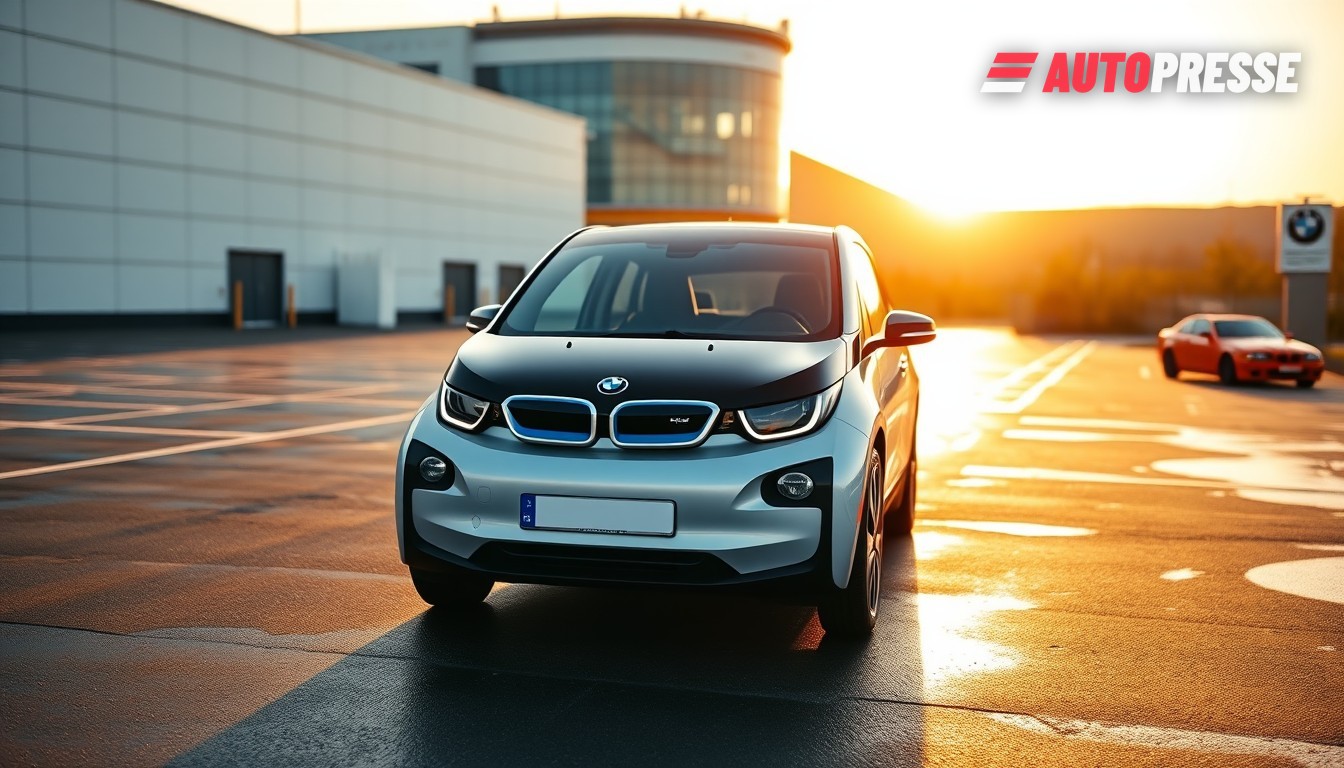
BMW’s new i3 — the fully electric version of the 3 Series and the second model on BMW’s ‘Neue Klasse’ architecture — has reached German and Austrian roads. For drivers, dealers and fleet managers in Germany and Austria the questions are concrete: how fast does it charge, how far will it go in real use, and how much will it cost? Early test drives and BMW’s own press material now give firmer answers.
How it performs on the road
BMW publishes the headline figures: the i3 50 xDrive uses a 108.7 kWh usable battery, an 800‑volt electrical architecture and a peak DC charging capability of up to 400 kW; BMW states a WLTP combined range of up to 912 kilometres for the top i3 50 xDrive and up to 710 kilometres for the smaller 40 xDrive. Production started in Munich in mid‑2026.
Independent first drives in late October measured how those numbers work in practice. Vision‑Mobility’s test (30 October 2026) summarises BMW’s technical claims and reports that under the test programme the i3 can reach 10–80% in around 21 minutes under ideal conditions; the site also recorded sporty real‑world consumption of about 34 kWh/100 km on its drive route (the author stressed that more economical driving will lower consumption). Vision‑Mobility’s test quoted WLTP windows between 729 and 912 km and reported that in ten minutes the car can add energy sufficient for roughly 423 km in ideal conditions.
Testers noted the i3’s driving character: immediate torque and a composed ride thanks to its low battery centre of gravity, but also compromises typical for compact mid‑class sedans — a slightly higher seating position than the traditional 3 Series and a rear bench that is “adequate but not generous” for tall passengers. The review singled out optional equipment (sports seats, adaptive dampers) as meaningful to the car’s on‑road balance. Fuel‑equivalent comparisons and price for well‑equipped models pushed test cars into premium territory.