Germany and Austria are moving beyond isolated pilots: second‑life battery plants and bidirectional charging demonstrations this year turned parked EVs into dispatchable grid assets, while OEMs prepared customer offerings for late 2026. That shift matters to drivers, fleets and dealers — because parked EVs and retired battery packs are now being counted as energy infrastructure, with concrete figures and dates already on the table.
Second‑life storage grows from lab to utility
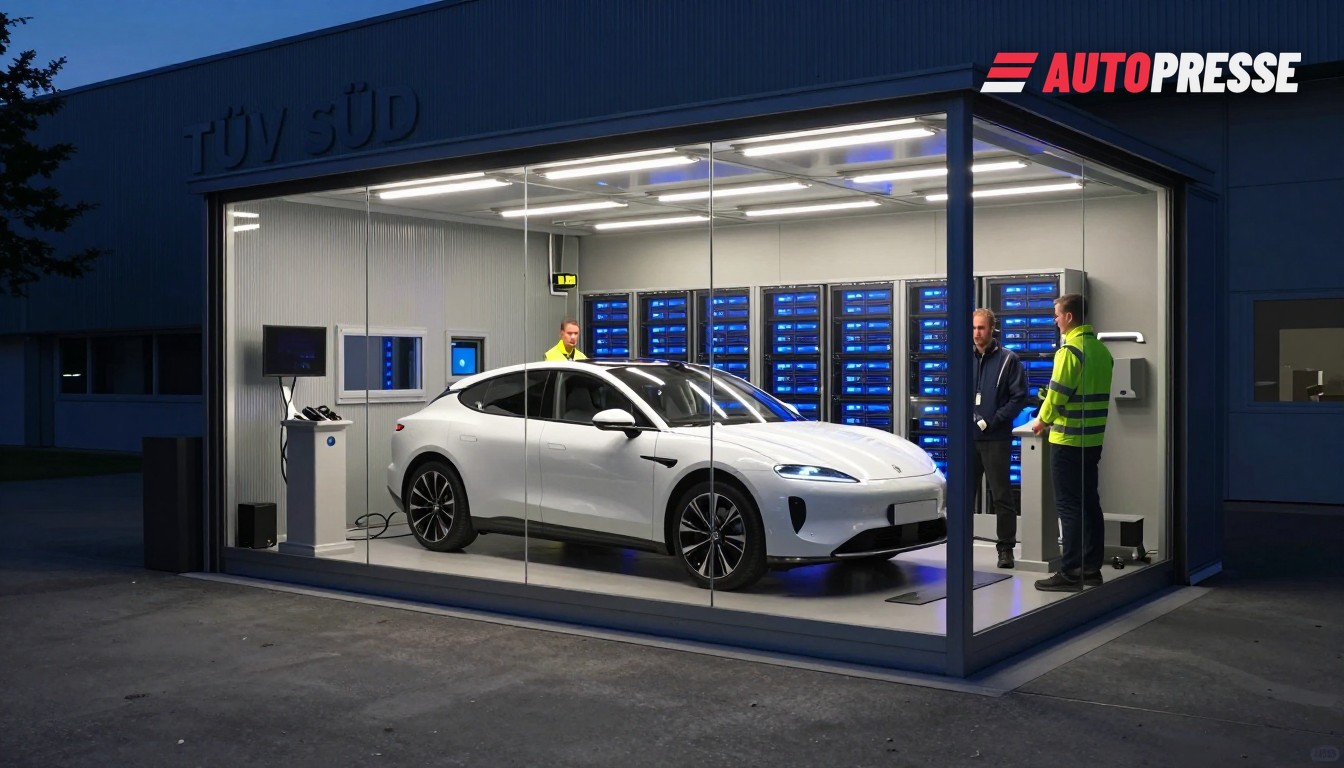
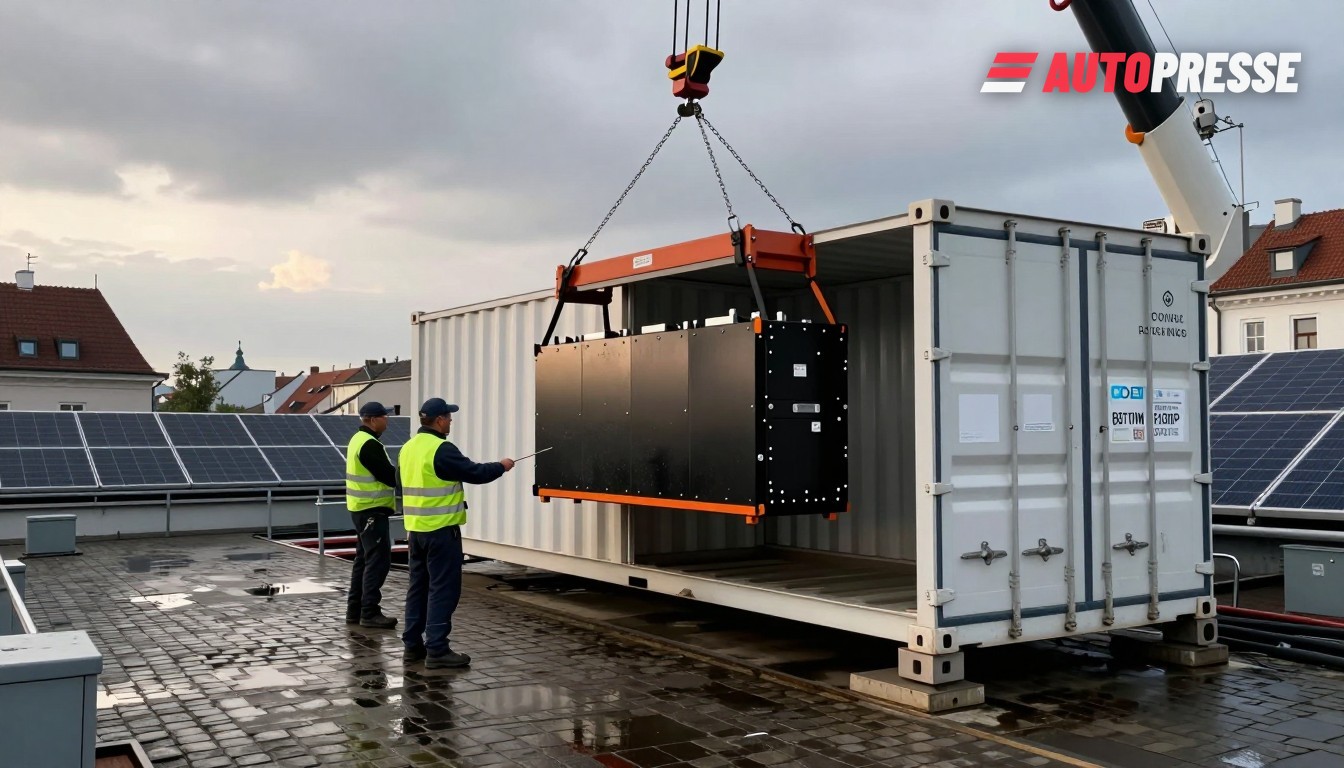
Vienna’s utility group opened what it calls Austria’s largest second‑life battery plant on 6 August 2026: about 400 second‑life modules provide roughly 4.0 MWh of storage and 1.0 MW of power to balance local PV output, lengthening battery life by an estimated 10–12 years. The project explicitly ties rooftop solar and reused EV modules to a station-sized buffer that can feed the local grid when needed.
On the research side, Germany’s Fraunhofer ISE wrapped the ecoLEPuS project in May 2026 after testing the technical suitability of heterogeneous second‑life cells for fast‑charging buffer storage — work thataddresses thermal management, online condition monitoring and refurbishment needs for higher‑power, second‑life applications. The Fraunhofer team published design and safety recommendations intended for charging‑infrastructure integrators.
Bidirectional charging moves from pilot to product
Fleet and depot pilots showed the operational upside of V2G: on 24 April 2026 a consortium led by TUM demonstrated a MAN eTruck that returned up to 325 kW into the distribution system during a live depot test near Regensburg — the project displayed use cases from vehicle‑to‑vehicle charging to full V2G into the medium‑voltage network. Such experiments prove the concept for logistics operators and grid managers.
Austria’s postal operator joined that movement early: on 10 March 2026 Österreichische Post, EVN and Netz Niederösterreich began a Mautern pilot in which five delivery EVs are not only charged but can also feed stored energy back into the public grid; the Post noted it already operates over 6,000 electric vehicles and described the trial as a step toward "a decentralised storage system" if the tests succeed.
Manufacturers are starting to package these functions for customers. Volkswagen Group’s Elli announced on 16 April 2026 that it plans a market launch of a fully integrated Vehicle‑to‑Grid offer in Germany from the fourth quarter of 2026, with pre‑registration opening in June 2026 — marking the first large OEM timetable to connect retail EVs to energy markets at scale.
What this means for the market
Technically, the combination of depot V2G (hundreds of kilowatts per vehicle in trials) and multi‑MWh second‑life plants creates new flexibility for grid operators and opportunity for fleet owners to monetise parked assets. Projects such as Vienna’s 4.0 MWh plant and the MAN 325 kW demo show the two value chains — retired packs as stationary storage, and operating fleets as mobile buffers — can coexist and complement one another.
Commercial rollout will hinge on regulation, integration and business models. Observers warned in mid‑2026 that Europe still needs simpler, harmonised rules for bidirectional charging to reach scale; industry pledges and OEM product timetables now put pressure on regulators to align grid fees, metering and market access before these revenue streams become widely bankable.
For dealers, fleet managers and local utilities in Germany and Austria the takeaway is practical: second‑life projects lower storage costs and extend battery value, while depot V2G pilots show fleets can become distributed energy resources. Expect more joint pilots between OEMs, utilities and charging‑infrastructure integrators through 2027 as technical learnings from Fraunhofer and university consortia feed into commercial designs.
Electric vehicle listings on WorldTrader24 →
Sources: Volkswagen Group (Elli), Technische Universität München (SPIRIT‑E), EVN / Österreichische Post, Wiener Stadtwerke, Fraunhofer ISE, electrive.com