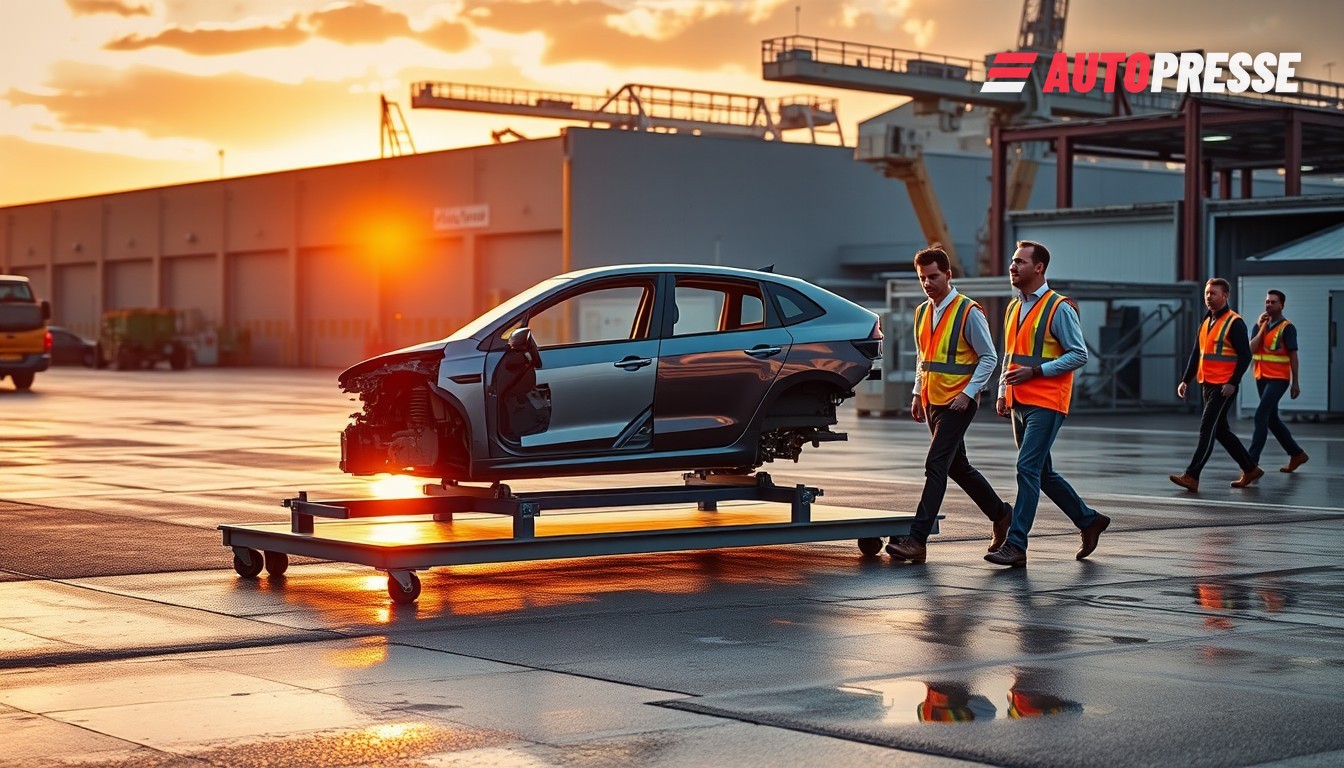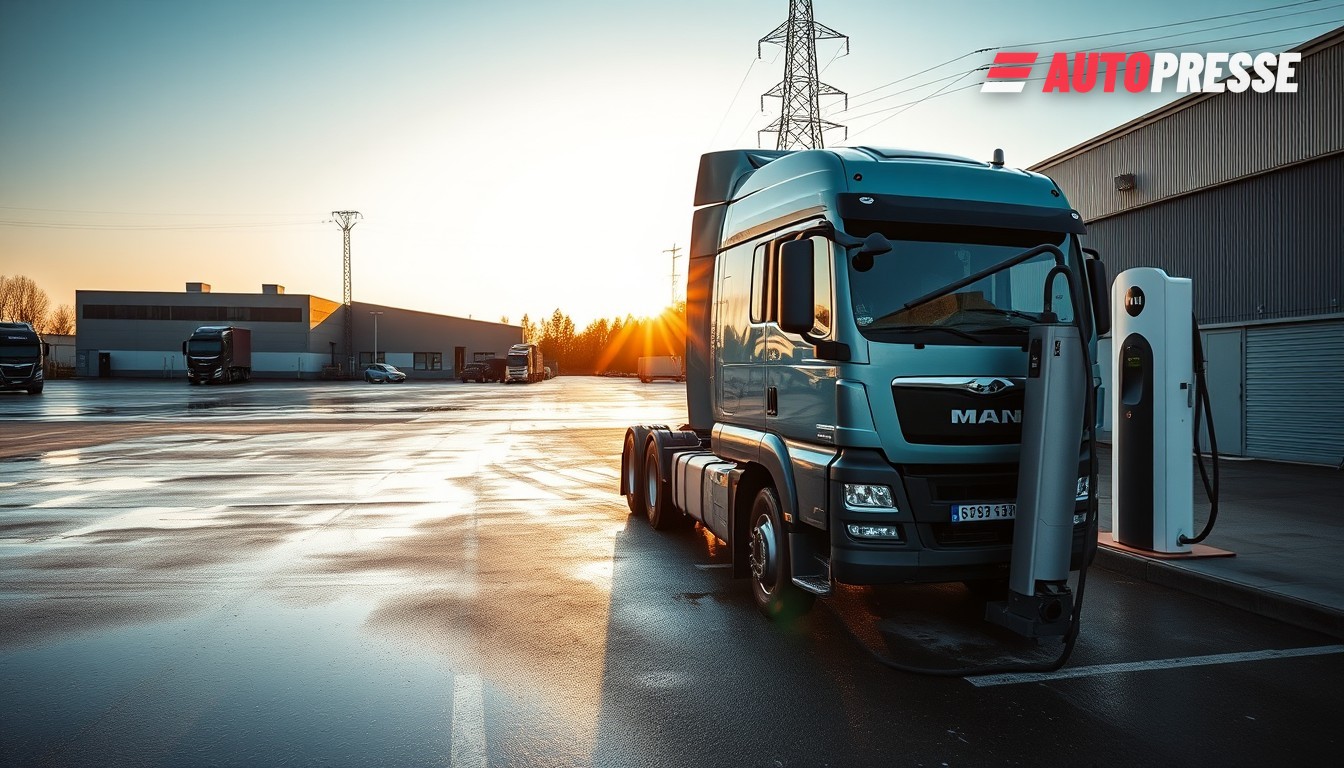
Germany’s truck industry took a step from lab demo to real‑world proof last week when the SPIRIT‑E consortium presented final results showing a MAN eTGX heavy truck feeding electricity back into a depot and the public grid at up to 350 kilowatts. The finding, revealed at the project’s close on 30 October 2026, matters for German and Austrian fleet owners, depot operators and grid planners because it turns a parked e‑truck into a large, flexible energy asset.
The Regensburg demonstration
The demonstration took place at the Schmid logistics depot near Regensburg where a MAN eTGX with about 480 kWh of usable battery capacity discharged through a bidirectional DC station built by Shell Business Recharge Solutions. In the trials the truck delivered up to 350 kW to the site (V2S), to other vehicles (V2V) and into the public grid (V2G) using ISO 15118‑20 communications. The project publicly presented these results on 30 October 2026.
MAN highlighted that the trials also tested electricity‑market functions: in a pilot environment software scheduled charging to buy cheap power and sell it when prices rose, and interfaces were trialled between vehicle, charger, site energy manager, electricity trader and grid operator. The consortium included TUM (lead), MAN, Fraunhofer IEE, TenneT, Hubject, Consolinno and others; SPIRIT‑E ran from August 2023 to October 2026 under German federal funding.
What this means for the market
Project modelling and TUM’s accompanying research found realistic savings of around 10% on depot energy costs, with fleet‑level benefits from grid and market integration of roughly 1.7 euro cents per kilometre on average and up to 6.1 cents/km where bidirectional charging was used in the scenarios examined. For a truck doing 100,000 km/year TUM’s team equated the 10% depot energy saving to the energy cost of roughly 10,000 km of driving. These numbers come from the SPIRIT‑E closing analyses and the consortium’s public statements.