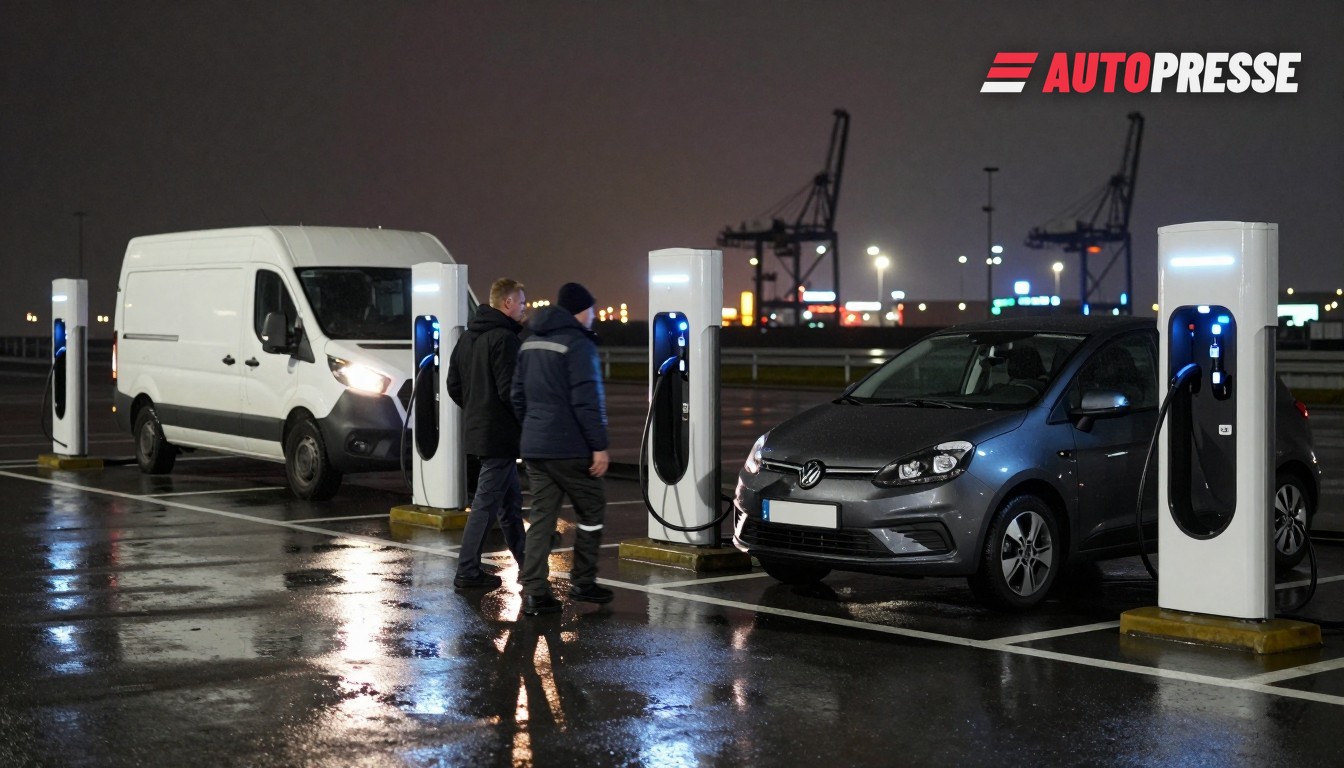
Germany and Austria have moved from ambition to concrete rules for electric mobility this year — reforms that will matter to drivers, dealers, property owners and grid operators. Berlin’s Building Modernisation package tightens obligations for wiring, pre‑cabling and smart charging from 1 January 2027, and the Bundesnetzagentur’s October MiSpeL determination opens the door to vehicle‑to‑grid (V2G) at scale. In Vienna, regulator and ministry drafts set out standardised metering and a 2030 fast‑charge coverage target — while the OECD urges Austria to use pricing and taxes more aggressively to curb car dependency. These are practical, near‑term shifts, not distant promises.
Stronger building rules — but with a flexibility switch
On 13 May 2026 the Federal Ministry of Transport published a Cabinet text that translates the EU Energy Performance of Buildings Directive into German law and gives building owners clearer duties — effective 1 January 2027. For existing non‑residential car parks the new threshold is one charging point per ten parking spaces, or alternatively publicly accessible charging capacity totalling 1.1 kW per parking space (for a 100‑space supermarket car park that equals either ten AC points or 110 kW of DC capacity). New and heavily renovated non‑residential buildings face higher pre‑cabling and minimum charging quotas (for offices as tight as one charging point per two spaces). Smart charging and interoperable communication standards are mandatory for new or replaced points.
MiSpeL: Germany makes V2G market‑ready
The Bundesnetzagentur’s MiSpeL determination, published 1 October 2026, treats bidirectional charging points like market‑active storage: it provides separation and flat‑rate accounting options, preserves EEG support for temporarily stored renewable electricity, and allows netting that can lower levies and grid fees on energy cycled through vehicles. The MiSpeL text includes a transition window until September 2027 for network and meter operators; the flat‑rate option still needs European Commission sign‑off for state‑aid reasons. The decision removes a major legal barrier to commercial V2G pilots and aggregation services in Germany.
Austria is preparing similar plumbing for V2G: E‑Control’s TOR Metering draft (June 2026) sets standardised metering concepts and treats bidirectional chargers as storage within metering rules, with precise operating modes and a 250 kWh threshold for certain Guarantee‑of‑Origin accounts. The draft is intended to reduce billing uncertainty for V2G, but it also highlights practical constraints such as the need for second‑level control and sub‑second measurement resolution in some setups.
What this means for the market
Short term, the GEIG/Building Modernisation changes will lift demand for electricians, conduit and smart chargers: owners of retail parks, offices and apartment blocks must decide whether to deliver many AC points or fewer, higher‑power units to meet the 1.1 kW‑per‑space option. That will push faster DC installations into locations where turnover justifies it and force building‑services firms to scale.
MiSpeL materially improves the business case for aggregators and fleet operators: it creates clearer settlement rules for energy fed back from vehicles, lets owners avoid some levies by netting fed‑back volumes, and enables new flexibility revenues — but practical roll‑out depends on meter and network operator implementation and the EC decision on the flat‑rate option. Austria’s metering draft could make cross‑border fleet services simpler if harmonised, while eMove Austria’s 2030 goal (95% of citizens within 10 km of a fast charger) frames future public infrastructure demand. The OECD’s 2026 review of Austria also underlines that pricing and tax instruments (tolls, parking, congestion charging) remain powerful levers to reduce car dependency and must complement supply‑side measures.
Electric vehicle listings on WorldTrader24 →
Sources: Bundesministerium für Verkehr (BMV), Bundesnetzagentur, DIHK, E‑Control/CMS (Austria), eMOVE Austria, OECD