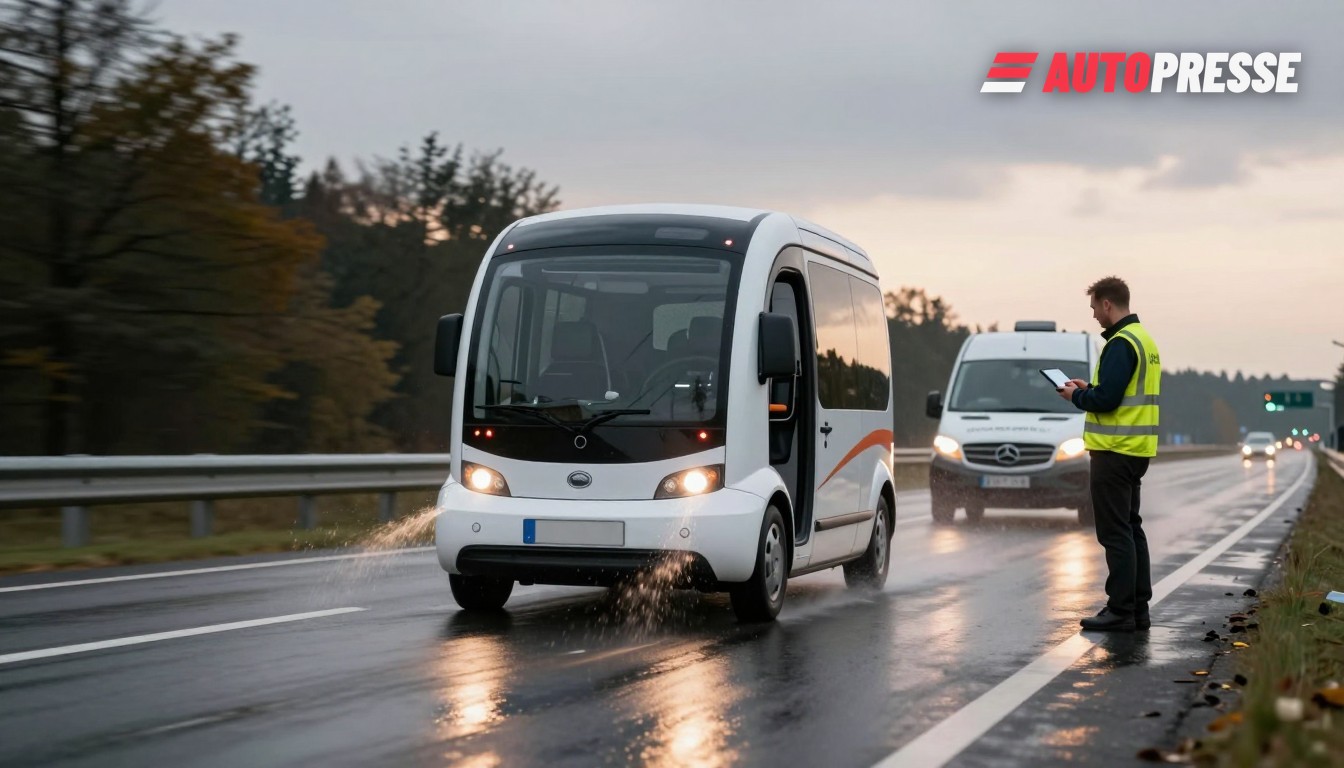
Germany and Austria are taking different but complementary policy routes to bring Level‑4‑style automated vehicles onto public roads. Berlin rewrote the Straßenverkehrsgesetz (StVG) and related rules in 2026 to create KBA permits, data obligations and fixed operating‑area approvals for autonomous test and operation; Vienna has published a novellierung package and plans model regions from 2028 to scale fleet trials under supervised, driverless conditions. These steps reshape the legal map for manufacturers, fleets and test hubs across Germany and Austria.
Germany: StVG changes and KBA permissions
Berlin’s “Fünftes Gesetz zur Änderung des Straßenverkehrsgesetzes” (May 2026) updated several StVG paragraphs to define rules for the trial and operation of vehicles with autonomous driving functions. The law creates formal authorisations for both Erprobungsgenehmigungen (trial permits) and Betriebserlaubnisse for vehicles with autonomous functions, and gives the Kraftfahrt‑Bundesamt (KBA) powers to issue permits and to collect anonymised operational data for safety assessment. The changes were published in May 2026 and associated implementing texts and procedural rules followed through summer and autumn 2026.
Practical consequences in the German texts include: manufacturers or operators must apply to the KBA for Erprobungsgenehmigungen under §1i; vehicles may only be used within expressly authorised Betriebsbereiche; and the KBA can require anonymised data collection to build an evidence base for future regulation. Further market‑surveillance and approval regulation revisions (including a new Autonome‑Fahrzeuge‑Genehmigungs‑und‑Betriebs‑Verordnung) were updated into the autumn of 2026.
Austria: Novelle, supervision and model regions
Austria has followed a parallel, deliberately staged path. In April 2026 the federal ministry set out a novellierung of the Automatisiertes‑Fahren‑Verordnung together with changes to the Kraftfahrgesetz (KFG) to enable extended test and commercial fleet activity — explicitly allowing “fahrerloses Fahren unter Aufsicht” as a legal test regime. The Austrian government signalled this as the basis for fleet trials and public‑transport pilots.
The Austrian parliament’s transport committee backed the KFG novelle in July 2026 and AustriaTech and the federal ministry have scheduled a national stakeholders’ summit and a rollout of regional pilot programmes, with model regions targeted to start in 2028 to test larger scale, supervised fleet operations and public‑transport cases. Austria positions the model‑region approach as a way to couple regulation with infrastructure, inclusion and industrial strengths in sensor and test technology.
What this means for the market
The legal changes make two facts clear and verifiable: in Germany, manufacturers and operators seeking to trial or operate autonomous functions must follow the StVG procedures and obtain KBA permits (Erprobungsgenehmigungen / Betriebserlaubnis), and authorities can require anonymised operational data to assess safety. In Austria, the legal novelle explicitly permits supervised driverless trials and commits to starting model regions in 2028 to scale real‑world fleets. These are regulatory facts, not forecasts.
For OEMs, Tier‑1 suppliers and testing hubs the practical implication is longer lead times for approvals but clearer pathways: apply early to the KBA in Germany and engage the AustriaTech contact point in Austria for model‑region projects. For fleets and mobility operators the two approaches mean operators able to meet KBA requirements in Germany or the supervised‑fleet framework in Austria will gain first‑mover test access to public roads; cross‑border pilots will need to reconcile Germany’s strict permitting and anonymised data obligations with Austria’s regionally staged, supervised regime.
Available vehicles listed now on WorldTrader24 →
Sources: Gesetze‑im‑Internet (StVG), BMIMI / AustriaTech