German supplier Schaeffler announced on 3 November 2026 a fresh “performance improvement programme” that will cut 3,460 positions across Europe — about 2,660 of them in Germany — and close four German sites (plus one in Belgium). The move follows the group’s push into humanoid robotics and comes with an expected one‑off restructuring charge of roughly €480 million and recurring savings of about €300 million a year from 2030.
Why drivers, dealers and employees should care
Schaeffler is a major Tier‑1 supplier to large OEMs; it supplies components and systems to leading carmakers including Volkswagen, BMW and others — so its workforce and factory changes can ripple through parts availability, local dealer service networks and regional employment in Germany. The company said the cuts are driven by weaker demand for combustion‑engine components, a slower EV ramp and high personnel costs in Germany.
Management said roughly 50% of the reductions will affect production roles, about 30% research & development and 20% other functions; 16 European sites are impacted in total, with detailed local plans to be discussed with works councils. The company says implementation is mainly scheduled for 2027–2028.
A pivot toward Physical AI and humanoids
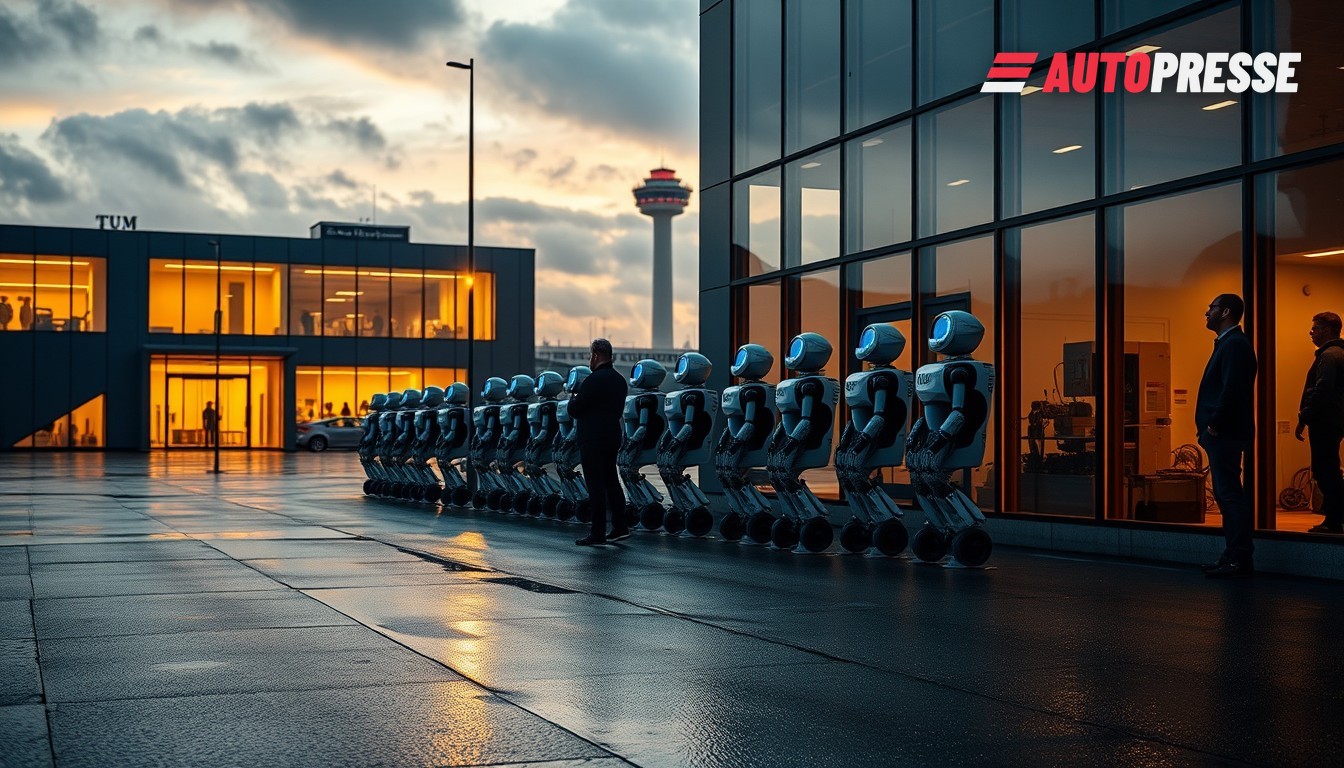
The restructuring announcement makes explicit that Schaeffler aims to reallocate resources into “new growth fields”, naming humanoid robotics and defence among the opportunities. That follows the opening of a 7,500 m² “lighthouse” factory in Taicang, China, on 20 October 2026 where humanoid robots assemble joint modules for other humanoids — and Schaeffler’s statement that incoming orders for its humanoid‑robotics business have risen to about €400 million.
CEO Klaus Rosenfeld framed the programme as necessary to keep German and European production competitive: “With the today announced performance improvement programme we want to show that despite the difficult conditions it is possible and sensible to develop and produce in Germany and Europe competitively and cost‑efficiently in the long term,” he said in the company statement. Schaeffler also proposed a voluntary “solidarity contribution” — including temporary pay reductions starting with the executive board — to reduce the scale of headcount cuts.